

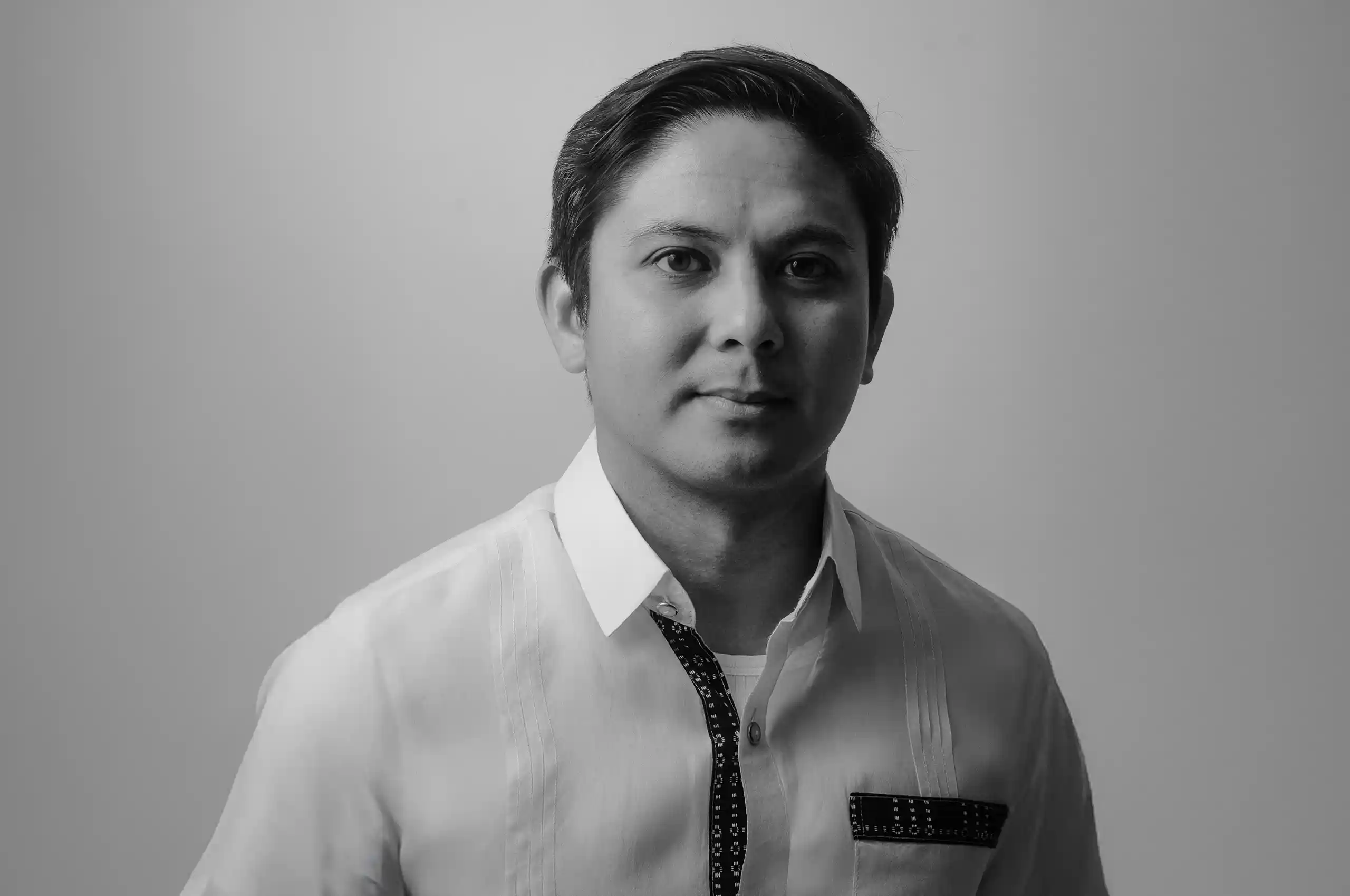
The door has to be closed, Mico Clavano insists. He is not entirely comfortable with being photographed. This would be unremarkable, except that his face is on primetime news nearly every night. Clavano is the spokesperson of the Office of the Ombudsman, the institution that has been building cases against officials whose names have become shorthand for everything wrong with Philippine governance.
Cameras are, at this point, a professional hazard. And yet here he goes, sheepishly asking the Rolling Stone Philippines team if we can shut the door so fewer people would walk past while his photo is being taken.
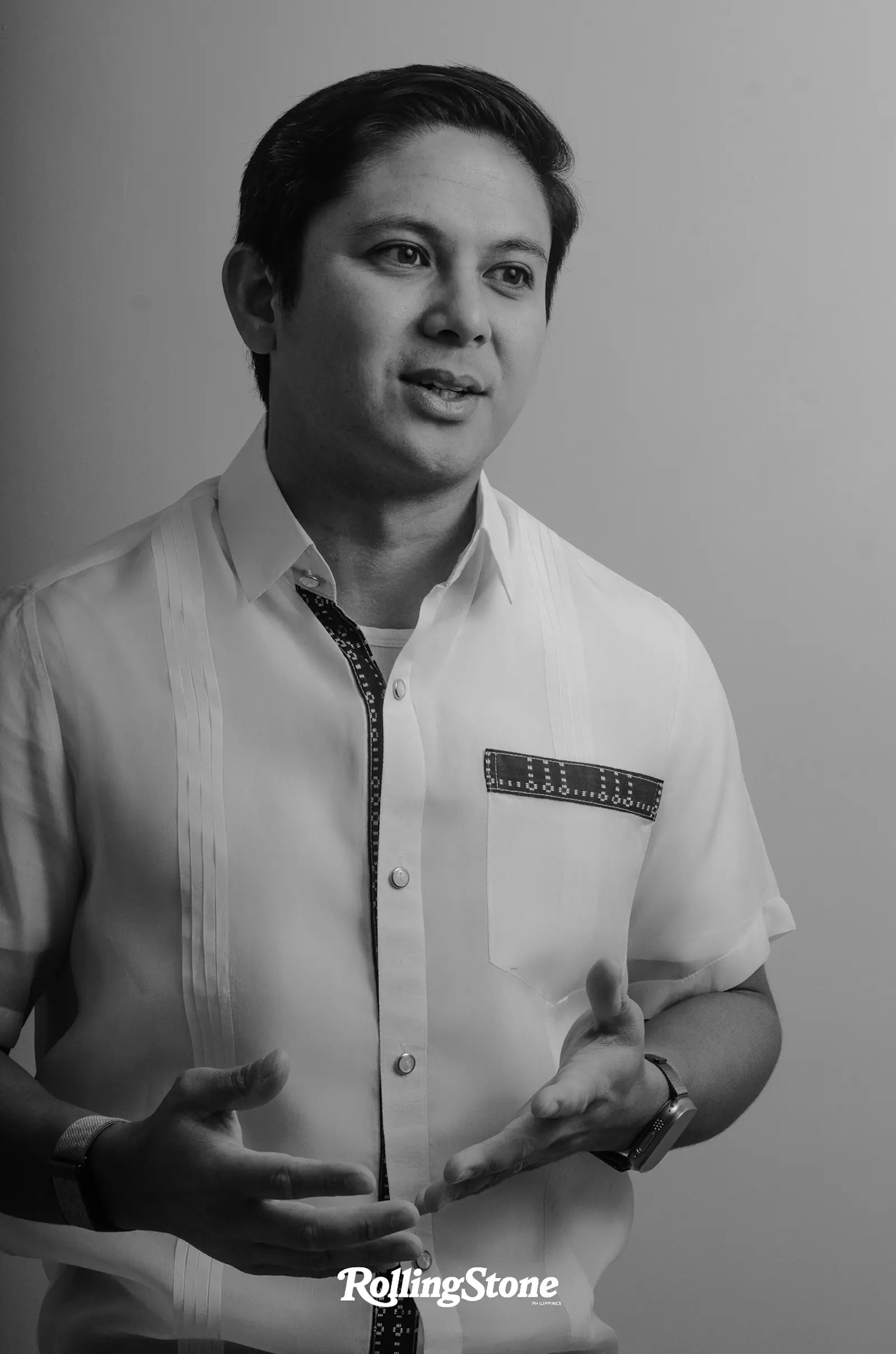
“It’s never about me,” he says. “When you speak for a department, you represent the institution. What I want to portray are the values of the office.”
He didn’t ask for this job. He didn’t ask for the one before it either.
At 31, Clavano walked into the Department of Justice (DOJ) for what he thought was an interview to become executive assistant to then-secretary Jesus Crispin “Boying” Remulla. Ten minutes into their first conversation, Remulla looked at him and said: “I know what to do with you. You’ll be my spokesperson.”
“You don’t get to say no to the Secretary of Justice,” Clavano says, laughing.
He went home and watched former United States President Barack Obama on YouTube. He studied American DOJ spokespersons to learn what to say at each step of the case build-up, and what not to say. He studied Singapore’s first Prime Minister Lee Kuan Yew for something harder to name: the idea that every public statement should carry a philosophy worth understanding beyond the headline.
“It helps that I get face time with my boss every day, because I learn how he thinks, why he thinks a certain way, why he does what he has to do. Being in the room when decisions are made, that’s where I really trained myself,” says Clavano.
His first real test was the case of slain journalist Percy Lapid, with the investigation pointing toward ex-Bureau of Corrections (BuCor) Chief Gerald Bantag, whose office was under the jurisdiction of the DOJ. There is no YouTube tutorial for that.
When Clavano overstepped early on, generalizing that the Philippine National Police was allegedly covering up for BuCor, someone called him out. He apologized, clarified, and filed it away. “Firecrackers,” his word for officials who would go in swinging at everyone, do not last. Keeping your cool is not weakness, but what the job entails.
When Remulla moved from the DOJ to become Ombudsman in 2025, he brought Clavano with him. Here, as Assistant Ombudsman and spokesperson, from the moment Clavano arrives at 8:30 in the morning, he does not leave. The only exceptions are press conferences downstairs or when they finally file cases against erring public officials.
The office he speaks for has become the epicenter of the country’s two biggest political stories: the flood control corruption scandal, which has produced non-bailable plunder complaints against the likes of fugitive lawmaker Zaldy Co, Senator Jinggoy Estrada, and former Public Works Secretary Manuel Bonoan, and the expanding web of cases touching allies of Vice President Sara Duterte, several of whom will sit as senator-judges in her impeachment trial.
“‘Pag puro pulitika na lang, you’re just another piece on the chessboard,” he says. “Sometimes I find myself getting into it, but I have to reel myself out. If you lose the vision of what you want the country to be, then you’re not working towards anything anymore. You have to keep a little bit of that. But along the way, you become a little bit more pragmatic.”
The loudest accusation levelled at the ombudsman is not about any single case but the alleged pattern: that the office, under an ombudsman who shares a surname with a Cabinet secretary in the Marcos administration, is allegedly systematically targeting Duterte and her allies.
Clavano doesn’t pretend the optics are clean.
“It’s more of a coincidence that the timelines came together at this moment, where the Senate is very much under the spotlight and then a senator all of a sudden is held accountable for something that has been investigated for so long already. Unfortunate, but it had to be done,” says Clavano. “Because what are you gonna do? Hold the case also because there’s political turmoil in the Senate? So hindi naman puwede ‘yon, ‘di ba?”
What he keeps returning to is not the politics, not the optics, not the noise surrounding the cases the Ombudsman handles, but, simply, the evidence.
“There’s a difference between the actual truth and the judicial truth,” he says. “The judicial truth is basically what you can prove in court. But sometimes it’s not the same as the actual truth, which is sad. Some things you’ll never know because either nobody was there to witness it or there’s no evidence. So as investigators and prosecutors, you’re really trying to get to the bottom of it. But it’s not always that easy.”
And when people accuse the ombudsman of deciding who goes to jail and who walks free, Clavano does not flinch.
“We’re not playing God here. We don’t decide who goes to jail or who is saved. It’s all tied to the evidence,” he says.
Off camera, Remulla spends lunch making jokes about Clavano being 5’6”. He takes it in stride. Behind the scenes, he says, his boss is warm and a genuine mentor.
“Rarely do you see a boss that is also loyal to his employees. He mentors you, he coaches you, he tells you when you could have done better,” says Clavano.
“When you speak for a department, you represent the institution. What I want to portray are the values of the office.”
He went on paternity leave when his son was born in January. Remulla called Clavano three times in one day. He came back to work after a week.
What keeps Clavano grounded is ordinary life — playing basketball and golf on Sunday mornings with friends he calls, with complete seriousness, the “Good Boys Club.” He goes home and tries not to bring the office with him. He goes on dates with his wife, television host and model Samantha Sadwhani-Clavano, and they reflect about their life’s work.
“Sometimes I can’t believe na at this age, [I’ve achieved these things already]. I share with her a fear of mine, [that] I hope this is not the pinnacle [of my career]… Because I’m still young and I want to achieve more,” Clavano says. “She just tells me to keep going.”
He is 35. The ombudsman’s cases are far from done. And for someone who never asked for any of this, Assistant Ombudsman Mico Clavano has somehow ended up exactly where the country needs him to be.
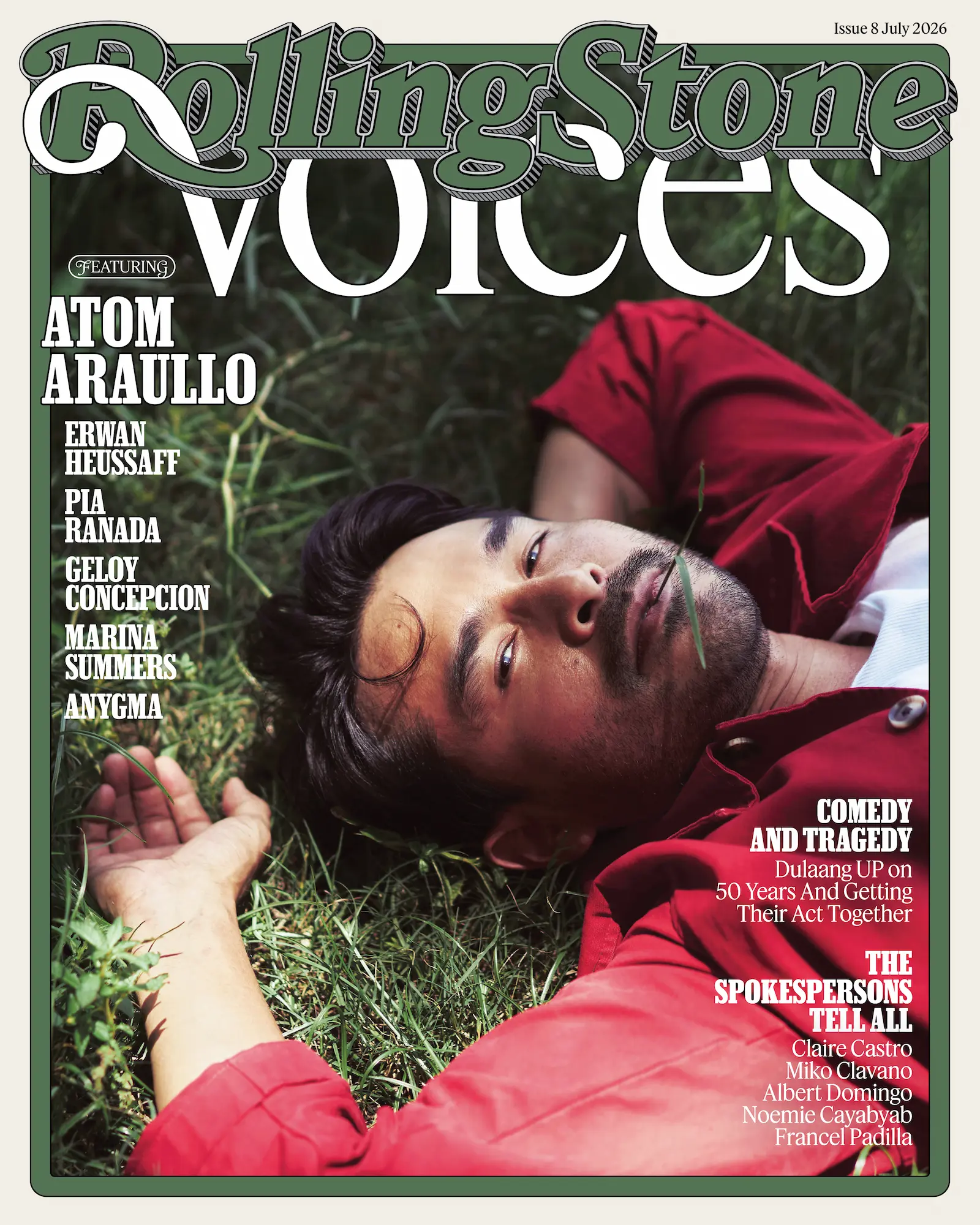
Read the rest of this story in the Rolling Stone Philippines’ Voices Issue, now available for pre-order on Sari-sari Shopping and in major newsstands soon.
Get digital access to the latest issue here.
Frequently Asked Questions
Mico Clavano is the Assistant Ombudsman and spokesperson of the Office of the Ombudsman in the Philippines. At 35, he is the public face of the institution building corruption cases against government officials, appearing on primetime news as the office pursues major graft and plunder investigations.
Clavano became a spokesperson unexpectedly. At 31, he walked into the Department of Justice expecting an executive assistant interview, but then-Secretary Boying Remulla named him spokesperson on the spot. He studied figures like Barack Obama and Lee Kuan Yew to learn the role.
The Office of the Ombudsman sits at the center of two major political stories: the flood control corruption scandal, which produced non-bailable plunder complaints against figures like Zaldy Co, Senator Jinggoy Estrada, and Manuel Bonoan, and expanding cases touching allies of Vice President Sara Duterte.
Yes. Critics allege the office, led by an ombudsman who shares a surname with a Marcos Cabinet secretary, is systematically targeting Duterte and her allies. Clavano calls the overlapping timelines a coincidence, arguing the cases had to proceed despite political turmoil in the Senate.
Clavano insists evidence, not politics, must guide every case. He distinguishes between actual truth and judicial truth — what can be proven in court — and rejects claims that the office decides who is jailed or freed, saying, in his words, that they are “not playing God.”