

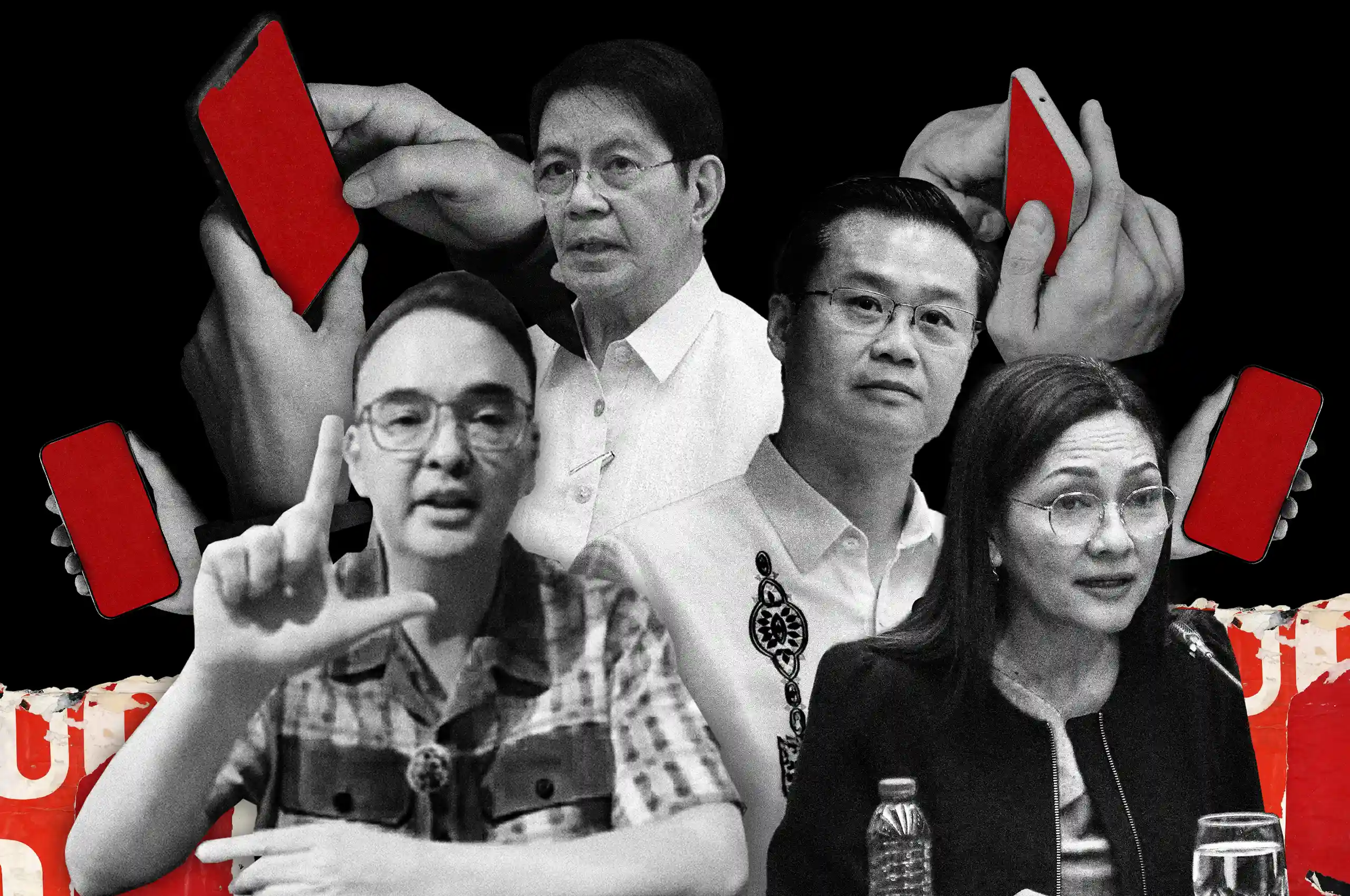
Today’s politicians spend as much time — if not more — cultivating an online presence as they do legislating and debating various policies inside the Senate building. Their social media accounts have become extensions of their public offices.
Whether engaging with their supporters, updating through Facebook livestreams and X posts, or promoting it as an alternative to traditional news media, politicians have made social media one of their arenas for public engagement. But: how much is considered too much?
While this makes politicians more accessible to the public, this very same tactic allows them to bypass intermediaries and control the narrative on their own. Political communication, which was once filtered through media coverage or institutional channels, is now easily viewable in a click. It has become easier to find senators subtweeting each other on X or posting cryptic Facebook statuses before they are seen answering media interviews or sending press releases.
Take, for example, Senator Alan Peter Cayetano. Over the past few months, Cayetano has traded the usual image of a veteran lawmaker for something closer to a social media influencer, broadcasting his sentiments and even his political spats through Facebook livestreams. His view count ranges from 200,000 to 1 million, with comments varying from those of his supporters to netizens fake “mine-ing” items and calling him a “live seller.”
The real problem arises when livestreams are substituted for press conferences, and actual hearings are stalled, or when a trending hashtag somehow becomes a measure for effective governance.
During the Senate lockdown in May, he used the same platform to send an update inside the hall and criticize the new majority bloc. Cayetano’s posts and livestreams further ramped up after the incident. He had done over 20 live broadcasts from May to June alone, which earned reactions from his colleagues, specifically Senator Panfilo “Ping” Lacson, who roasted him over his livestream barrage. Cayetano later clapped back, “Ba’t kayo galit na galit ‘pag nag-fe-Facebook ako? Ang hilig niyo rin naman mag-Facebook.”
The Cayetano-Lacson Feud, live on X and Facebook
Lacson has also found his voice on social media recently. The senator utilizes X instead of Facebook for his concise yet pointed comments. On June 7, he tweeted that those who are weak on the law and facts should stick to making Facebook live streams. Despite not mentioning anyone, the timing and specific wording resulted in speculations online that it may be for his rival Cayetano. He had also previously called Cayetano “bopols,” and just recently, the latter branded Lacson a “senator-judge troll” and a “gossip-monger” on his Facebook live. The senators’ snarky back-and-forths online have seemingly repackaged their rivalry into frivolous content, which netizens poke fun at and analyze in Facebook comments and Reddit posts.
“When you’re strong on the law, pound the law. When you’re strong on the facts, pound the facts. When you’re weak on both…” — mag-Facebook live ka na lang.
— PING LACSON (@iampinglacson) June 7, 2026
These days, a carefully argued privilege speech rarely cuts across the way direct livestreams and online posts do. Beyond catering to their audience, it seems that politicians are taking advantage of the state of media today. Politicians have also used social media to challenge the credibility of traditional journalism itself. Vice President Sara Duterte has repeatedly portrayed news organizations as money worshippers and suggested that social media offers a more trustworthy alternative to independent press. She echoes many of the same tirades as her father, former President Rodrigo Duterte, who spent years throwing jabs at the media during his time as president.
“Buti na lang, meron na tayong social media ngayon. Para nakikita natin kung ano talaga ang katotohanan na nakita ng tao at lumabas sa bibig ng tao,” Duterte said in an interview at The Hague on August 1. The vice president’s rhetoric feeds the long-running public distrust in Philippine journalism and encourages citizens to consume political information from online platforms, where content can be taken as truths with little to no verification.
The Celebrification of Senators: Gatchalian, Hontiveros, and the ‘WinRi’ Fandom
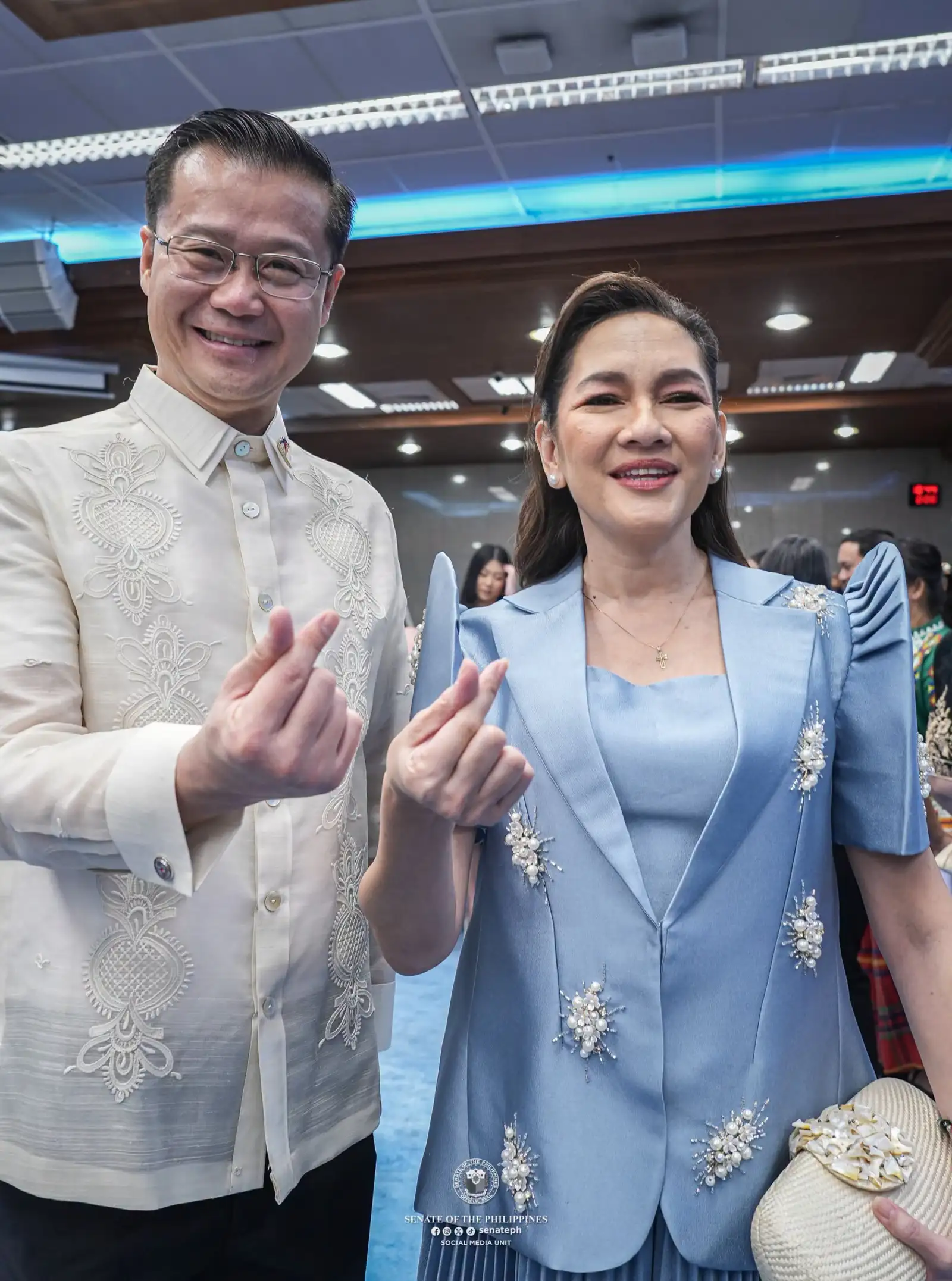
Beyond politics, social media is also able to show a side of these politicians that may be criticized as “cringe,” but is an effective way to show their more “human” side. It is also fueled by ecosystems of influence through unofficial pages and highly engaged supporters, who continue to be enticed by their politician-idol’s social media presence. Supporters themselves have contributed to the growing celebrification of politicians on social media. Senators Sherwin Gatchalian and Risa Hontiveros were paired together online after interactions of the two praising each other. Their fans have coined their pairing as “WinRi,” with the fandom collectively agreeing to be called “Winners.”
Rather than distancing themselves from the trend, both senators acknowledged the fandom on X, with Hontiveros even responding to tweets and welcoming the playful support. Although such interactions may seem harmless, it demonstrates how politicians are capitalizing on social media’s take on celebrity culture, utilizing their capacity to cultivate online communities, participate in trending conversations, and sometimes, “sell” themselves for the purpose of engagement metrics and wider reach. Some will say it’s all good fun, but at the end of the day, is this what we want to see from our elected officials?
This isn’t to say that social media is the problem, or that politicians should have no access to these online platforms at all. In fact, these tools have become indispensable ways for communicating during public crises and national emergencies in the country. The real problem arises when livestreams are substituted for press conferences, and actual hearings are stalled, or when a trending hashtag somehow becomes a measure for effective governance. When communication and policies are only coming from one side, integrity and credibility are the first things to suffer.
If journalists are constantly being compared to vloggers, and senators are now acting like live sellers or social media influencers, and when news seems to only come from one source, what will become of accountability in our government? When politicians spend too much time chasing views, likes, and fleeting affirmation, it’s easy to see what they do as nothing but performative instead of genuine public service.
FREQUENTLY ASKED QUESTIONS
Cayetano went live on Facebook to broadcast the situation from inside the Senate.
Senator Alan Peter Cayetano has reportedly done over 20 live broadcasts from May to June alone.
Senator Ping Lacson utilizes X instead of Facebook for his concise yet pointed comments, replying indirectly to attacks against him and commenting on issues online.
“WinRi” is the fan-created pairing of Senators Sherwin Gatchalian and Risa Hontiveros. The fandom emerged after the two senators were seen interacting cordially in Senate sessions.
When politicians start chasing views, likes, and online engagement, this can result in performative acts rather than substantive public service.
Recommended Video