


The Philippines has been plagued by political dynasties for decades. Across national and local government, families across generations have entrenched themselves in positions of power. According to the Philippine Center for Investigative Journalism (PCIJ)’s June 2025 study, more than 80 percent, or 212 out of 254 district seats, were occupied by members of political dynasties. If you’re curious who’s who, there’s now an easy way to track these clans and their political connections.
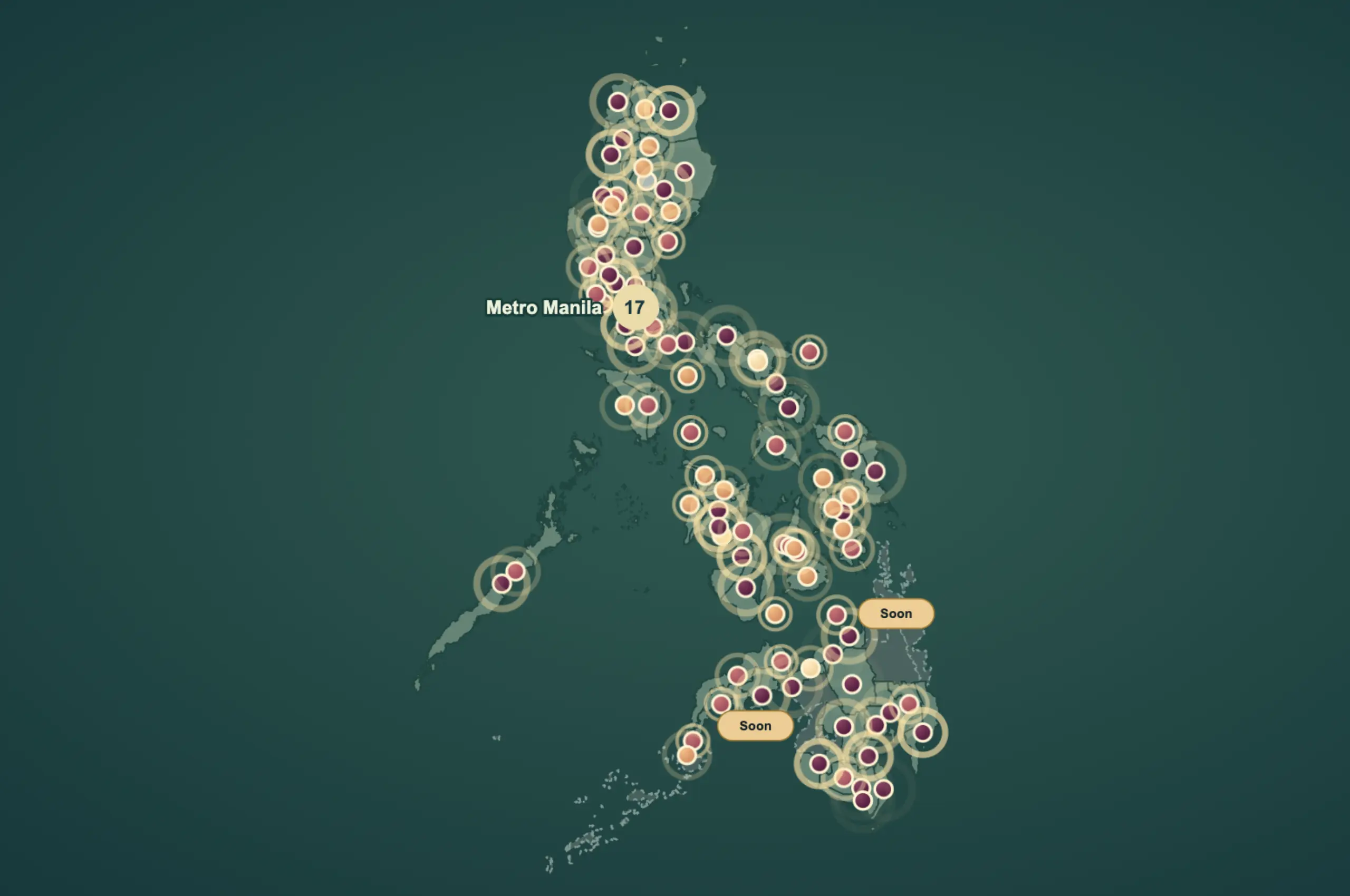
Enter PulitiKlan, an interactive platform that exposes the numerous political dynasties in the country. Through an atlas map and a searchable database, users can explore the political clans by province, city, person, or family name. X marks the spot; you’ll be surprised by just how much concentrated power there is wherever you choose to click.
Built by content creator and computer programmer Jon Oraña, the mapping covers Luzon and Visayas, while some parts of Mindanao are to be developed soon. Its database includes a web of relationships (615 documented families as of this writing), the generations, and their office histories.
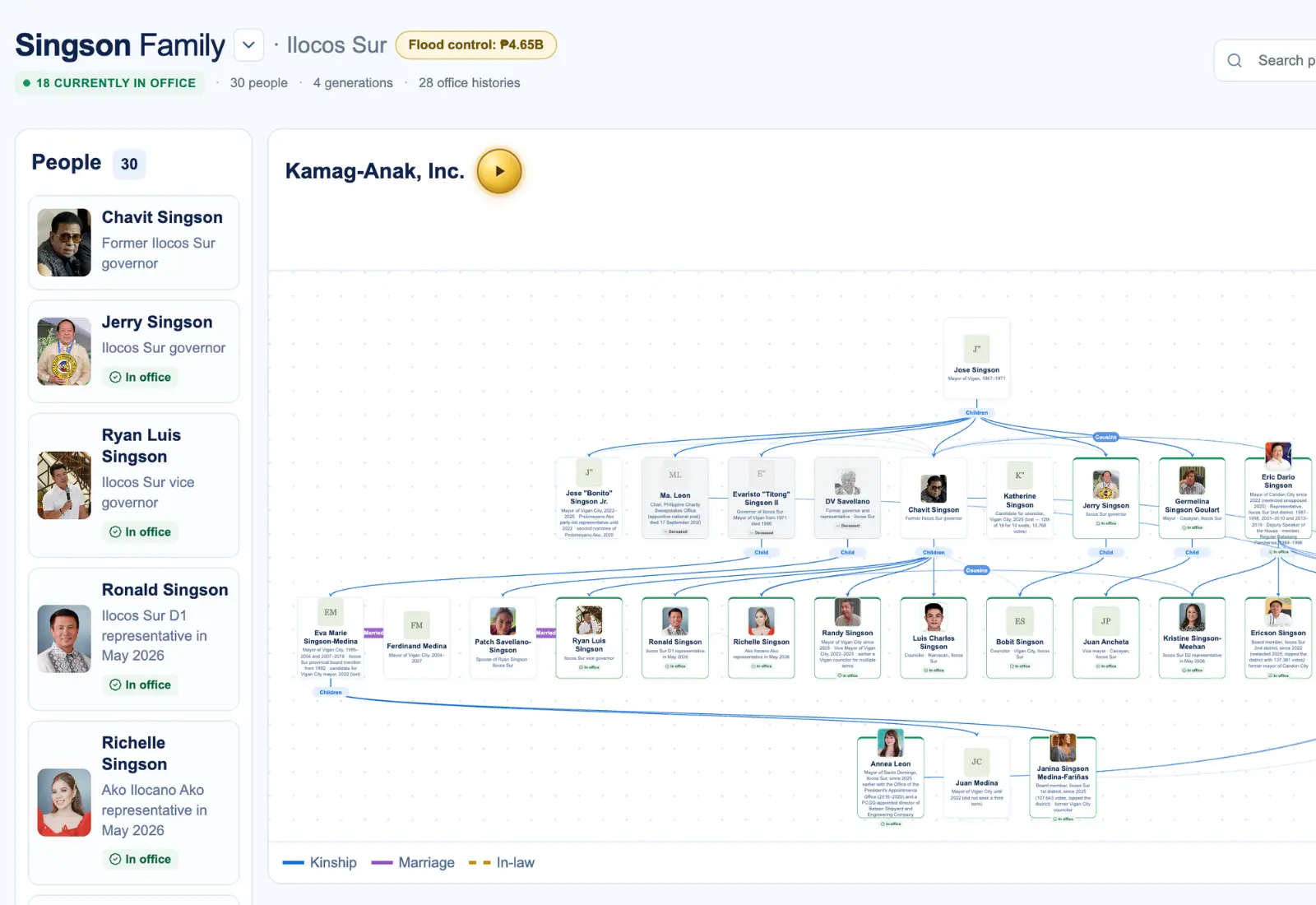
Aside from merely visualizing the dynasties, the site also provides the number of flood control projects and their total amount in each province and city, cited from the Sumbong sa Pangulo‘s Department of Public Works and Highways (DPWH) projects list. In addition, it has the “Klan Power Ranking,” which directs you to an index of which family has the most relatives in power. The Singsons in Ilocos Sur dominate the list for Luzon with 18 members in office, and the Evardone clan in Eastern Samar, Visayas with nine.
All the presented family networks and relationships are supported by official sources, such as the Senate and House of Representatives sites, local government pages, and articles from media outlets including Philippine News Agency, Rappler, and VERA Files. The site is cautious with each piece of information it presents and clarifies that it does not measure governance or influence, and that its coverage is incomplete. PulitiKlan is engaging, backed up with official data, and, most of all, informational.
THE ANTI-POLITICAL DYNASTY BILL
In September, the Supreme Court (SC) urged Congress to fulfill its constitutional mandate of enacting an anti-dynasty bill in the Philippines, with the ban being extended to the fourth degree. The highest court referenced Article II, Section 26 of the Constitution, which states that “the State shall guarantee equal access to opportunities for public service, and prohibit political dynasties as may be defined by law.” The SC added that Congress’ inaction for over 39 years constitutes injustice and grave abuse of discretion.
The House of Representatives approved the bill prohibiting political dynasties up to the second degree of consanguinity or affinity on the third and final reading in June, while its Senate counterpart remains pending in the second reading.
FREQUENTLY ASKED QUESTIONS
PulitiKlan is an interactive website by content creator and programmer Jon Oraña that maps Philippine political dynasties by province, city, person, or family name.
PulitiKlan has documented 615 political families as of this writing. Its map covers Luzon and the Visayas, with some parts of Mindanao still being developed.
The Singson family of Ilocos Sur currently leads PulitiKlan’s Power Ranking for Luzon with 18 members in office. The Evardone clan of Eastern Samar leads the Visayas with nine.
PulitiKlan displays the number and total amount of flood control projects in each province and city, based on the DPWH Sumbong sa Pangulo projects list.
The House approved the bill, banning dynasties up to the second degree, on third and final reading in June. The Senate version remains pending on second reading.
Recommended Video