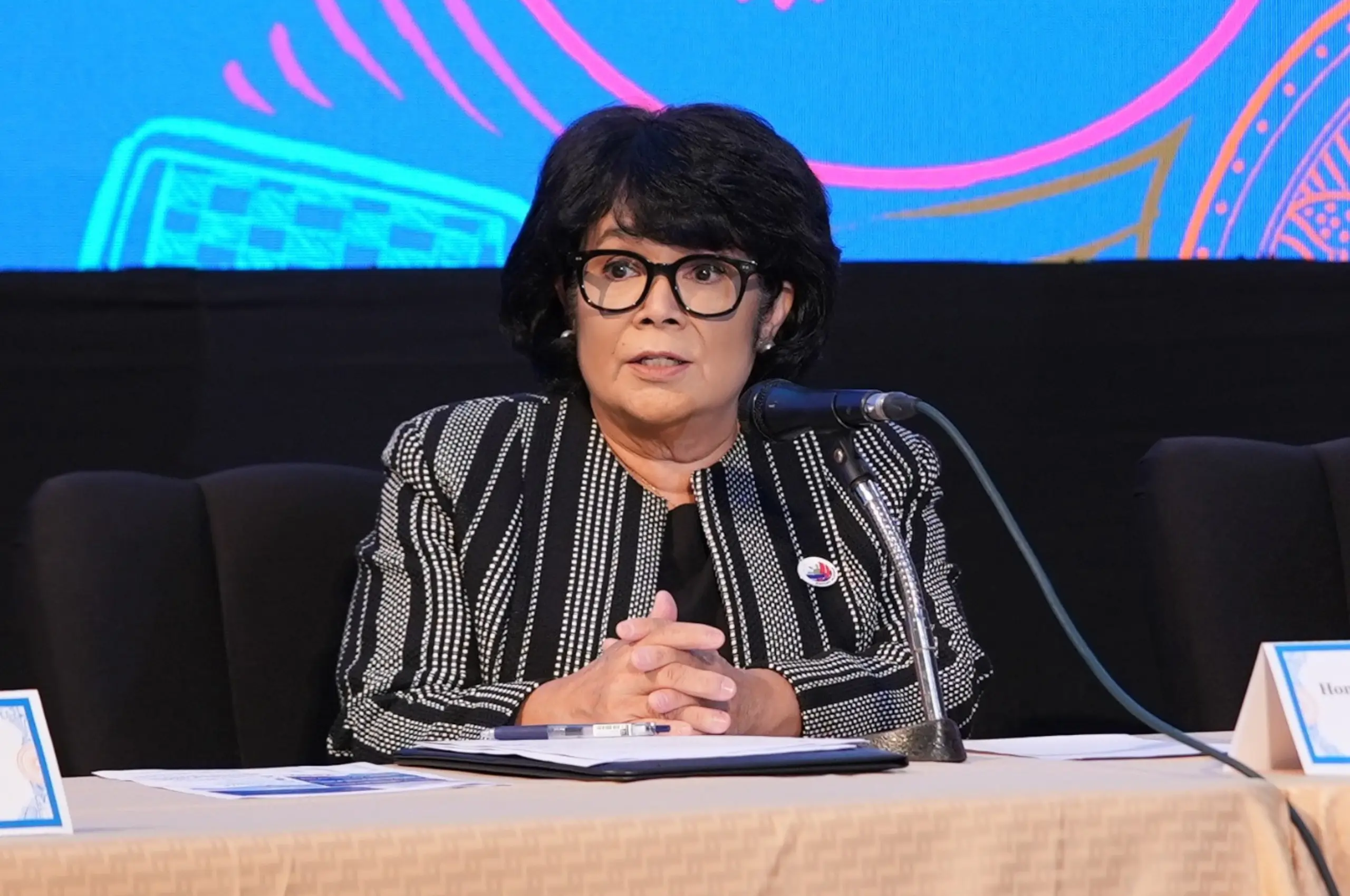
On Thursday, May 22, Maria Antonia “Toni” Yulo-Loyzaga tendered her resignation as secretary of the Department of Environment and Natural Resources (DENR) after President Ferdinand “Bongbong” Marcos Jr. called for courtesy resignations from all cabinet members. She will be replaced by Energy Secretary Raphael Lotilla.
Yulo-Loyzaga’s removal from office is almost surprising because she’s also a close relative of First Lady Liza Araneta Marcos. But critics, especially those in the environmental sector, will say it’s deserved.
As chair of the International Advisory Board of the Manila Observatory and technical adviser for the Philippine Disaster Resilience Foundation, Yulo-Loyzaga was nominated as environment secretary in 2022 for her expertise in disaster risk reduction.
To her credit, Yulo-Loyzaga took a research-based approach to addressing some environmental concerns. Under her leadership, the DENR commissioned a study assessing the impact of the Manila Bay reclamation projects on surrounding communities. In February 2025, she warned that many of these reclamation projects are not integrated into the flood management plans of the surrounding local government units, and that the livelihoods of fisherfolk would also be at risk.
At the beginning of his term, Marcos’ marching orders for the DENR were to maximize the country’s mineral resources and balance economic development with environmental care. In January 2025, the DENR said that it would adopt parallel processing for mining permits, as opposed to the current sequential process, allowing operators to secure permits in three years instead of six. To offset the environmental impact of mining, operators are also required to submit plans for community development programs.
Yulo-Loyzaga’s support for the mining industry stands in sharp contrast to another environment secretary, the late Gina Lopez, whose leadership of the DENR lasted less than a year but made an impact in the environmental sector. Lopez led the department from June 2016 to May 2017 and used this time to crack down on mining firms, who broke conservation laws, stripping them of their environmental certificates and suspending operations.
Despite being removed by the Commission on Appointments, which Lopez chalked up to the government pursuing business interests, she was lauded by civic groups and environmental advocates for putting the environment first.
In contrast, Yulo-Loyzaga emphasized the need to strike a balance between the mining sector and the environmental sector. At a multi-stakeholder forum in Cagayan de Oro in February 2023, she said, “We’re here to listen and until we can be satisfied that we’ve heard all stakeholders, we cannot achieve a balance in terms of the approach.”
But environmental advocates felt that they were sidelined.
Reinforcing Margins
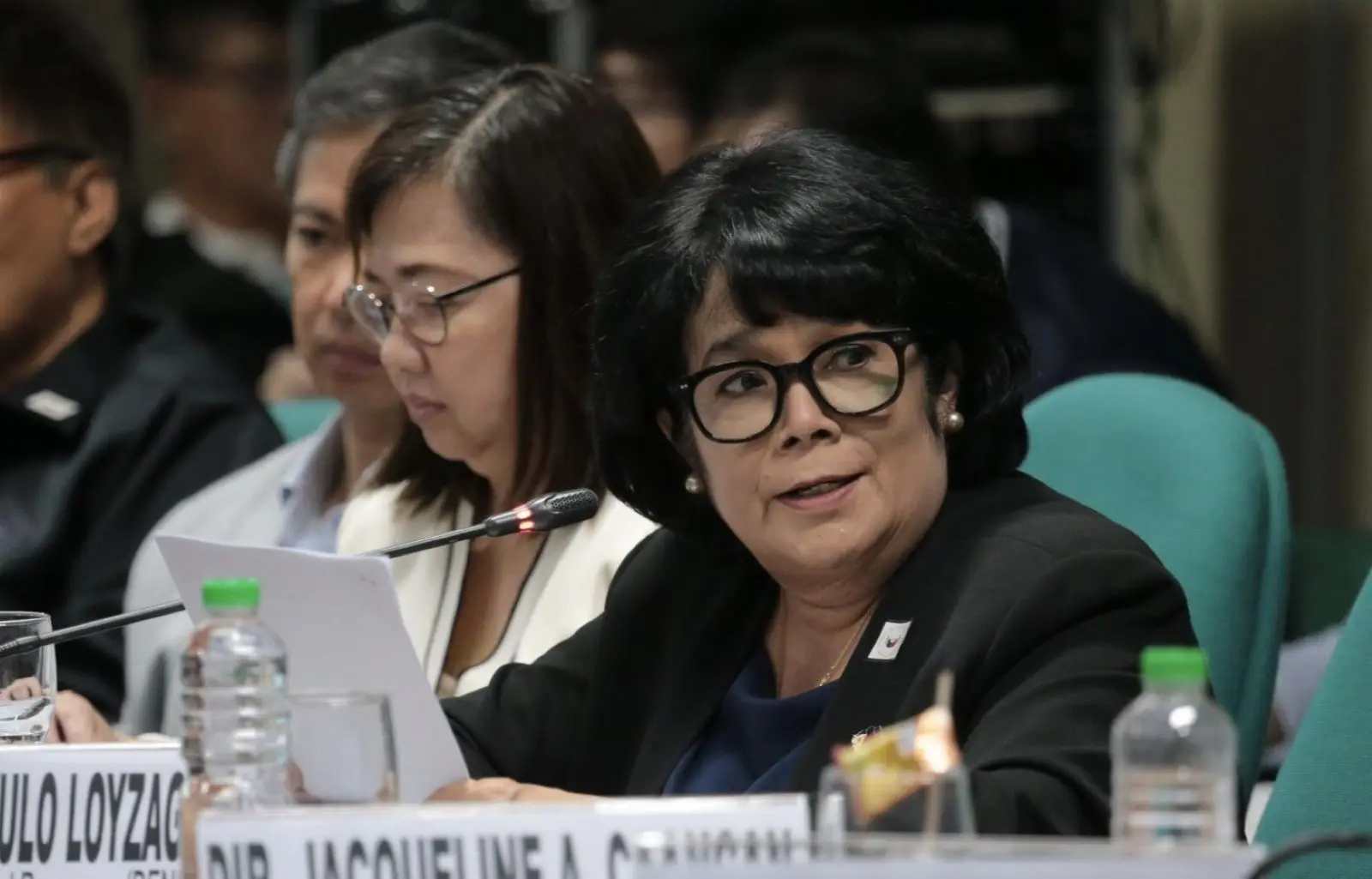
In December 2023, Philippine Movement for Climate Justice, Caritas Philippines, Center for Energy, Ecology, and Development (CEED), Aklsyon Kilma Pilipinas, and Greenpeace Philippines called the DENR out for excluding them from the Philippine pavilion at that year’s United Nations Climate Change Conference (COP28) in Dubai, United Arab Emirates.
“Unfortunately, it is clear that the inclusion of vulnerable communities and civil society is not a priority of the delegation, and the pavilion’s execution,” the groups said in a statement. They added that the pavilion was a “space that has potential to facilitate critical intersectoral discussions for our people’s climate survival.”
A source from the department explained to Rappler that the DENR had to “curate” their activities for COP28 given the conference’s busy schedule. “Just because they’re not included in the COP doesn’t mean they’re not heard,” the source said. They also said that the groups were engaged with the Yulo-Loyzaga and other DENR officials.
In April 2024, Balagbag Environmental Society, Sibuyanons Against Mining, Philippine Misereor Partnership, Zambales Ecological Society, Masungi Georeserve Foundation (MGFI), and other civic groups called on the DENR chief to step down due to her inaction and inability to engage with communities affected by infrastructure projects.
“It’s time for Secretary Yulo-Loyzaga to either shape up her act radically or step down for someone committed and capable of making the necessary changes,” their statement said.
One of the most prominent stains on Yulo-Loyzaga’s tenure as DENR secretary is the agency’s conflict with Masungi Georeserve.
In March 2025, the DENR announced that it had terminated its contract with Blue Star Construction Development Corporation, the developer of the georeserve in Rizal. The 1996 joint venture agreement (JVA) sought to develop 130 hectares of government property into “sustainable housing” for employees and green spaces. In 2017, Lopez gave Blue Star another 2,700 hectares for them and MGFI to restore, reforest, and protect. Yulo-Loyzaga said that the new agreement between Lopez’s DENR and Blue Star was illegal as it allegedly failed to go through a bidding process.
Outgoing Senator Nancy Binay criticized the termination, saying that the DENR is incapable of carrying on MGFI’s conservation work in the area.
The only thing we really know about Yulo-Loyzaga’s removal from office is that it was motivated by Marcos’ thrust for government agencies to perform better. But there is no explicit indication of whether it’s because Yulo-Loyzaga, despite all her efforts, failed to bolster the mining industry or because she neglected the other half of her duties concerning the environment. Perhaps Lotilla’s assignment as the new DENR secretary, welcomed by mining groups, can clue us in.