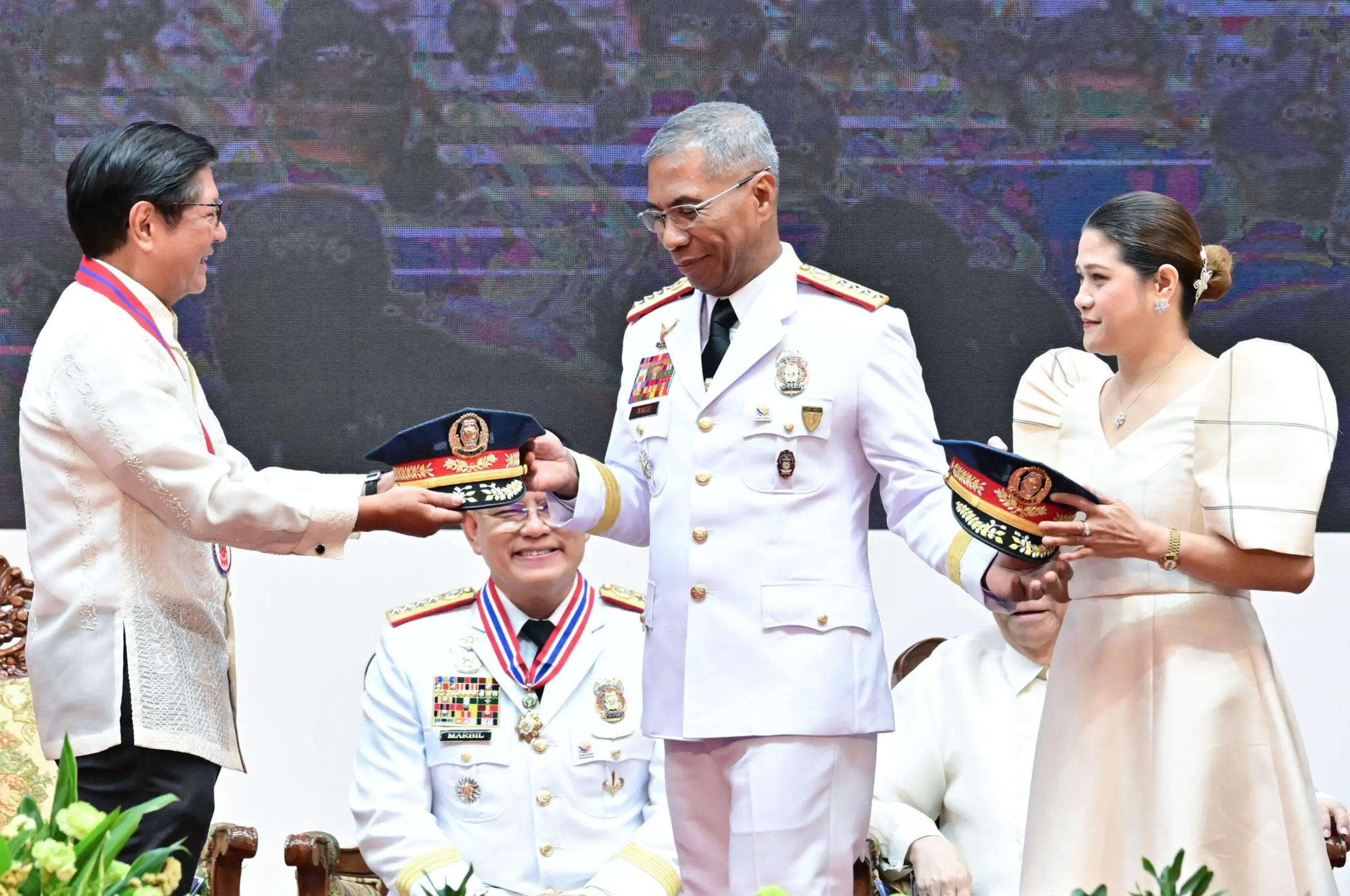
On Monday, August 25, President Ferdinand “Bongbong” Marcos Jr. removed Nicolas Torre III from his position as Philippine National Police chief, making him the shortest-serving PNP chief in history after being sworn in on June 2. While the Malacañang says that Torre has been offered another position, his removal from office sows doubt in the Marcos administration’s abilities to run a tight ship and follow through on promises.
In late May, Marcos called for the courtesy resignations of all cabinet members, then retained most agency secretaries in early June in an effort to align officials with the administration’s “recalibrated priorities.”
Torre’s appointment as PNP chief was a step towards Marcos’ aim for a focused and performance-driven government. But more than that, the appointment signaled the president’s favor for officials that could take decisive action in the context of the Marcos-Duterte feud. The appointment came months after the former Criminal Investigation and Detection Group (CIDG) director led the inter-agency operation to arrest former president Rodrigo Duterte in March.
So why is Marcos backtracking on what felt like one of his biggest power moves as president to date? Here’s everything that went down during Torre’s 85-day tenure as PNP chief.
Wins: 5-Minute Response Policy, CHR Oversight, Trust Ratings
Three days after being sworn in, one of Torre’s first steps as police chief was to implement a five-minute response policy in Metro Manila, requiring police to respond to emergency calls to 911 in their communities within five minutes. The policy was later implemented nationwide, but on August 11, Torre said that it had to be fine-tuned for remote areas with little personnel, where a quick emergency response may be unrealistic.
On June 9, a week after the start of his term, Torre paid a courtesy visit to the Commission on Human Rights (CHR), which commission spokesperson Attorney Beda Epres called “more than ceremonial”. There, Torre affirmed the CHR’s role as the PNP’s “boss.”
“When a victim has their human rights violated by a criminal, the police step in,” he said. “But if, for example, the police violate someone’s human rights, then the CHR is there. I do recognize and thank the CHR for keeping us always in check and being a partner of the PNP in ensuring that everything we do is within the ambit of law.”
A July “Tugon ng Masa” survey by research and consultation firm OCTA Research showed that trust ratings for the PNP had gone up in the middle of Torre’s term. 71 percent of 1,200 respondents said they trusted the police, a nine-point increase from the 62 percent recorded in the April survey. Only five percent of respondents said they didn’t trust the police, while the remaining 20 percent were undecided.
Losses: Boxing Match, Unwanted Reappointments, Relief
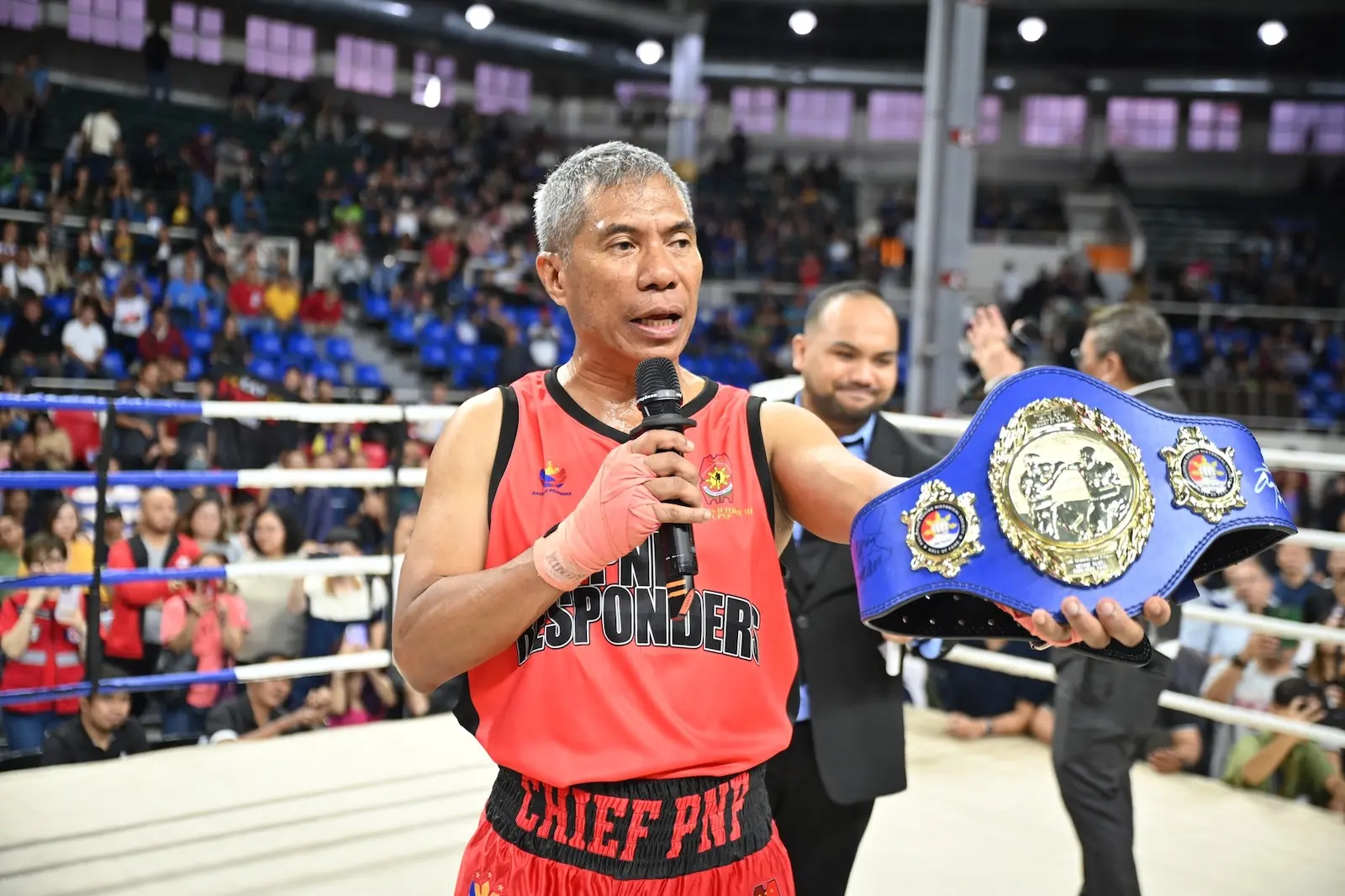
But Torre’s short term wasn’t without its disappointments. In July, acting Davao City Mayor Sebastian “Baste” Duterte challenged Torre to a “suntukan” in a podcast where he slammed the police chief for his involvement in Rodrigo Duterte’s arrest. Torre accepted the challenge, saying the proceeds from the boxing match should go to the victims of the typhoons that had devastated the country that month.
While the boxing match raised over P20 million worth of assistance in cash and kind despite the younger Duterte’s absence, the whole affair — with Torre posting practice videos and taunting Duterte — read more like a spectacle than philanthropy.
Torre’s biggest infraction, and perhaps the Marcos administration’s last straw, was his decision to reassign PNP officials in early August. In response, the National Police Commission (Napolcom) issued a resolution ordering the police chief to recall the reshuffle, which saw PNP Deputy Chief for Administration PLt. Gen. Jose Melencio Nartatez Jr. reassigned as area police commander for Western Mindanao.
On August 18, Torre said that the conflict with Napolcom had been “resolved,” but did not specify how. A week later, he was relieved from office and replaced by Nartatez, who currently serves as the PNP’s officer-in-charge.
The Palace and Interior Secretary Jonvic Remulla, who chairs Napolcom, have confirmed that Marcos wants to keep Torre. “The president believes in his capacity,” Remulla told the press on Tuesday, August 26. However, according to Presidential Communications Office Undersecretary Claire Castro, the details of Torre’s poetic reappointment to a different position cannot be discussed publicly yet.