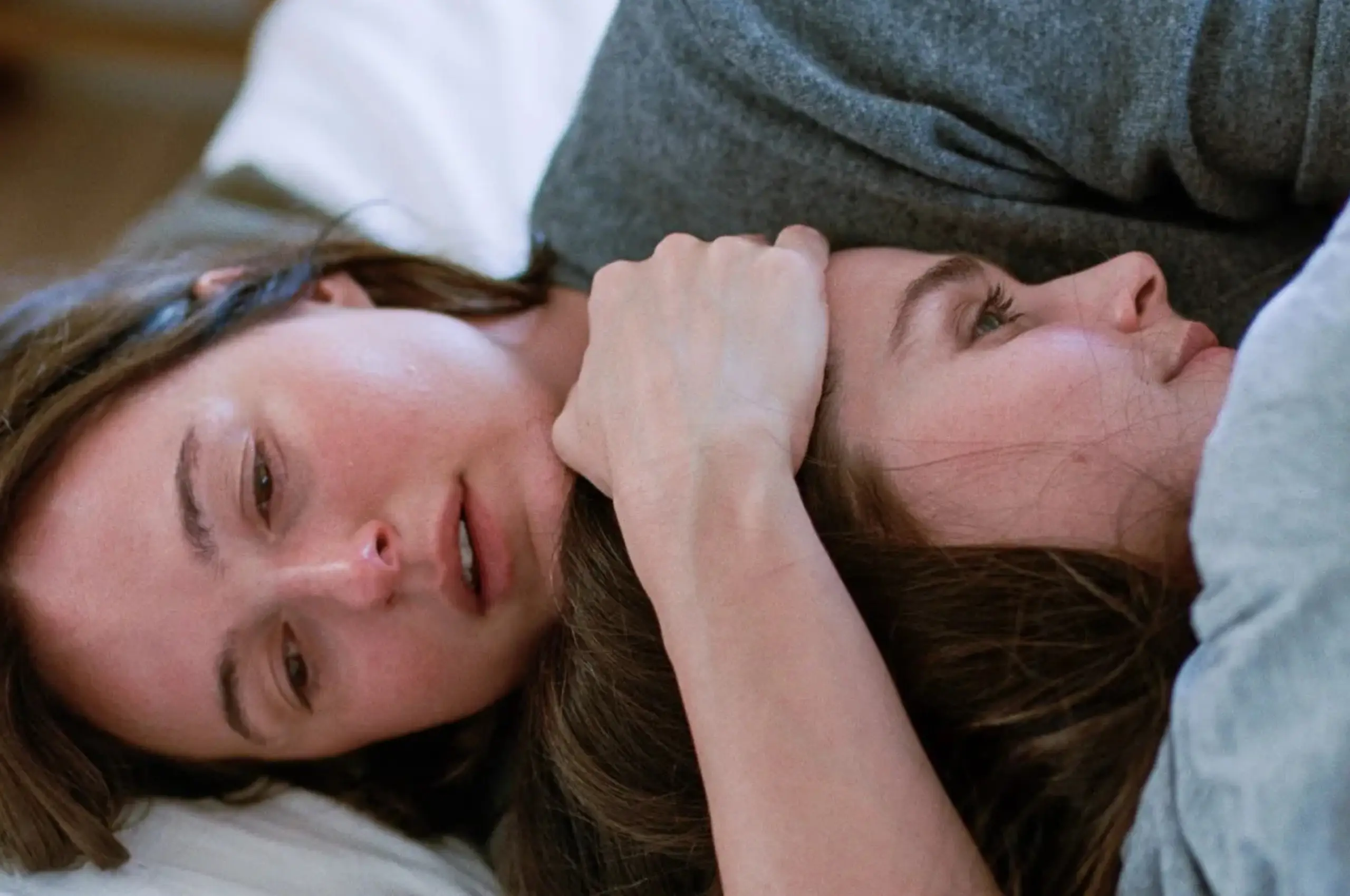
The first two scenes of Joachim Trier’s Sentimental Value contain the film in its entirety. In the prologue, a young Nora (Olivia Thompson) writes an essay imagining what their house says of the dissolution of her parents’ marriage. Hazy montages show how each brightly lit room grows darker with every loud argument. In the scene that follows, a now grown-up Nora (Renate Reinsve) has become a successful stage actress and has locked herself in her dressing room moments before her opening night. When she attempts to rip her dress off and flee, the crew intervenes. Then, as if a switch is flipped, she steps onstage and becomes Nina in The Seagull. Cut to: a standing ovation.
Nora’s volatility only begins to make sense afterwards, when we are thrown in the midst of her mother’s wake. Yet again, Nora acts: smiling for guests, chatting through her grief. Only her older sister, Agnes (Inga Ibsdotter Lilleaas, a revelation), sees through the performance. When her estranged father, the acclaimed auteur Gustav Borg (Stellan Skarsgård), suddenly arrives, their fragile equilibrium shatters. The temporary reunion stretches indefinitely when Gustav, after a 15-year hiatus, approaches Nora the next day with an offer: he has written a new film and believes only she can be the lead.
Of course, Nora refuses to even read it. Her father’s career has long depended on turning his daughters into muses, withdrawing affection once the cameras stop rolling. Their confrontation reopens old wounds — especially his absence from their childhood, their miscommunications, and his condescension towards her theater and television work. When Gustav replaces her with the young American starlet Rachel Kemp (Elle Fanning, pitch-perfect and gratingly earnest) and transforms their home into a film set, Nora is baited into rage and resentment. As fiction and reality blur, the family is forced to reckon with the shared history being unearthed by their father’s creative project.
Amid a sea of contemporary films responding to global and political emergencies, Sentimental Value feels like a quiet reprieve — a domestic chamber piece about the power of art to harm and heal. Nora is unaware of the parallels between herself and her paternal grandmother, who hung herself in their home after being imprisoned for resisting the Nazi regime, and whom Gustav’s film draws from, though he refuses to admit it. Her refusal to play this role represents a deeper discomfort with the cyclicality of her sadness and the possible inheritance of loneliness. Evasion, whether emotional, artistic, or personal, becomes the film’s central language.
Yet little of Sentimental Value lives up to the electricity of its first half hour, let alone its title. The film’s intensity evaporates quickly, its characters edging towards cliché. Too often, Trier’s writing drifts into bourgeois mumblecore, with artists debating authenticity over wine or proclaiming their genius at press junkets. At times, Sentimental Value feels trapped in its own intellectual posturing. Whatever nuance the film achieves emerges from the stunning performances at its center. Reinsve oscillates between rawness and outbursts, and between iciness and stillness. Skarsgård’s bruised, withholding presence is lightened with every public appearance. Lilleaas’ groundedness and caring stare glue whatever is left of the family. All of these cut through the bullshit and communicate entire histories even in silence. Nora’s passive-aggressive attempts to shame her father for his neglect only reveal how much they share in common. While Agnes enjoys a stable domestic life as an academic with a husband and son, Nora sleeps with her married co-star Jakob (Anders Danielsen Lie) and attempts to recover regularly from benders. Both Gustav and Nora take refuge in fiction: he writes scripts that attempt to explain the past, she performs roles that let her outrun hers. Sure, writing becomes an atlas — a way to map the exit wounds of family life. But it also becomes the most effective tool to avoid vulnerability.
As fiction and reality blur, the family is forced to reckon with the shared history being unearthed by their father’s creative project.
Despite these disappointments, there are moments of genuine insight and wonder. When Gustav gives his grandson DVDs of The Piano Teacher and Irreversible for his ninth birthday or when he tells Rachel how his mother hung herself using the stool she’s sitting on, only for her daughter to reveal that it’s from IKEA, his twisted attempts at tenderness reveal themselves. Trier draws parallels between Nora’s self-destruction and Gustav’s emotional recklessness, as both struggle to clean up after themselves. When the two sisters finally express how profoundly their parents damaged them, the tears feel earned and inevitable. Trier and co-writer Eskil Vogt (who also co-wrote The Worst Person in the World) are excellent at creating these small moments. One wishes the film had more of them, where Trier’s empathy and specificity cut through the film’s literary scaffolding. Instead, its conclusion feels manufactured from the beginning. The creative process alone cannot save the house from crumbling. In the end, Sentimental Value only partly lives up to its name.
Frequently Asked Questions
The film follows Nora (Renate Reinsve), a stage actress reconnecting with her estranged filmmaker father, Gustav (Stellan Skarsgård), after her mother’s death, when he offers her the lead role in his new film.
The film stars Renate Reinsve as Nora, Stellan Skarsgård as her father Gustav, Inga Ibsdotter Lilleaas as her sister Agnes, and Elle Fanning as actress Rachel Kemp, who replaces Nora in Gustav’s film.
Yes. “Sentimental Value,” representing Norway, won the Oscar for Best International Feature Film at the 98th Academy Awards.
The review is mixed, praising the film’s strong performances and moments of genuine insight while criticizing its later drift into “intellectual posturing” and manufactured emotional beats.
The film was directed by Joachim Trier and co-written by Trier and Eskil Vogt, who previously collaborated on “The Worst Person in the World.”
Recommended Video
- In This Article:
- November 2025 Issue
- Oscars 2026
- Sentimental Value