

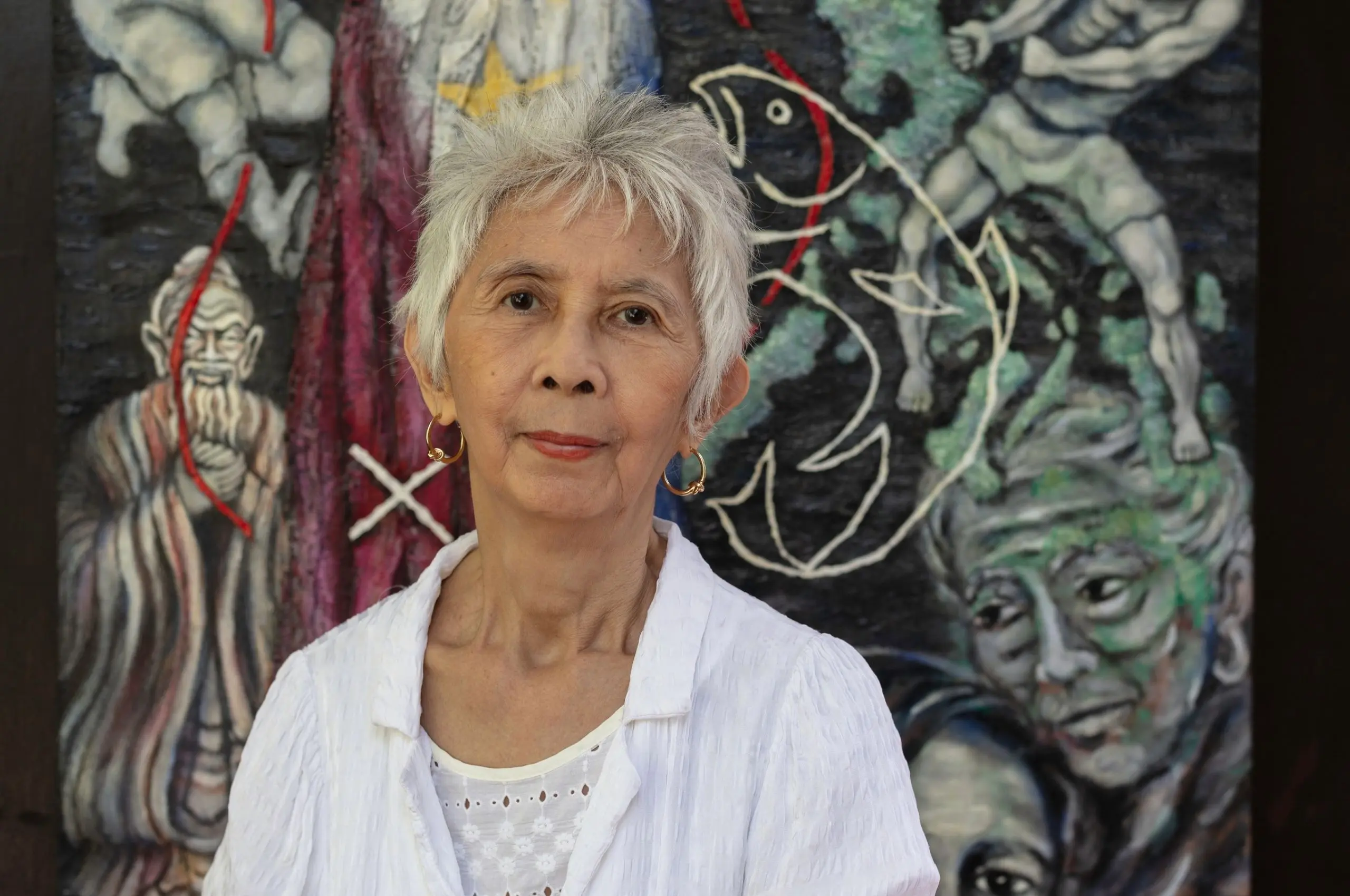
In the 54 years since the National Artists were established, no woman has ever been conferred National Artist for Visual Arts until this year. “It’s just that those in positions of power and selection are male,” Imelda Cajipe-Endaya, the first woman to receive the distinction, tells Rolling Stone Philippines. “They remember their kumpares and overlook the women who are normally isolated in their homes.”
Endaya was one of 10 individuals newly named National Artists in their respective disciplines, with her sharing the distinction with Negrense artist Nunelucio Alvarado in the field of visual arts. The announcement was made on September 9, just over a week shy of her 77th birthday.
Endaya’s art practice goes back to the 1960s, just before former President Ferdinand Marcos Sr. established what was then called the National Artist Award, and it’s in that political context — of injustice and imperialism — that her work would find meaning.
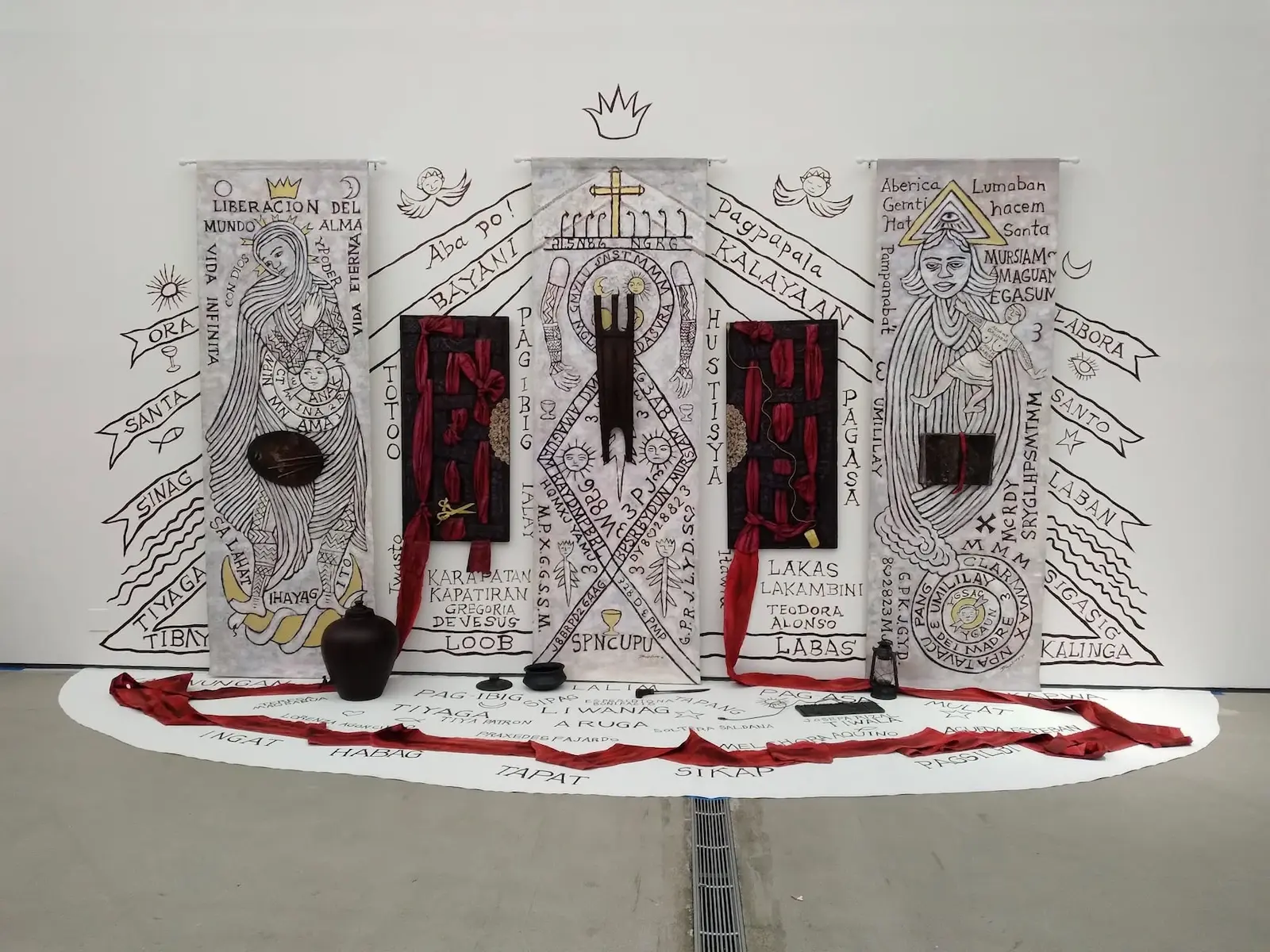
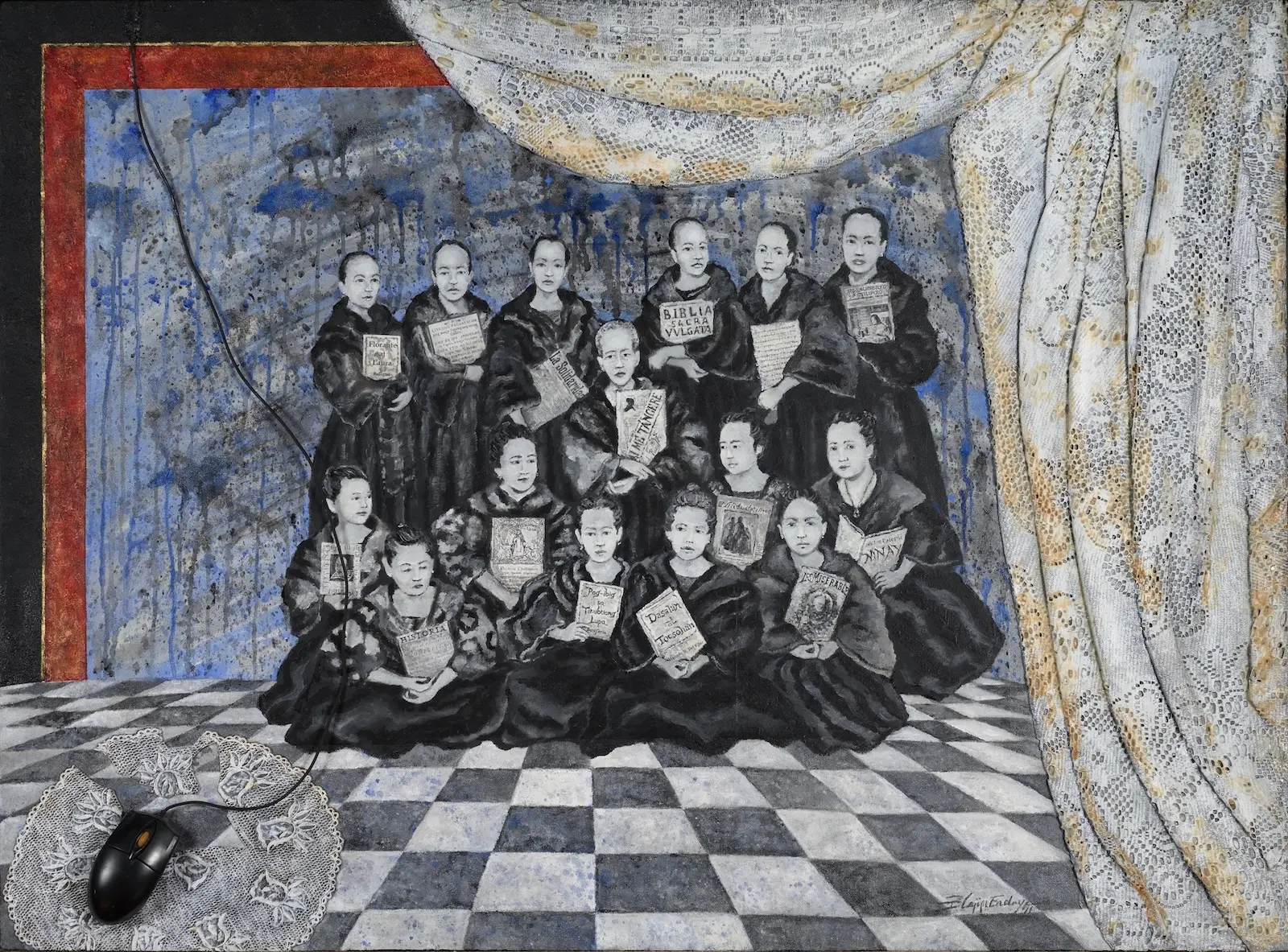
Distinctly political in content and eclectic in form, Endaya’s body of work is wide-ranging in media and material, and focused on the “multiple, complex intersections between woman and the question of nation,” as the Cultural Center of the Philippines (CCP) notes in its introduction to the 2022 retrospective Imelda Cajipe Endaya: Pagtutol at Pag-asa. The exhibition brought together over 200 archival pieces, from paintings and prints to collages and other works of mixed media.
“Why did the selectors forget Anita Magsaysay Ho, Nena Saguil, Norma Belleza? It’s just that those in positions of power and selection are male.”
The artist is celebrated not just for her artmaking but for her work in fostering dialogue about cultural production. In 1989, she co-founded KASIBULAN, a collective of women artists, and in 1996, she launched Pananaw: Philippine Journal of Visual Arts as its first editor. “I believed visual artists needed to be in dialogue, in a serious discourse about their artmaking, as well as to be self-critical,” she says when asked about what her goal was with the journal.
In her 70s, Endaya is still making art, and is grateful to be named a National Artist, late as that recognition might have come. “To keep on painting for as long as I am able to is the only way to go,” she tells us.
Here, she talks to Rolling Stone Philippines about writing about the plight of the Filipino woman, writing about art, and what she thinks about gaining recognition from an institution established by Marcos.
The Filipino woman’s experience is a big part of your practice. What is the biggest plight of the Filipino woman, in your opinion? Who or what is the biggest reason for the Filipino woman’s plight?
For my generation — I’m 77— and my mother before me, it was the isolation of women into the confines of home to serve her husband and children, first to get up and last to bed, after everyone’s needs are met. For my grandmother on my father’s side, she even had to sacrifice not being sent to school so she could serve at home and her brothers could be sent to school.
For today’s generation, the biggest plight is the double burden. A typical scene is a woman working in a factory or office, and upon reaching home, she has to do domestic duties while the husband relaxes and watches TV.
What was your goal as the first editor of Pananaw, and do you think you achieved it?
The tendency was for artists to get peeved and emotional when the pros and cons of their art were being analyzed. I believed visual artists needed to be in dialogue, in a serious discourse about their artmaking, as well as to be self-critical. Pananaw helped achieve this by bringing artists together in conferences. More artists began to write as well.
Do you think something is lacking in how we talk about art and its institutions here in the Philippines?
We had Eric Torres, Leonidas Benesa, Alice Guillermo, and Paul Zafaralla writing regular features critically in accessible, appreciative language. I miss those days of elucidated comments on art in daily printed sheets. Of course, now we have digital media, more democratic, yes. But discussions become too fluid, lacking in direction, at best random.
It is good that we have institutions like the CCP, the National Commission for Culture and the Arts, the Museum Foundation of the Philippines, the Ateneo Art Gallery, the Benilde School of Design, the Kalaw-Ledesma Foundation, and the Asia Art Archive, which organize art fora, research, documentation, and dialogues on art. Let us support and cooperate with them.
Speaking of institutions, why do you think it’s taken so long for a woman visual artist to be named a National Artist?
Why did the selectors forget Anita Magsaysay Ho, Nena Saguil, Norma Belleza? It’s just that those in positions of power and selection are male. Men are drinking buddies; their egos are large. They remember their kumpares and overlook the women who are normally isolated in their homes. The women have always been creative and imaginative but did not care much about recognition.
Does this recognition validate what you’ve been doing in KASIBULAN?
I believe so. KASIBULAN, through the years, has made women’s art more visible. And today, the gender count of artists publicly exhibiting is 50-50.
You’ve criticized the late Ferdinand Marcos Sr. in past work, like Dahil Sa Iyo Marcos and Pasyong Bayan. We also know that it was during his administration that the Order of National Artists was established. For National Artists who are also critics of the Marcos regime, is there a way to reconcile these things?
It is said that tyrants are actually afraid of artists because the latter are independent thinkers committed to truth. My work has been all about social justice and people empowerment from a woman’s viewpoint. I am committed to country and countrymen, bayan at taumbayan. And it is them, not the president, where the National Artist Awards emanate from.
What does being a National Artist mean to you? At your age, what does it mean for your practice now?
I never dreamed of this honor and its benefits. I am happy and thankful, though humbled that this award is being given to me. To keep on painting for as long as I am able to is the only way to go.
Frequently Asked Questions
She is a Filipino visual artist whose practice dates back to the 1960s. Her work centers on the intersections between women’s experiences and questions of nation, spanning painting, printmaking, collage, and mixed media.
She is the first woman to be conferred a National Artist for Visual Arts in the award’s history, which was established in 1972.
KASIBULAN is a collective of women artists that Cajipe-Endaya co-founded in 1989 to make women’s art more visible in the Philippines.
Pananaw: Philippine Journal of Visual Arts was a publication Cajipe-Endaya co-founded and launched in 1996, serving as its first editor. It was created to foster critical dialogue and discourse among visual artists.
She says the honor comes from the country and its people, not the president, and notes that her work has always centered on social justice and empowerment from a woman’s perspective.
Recommended Video