


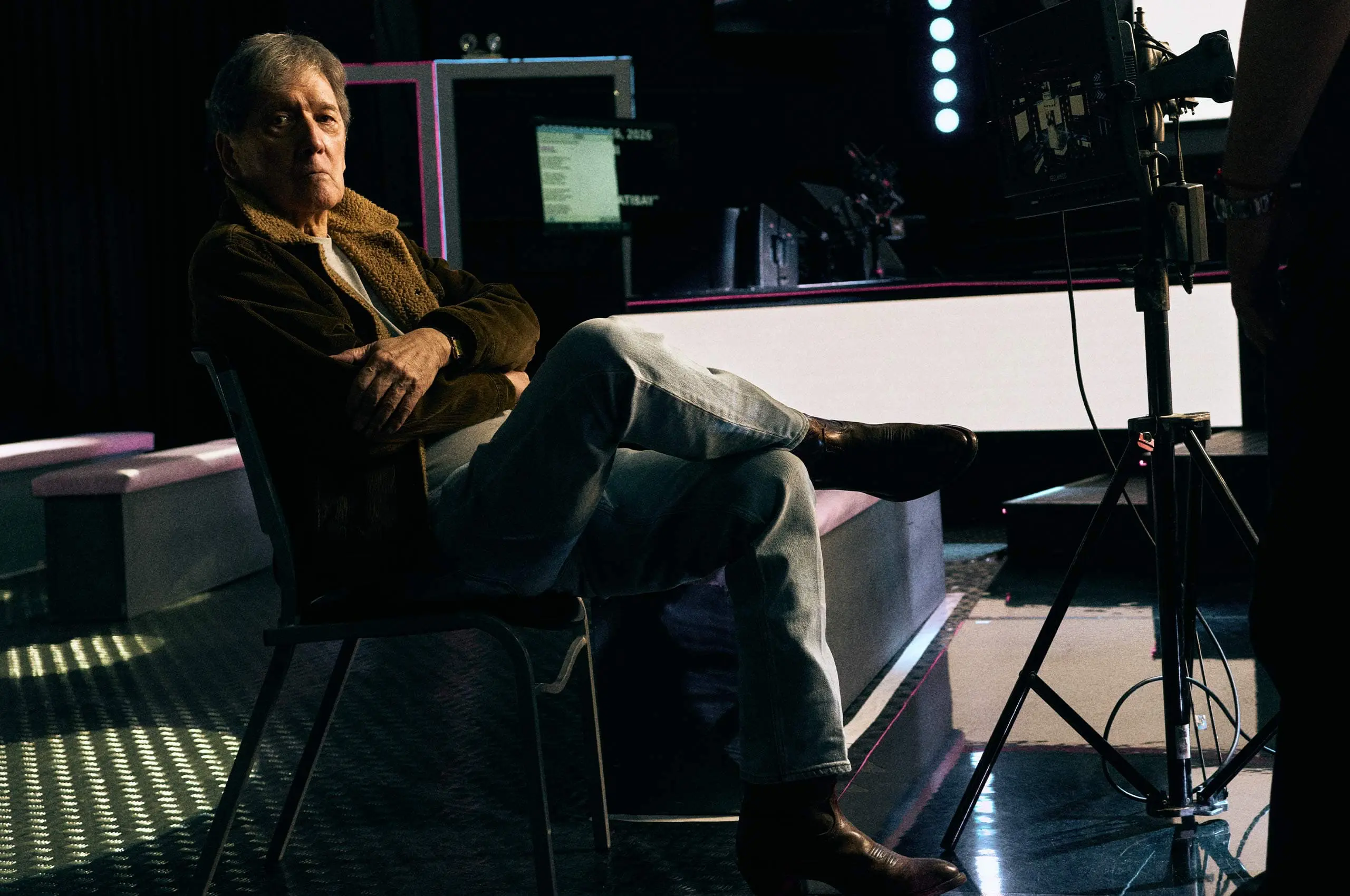
For decades, so many have tried to understand the mind of Johnny Manahan. From aspiring celebrities to the country’s best contemporary artists, a lot of the discourse focuses on reconciling his two sides: that of being one of the pillars of today’s entertainment industry — widely known as the co-founder and original patriarch of Star Magic, ABS-CBN’s talent management division, who gave us some of the biggest stars: from Piolo Pascual, John Lloyd Cruz, Diether Ocampo, Bea Alonzo, Angelica Panganiban, and more — and the other of being one of the most highly regarded conceptual artists the country has ever seen. Some argue that his time in show business can be seen as one big conceptual piece, decades in the making just waiting to be finished. While some forget he was ever an artist altogether.
Long before all the acclaim, Manahan’s life was already the stuff of cinema, traveling the world and meeting its best creative minds. At one point, during a short stint in Italy in his younger days, he hung around with famed sculptor and politician, Tomas Fernandez Concepcion, opera singer Leontyne Price, and the Italian director Federico Fellini. “That was also my introduction to movies,” he says.
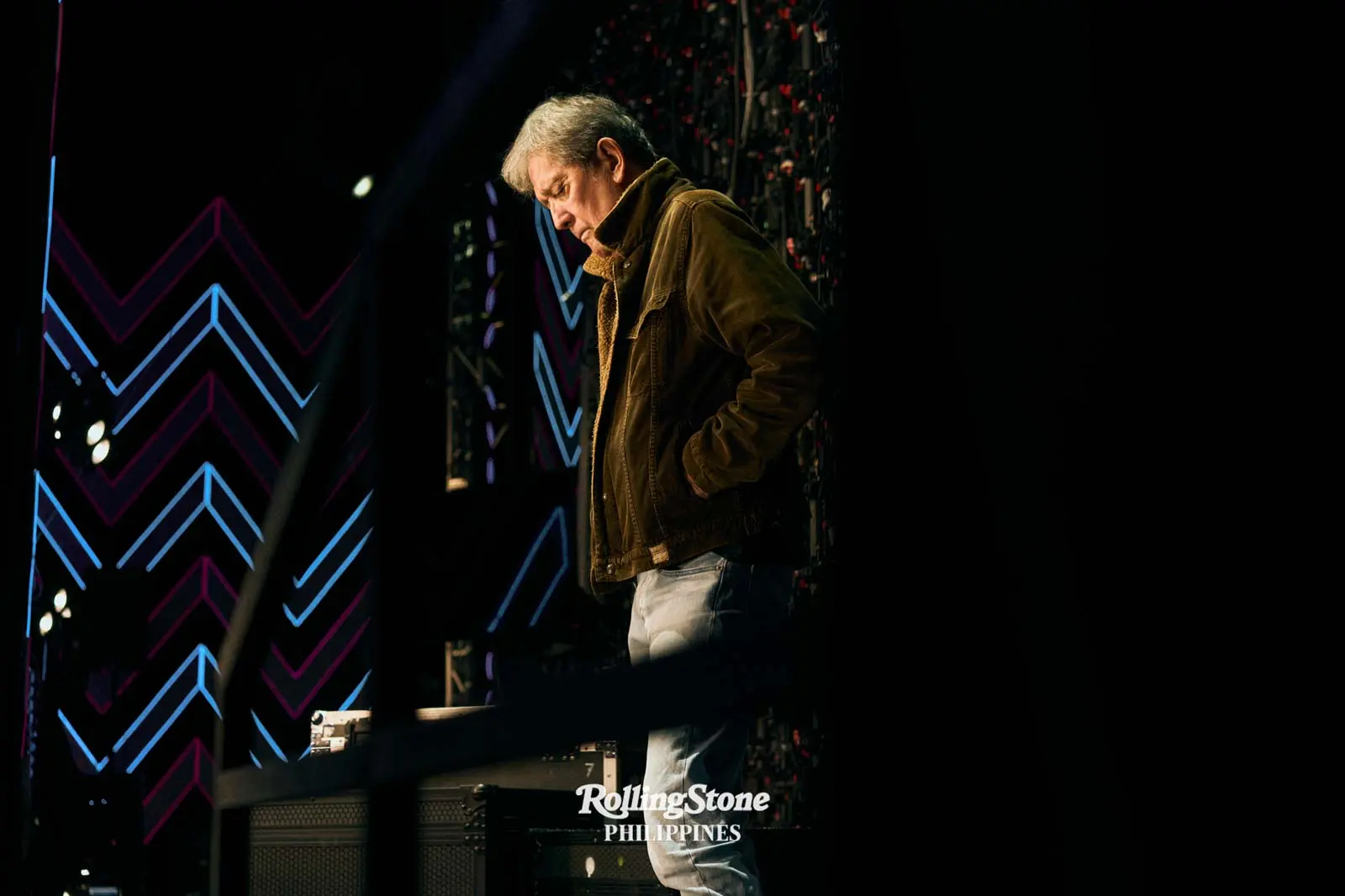
Since then, Manahan has been synonymous with ABS-CBN, not just for heading Star Magic but for also directing some of its most successful shows in Palibhasa Lalake, Home Along Da Riles, and the Sunday musical variety program ASAP. He then went on to work at its rival network GMA (from 2021 to 2025), something he had already done long before he first joined the Lopez family-owned franchise.
Today, Manahan works at TV5, where he leads its talent development and management division, Star Worx. When he signed on to take this new role, Manahan told reporters he joined TV5 because he wanted to work with “nice people.”
“Ang hirap kasi kapag ang mga kasama mo, masusungit, ang hirap magtrabaho,” Manahan said at his 2025 contract signing.
Not long after returning to the Philippines in 1969, Manahan found himself at the center of the country’s emerging contemporary art scene. Alongside artists such as Joe Bautista, Danilo Dalena, Rodolfo Gan, and Justin Nuyda, Manahan was part of the second batch of the Cultural Center of the Philippines (CCP)’s Thirteen Artists Award in 1972, which was curated by Ray Albano, who’s been credited as one of the main proponents of more experimental works in the CCP’s visual arts program.
“Sinali [ako] dun sa Thirteen Artists, and sabi ko, ‘why not?’” Part of being named one of the artists in the bi-annual affair was to mount an exhibit. “Sabi ko, sige maghahanap ako ng mga bato and then I brought the stones to the CCP main gallery,” recalls Manahan. “Takot nga nila e, sabi nila ‘anlalaki niyan a.’ Mga Piedra china e, ganun kalaki. So that was the stuff I did. Later on, naging reference [siya] sa mga acting directions or dance directions. Sabi ni Rolando Tinio, ‘I want you to lie on the floor like Johnny Manahan’s stones.’”
When asked what attracted him to conceptual artConceptual ArtConceptual art refers to work prioritizing the idea or concept behind a piece over its traditional aesthetic execution or technical craftsmanship and visual polish. Philippine conceptual artists increasingly use theGo to Conceptual Art Glossary, Manahan laughs and simply says “it was easy to do.”
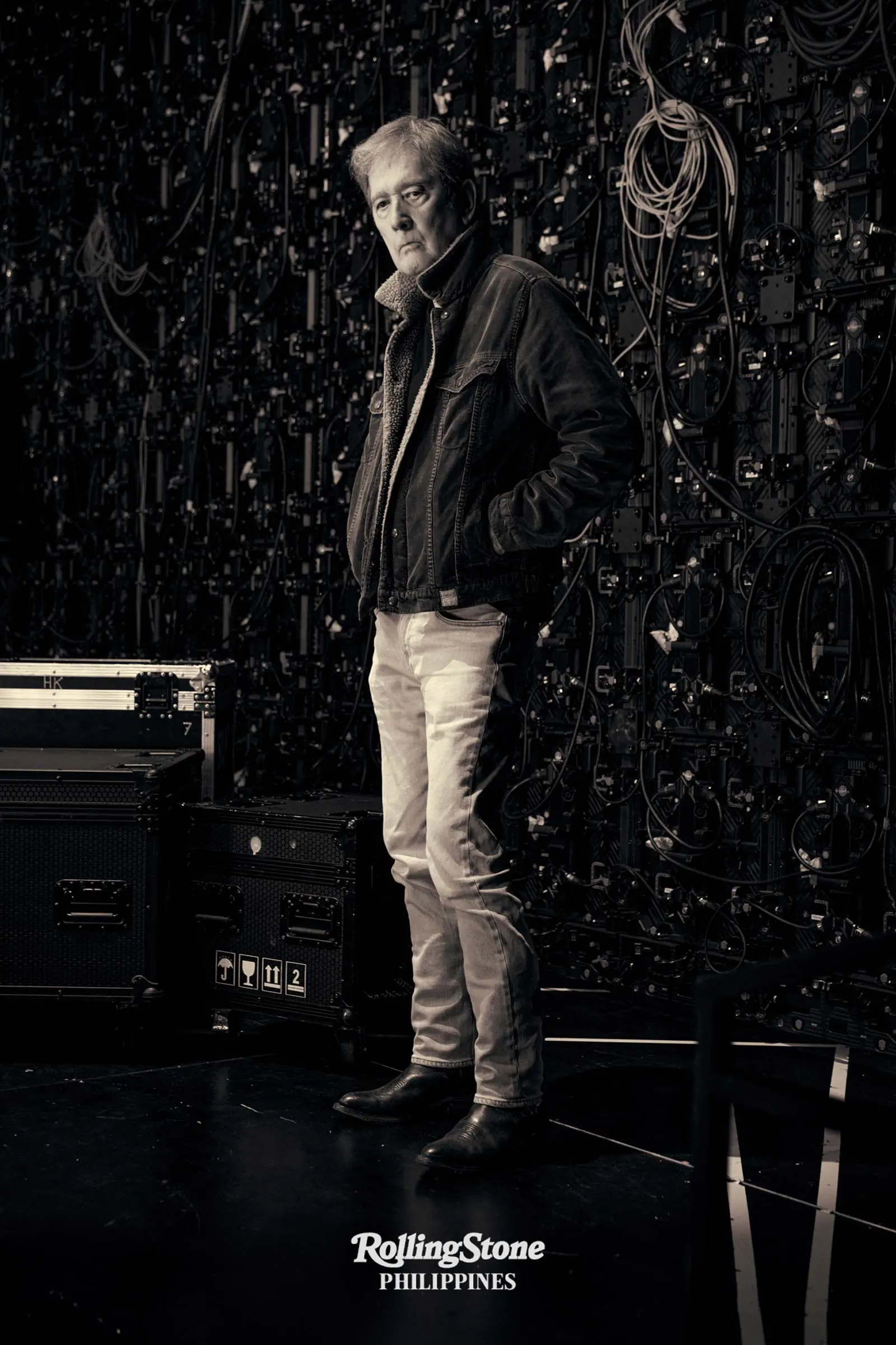
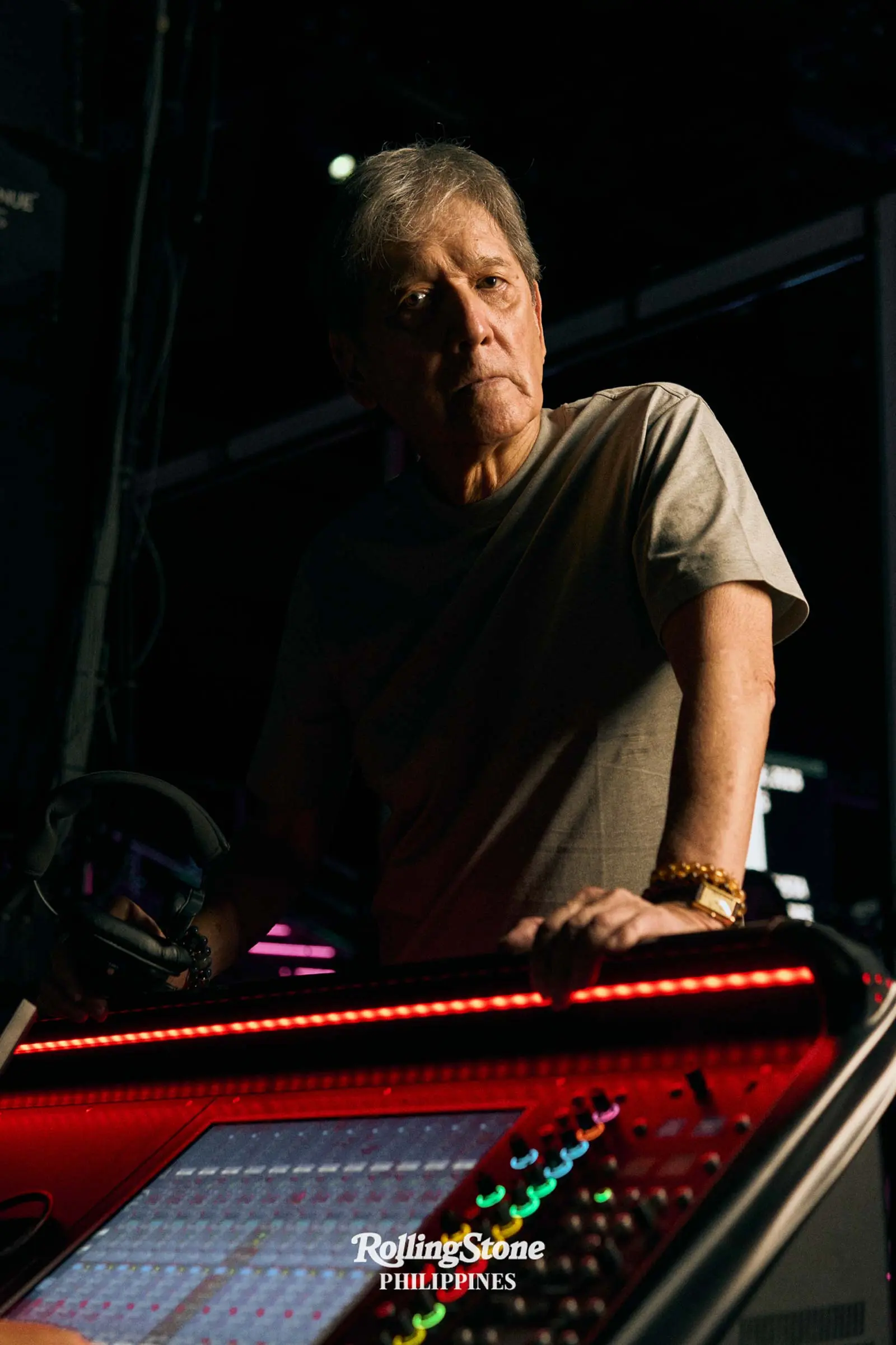
“Because if you didn’t have any money for canvases and stuff like that, you’d use your brain. You say, ‘I’ll just do this installation’ and hopefully, it has some sort of poetry or some sort of magic that’s good for the realm of fickle art.”
Aside from scattering rocks all over exhibition floors, Mahanan also became known for popularizing video art in the Philippines, if not pioneering it. Years ahead of MTV and music videos becoming part of mainstream pop culture, Manahan was one of the first who introduced the concept to the Philippines. He recalls one in particular he worked on with the designer, Helena Guerrero, who he describes as “ahead of her time,” involving models and chicken coops. “We would shoot outside in Caliraya. We’d do crazy things like kinukulong namin ‘yung mga models niya sa hawla ng manok. Mga model na 5’8”, 5’9” sa hawla, if you can imagine stuff like that. Very cruel pero maganda.”
Manahan’s work has gone beyond the Philippines, particularly his groundbreaking video art installation “Choose” reaching the Paris Biennale in 1982. He received a special citation for it. When the piece was moved permanently to the National Gallery of Singapore in 2016, it was noted as “the first video work in the region with documented multi-channel intent and the first to challenge the viewers’ capacity to give proper attention to multiple screens.” Adding, “Although the television is a medium of mass entertainment, Manahan argues that it is simultaneously an intimate object whose content can be consumed privately. The choice that the television affords — in where, when and how a viewer can watch its content and what content they wish to consume — gives it a magnetic, even magical, appeal.”

His love for the many mediums and possibilities of art eventually led him to working with dancer, choreographer, National Artist, and founder of Ballet Philippines, Alice Reyes. At that time, both were emerging artists who found common ground in wanting to create and push what Philippine performance art could be. “They would use me for their sets, their dances,” Manahan says. “Libre e, so I could work with very cheap materials and come up with something for their dances.” Manahan would do that for many years and would grow to love dance more and more. “Tambay ako sa mga dance classes… I’d stay there two or three hours because I loved it. I loved seeing the dancers, see how they move.”
That inspired Manahan to co-found the contemporary dance group, Hotlegs. “There was some sort of dissatisfaction with the dancers of that day. They were good, but I wanted more,” says Manahan. “Being involved with Hotlegs, I could tell them what I wanted, and worked with them for many years in all sorts of shows with Basil Valdez, and Zsazsa Padilla, Martin Nievera. We would do music videos with them, and we would introduce that sort of thing, that non-traditional way of doing a dance.”
With Hotlegs, Manahan would be able to do experimental productions like one involving the dancers carting around 10 fire extinguishers in lieu of a smoke machine. He loved reimagining what was seen as very traditional or strict to create something new. “Binabali namin,” he says. “‘Baliin mo!’ ‘Yon ang sinabi ko. I wouldn’t like the traditional stuff, so sabi ko, ‘Sige, baliin mo nang konti,’ and it would come out more raw. I like raw, and from the gut.”

Perhaps it’s that same rawness that attracted him to meeting and learning from the likes of Lino Brocka and Ishmael Bernal. He had met them long before he was fully immersed in show business, thanks to his mom, Elvira Manahan, who had worked with some of the most iconic directors this country has ever had. “Sina Lino and Ishmael, they would go to my mom’s parties or work together.” Her mother was a fixture both in and outside the industry. She would star in Bernal’s Pagdating sa Dulo and Brocka’s Burgis, hang out with the likes of Nestor Torre and Ben Cervantes, and along the way, Mana- han would himself pick up what he could from them. He’d be on set and hear stories so few rarely get to hear. “Si Ishmael sabi niya, ‘Kaya ko ipag-akting ang bato pero si so-and-so ‘di ko kaya.’ Nag-give up siya sa artistang ‘yon,” he recalls. “With Lino, I could see the power of his films using, sometimes, non-actors. Sabi ko ‘yon ang tama. You don’t want the gloss. You want the raw, the rawness of life. ‘Yon ‘yong natutuhan ko sa kanya: Take out the gloss, and you’ll see something else.”
This is an excerpt from the Rolling Stone Philippines Hall of Fame Issue, now available for pre-order on Sari-sari Shopping and in major newsstands soon.
Get digital access to the latest issue here.
Stylist SHARK TANAEL of QURATOR STUDIO, assisted by JIA TORRATO
Grooming DOROTHY MAMALIO
Hairstylist RHOY CERVANTES
Mr. M wears Carolina Herrera jacket
Recommended Video