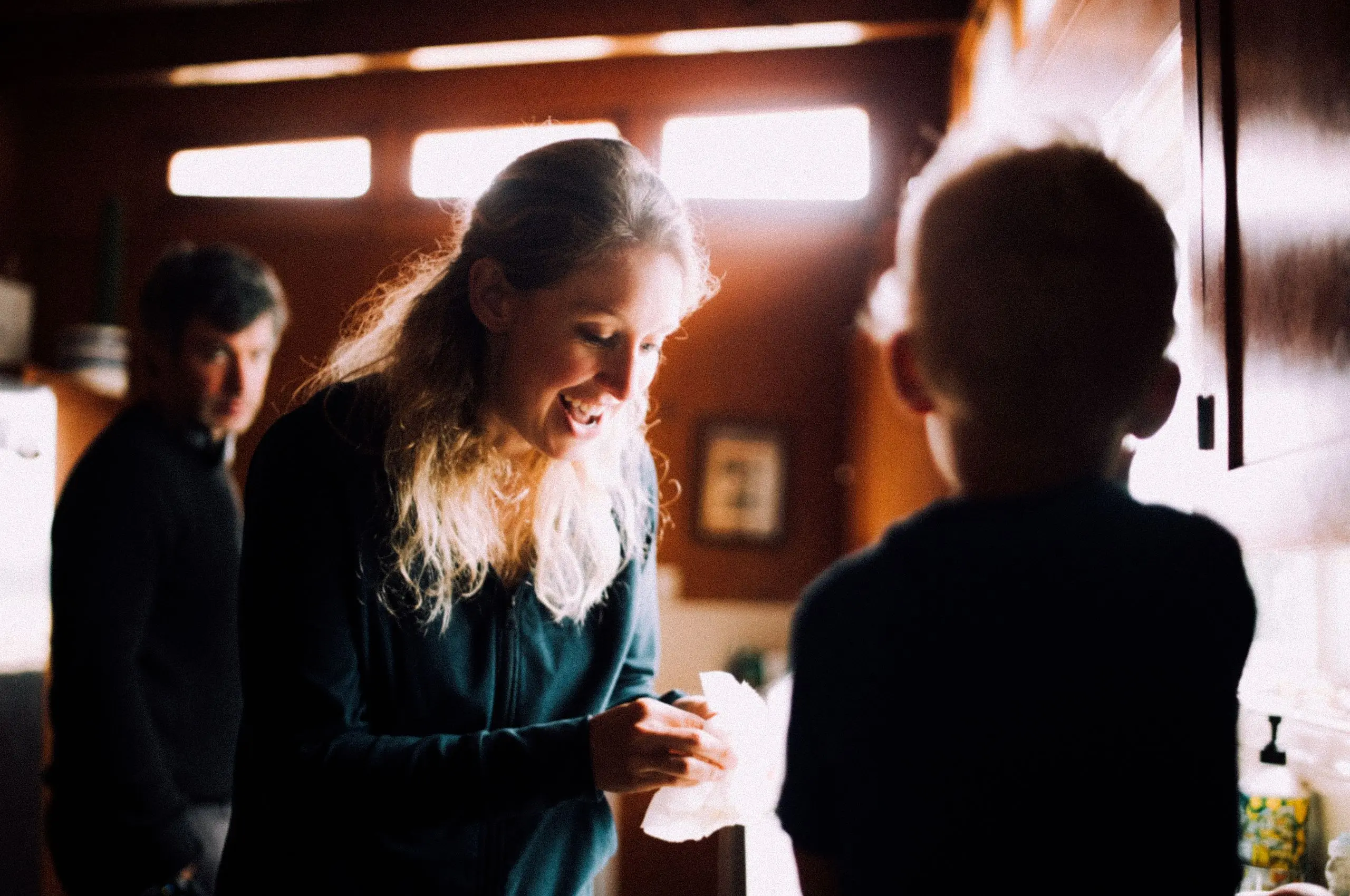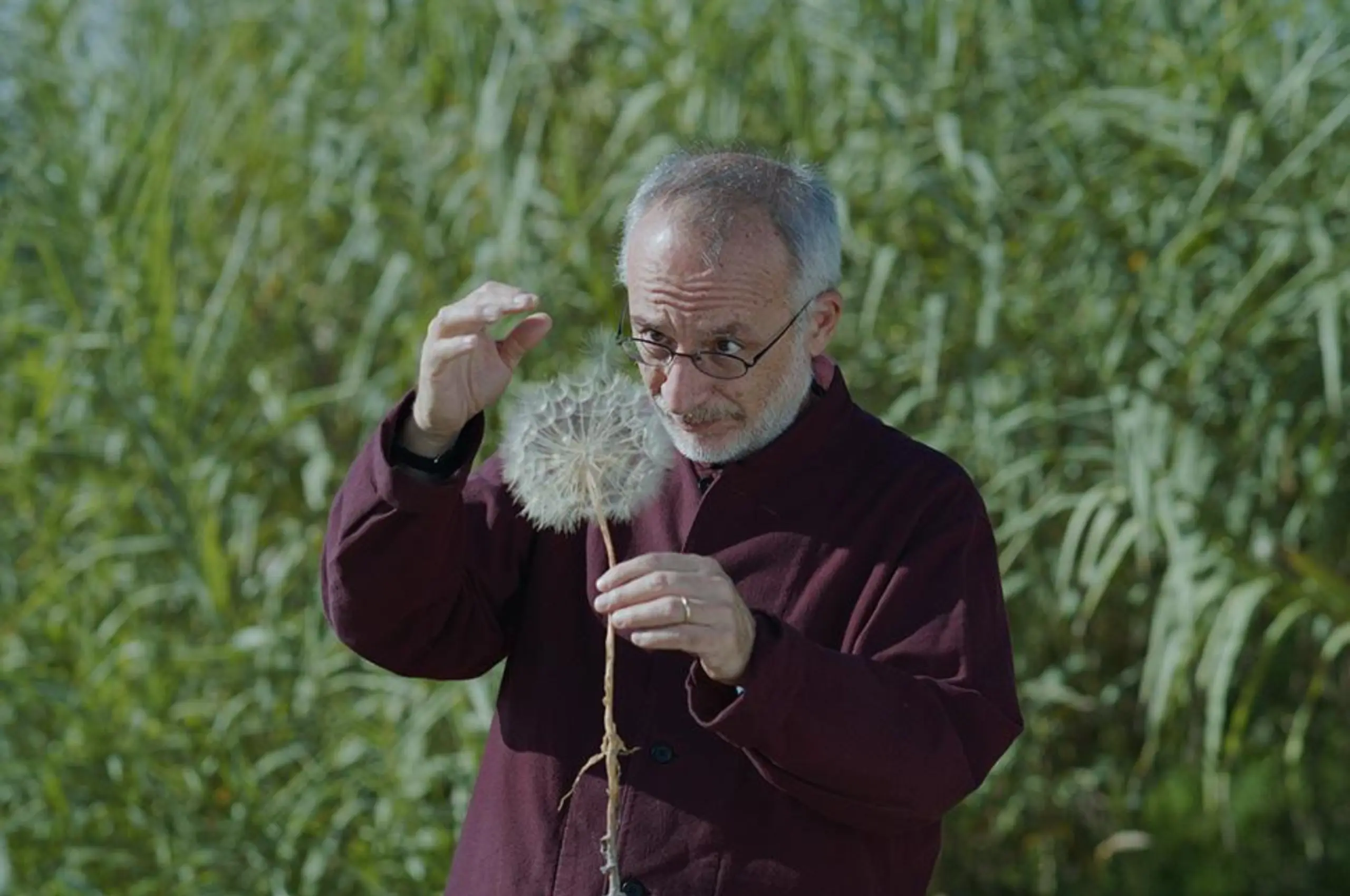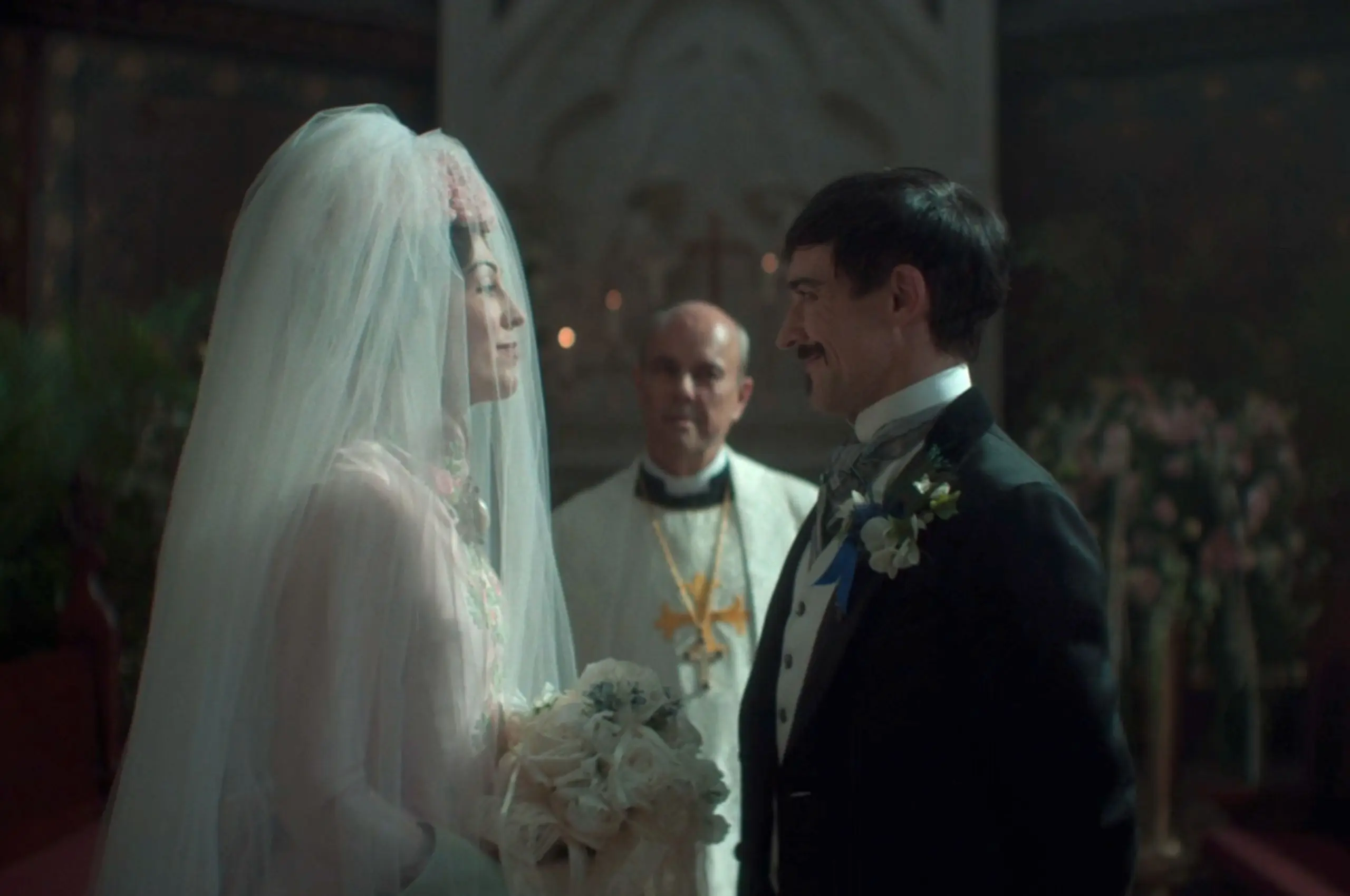


Over Zoom with John Torres, I begin to feel slightly disoriented as his camera’s auto face tracking featureFeatureA guest appearance by another artist on a song, usually credited as featuring or ft. in the title. Features introduce each performer to the other's fans, and they can sparkGo to Feature Glossary imposes its will barely halfway through our interview. Every slow pan-in on every head tilt or a sudden zoom-out at once draws me towards and pulls me away from the filmmaker. “Sorry, hindi ko alam kung paano alisin ito,” says Torres. “Sana hindi ka ma-distract.” The sensation, though, pales in comparison to the vertiginous ethos of his latest and first real-deal narrative feature, The Remotes, now touring the festival circuit after its world premiere at the Toronto International Film Festival (TIFF).
A possession movie of sorts, the story finds Detective Mijares, played by Alchris Galura, on a circuitous hunt for forces responsible for a series of strange automobile crashes on the outskirts of Manila, one of which took the life of his wife a year earlier. The investigation begins with a quasi-hypnotic navigation app that takes control of victims’ minds and motor functions via voice commands, until the film eventually muddies the trail to explore sinister hauntings of the soul driven by delirious reveries and overlapping voiceovers. The many swerves Torres takes visually and aurally only heighten the beguiling powers of the speculative tech-noir, akin to the allure of making out faces behind the visors of speeding riders from afar.
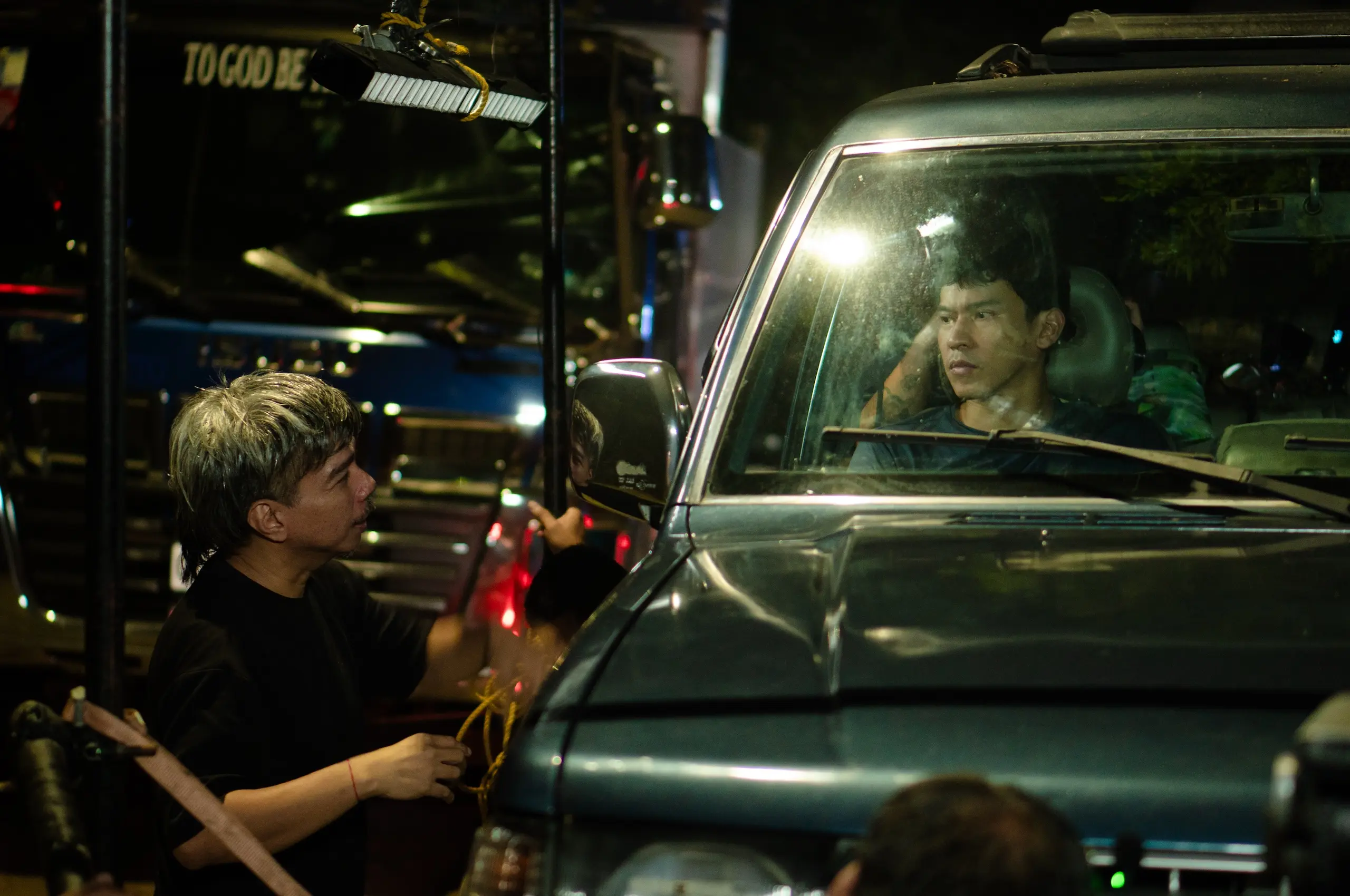
Pieced together over several years and fragmented into four chapters, The Remotes fundamentally riffs on the premise of Torres’ 2023 hybrid sci-fi drama Room in a Crowd, which doubles as a proof of concept that features what would later become the second canto of the 2026 title, and, in turn, plays as an expansion of the director’s 2019 short We Still Have to Close Our Eyes, which fashions behind-the-scenes footage from the film sets of such filmmakers as Lav Diaz and Erik Matti into a sci-fi narrative about insidious, human-controlling tech.
While the long-gestating work sees Torres shifting gears as a filmmaker, working with a full-scale set, a conventional script, and big-name actors, including Gabby Padilla and Enchong Dee, it still somehow retains the Torres of 2006’s Todo Todo Teros and the paranoia and poetry built into his plunderoptic sensibility. In the diaristic narration, for one, the director’s voice stands in for that of Mijares. The film, says Torres, is a response both to the voice of his mother, who passed during the first wave of the Covid-19 pandemic, without seeing the “real film” she would often ask her son to make, and to the voices keeping the country in a tight grip, though The Remotes is less explicit in its evocation of the political darkness under Duterte and Marcos than Room in a Crowd was. And yet, within the movie’s vaporous shadows and looping logic, that frenzied spirit continues to linger and swell, spurring several characters on to the pleasure of losing control.
“The experience of our lockdown heightened the awareness of the power of sound that travels, the imagination of what we don’t see, the yearning of the voice to travel and be heard by the person you love,” explains Torres. “It’s also about our own imagination into the voices of our country and how the larger population is being controlled, and how we are all grieving. And this voice can be authoritative and violent and can take us away anytime. Why do we seek to be controlled?”
Back at his Evanston home in Illinois after the TIFF premiere and ahead of QCinema, where The Remotes will screen next, Torres and I sit down for a lengthy video chat. Here, he talks about grief, parenthood, and flouting the primacy of the image.
The following has been edited for brevity and clarity.
Any initial reactions to the film that seemed wild or least surprising to you after the premiere at TIFF?
Mahaba kasi siya. It’s two and a half hours long, and it’s not the most simple or straightforward thing that you can watch. I was surprised about how engaged the people were and how very open [they were] about not understanding fully but also having to acknowledge that there’s something there that stays with them, which is the most, I would say, fulfilling part about it. I’ve been making films and then trying to take steps to kind of see the potential of how cinema can unfold, and what feeling of time and space can be evoked not only by the combination of image and sound but also by time unfolding. So, rhythm and the mystery of this combination unfolding through time. That’s what I’ve been wanting to explore more.
I went into film or cinema having had to learn music first, with a self-taught knowledge of the guitar, but having to realize that a different art form — in this case, music — can transport me to places just by how sound can be heard and how I can make rhythms. So sometimes it’s like daydreaming or really lulling myself to sleep. I take that into filmmaking because we’re often too focused on what we see or what we hear. Hindi masyado nabibigyan ng importansya ‘yong beats and how we can piece together fragments, even scenes that can be tangential or that can be very much put together beside each other in a very meaningful way and have a swelling of a feeling. How can we reach emotions or an experience of an emotion or memory through this? And how can we express this? How can they express this or acknowledge this without using words? And can this be communicated from one to the other beyond words? That’s the mystery and allure of film to me.
I think that’s also the primary draw of the film. It’s really appealing in a way that is also unnerving. It evokes this sort of dreamy but also eerie atmosphere. I have more questions about that later on. But I want to sort of start with the context about your life abroad. I know you’ve been living in Illinois for about a year now. What is it like over there, and what made you decide to emigrate?
It’s a practical consideration to be with family. My wife got invited to participate in an MFA program here. We devised a plan to go to Illinois. [I thought that] since mayroon na akong The Remotes, which was already part of the QCinema Project Market (QPM) and got a grant to make it, perhaps it would be prudent to schedule the shoot earlier so that before we leave, we already have all the material, and take the material to Evanston, where I will have, presumably, at that time, so much time on my own.
Being an editor for two decades, making my own films, I think this is the perfect setup. So we’ve been here for a year already. Thankfully, I was able to spend a lot of time with my kids and with the film and not having to be rushed. At the same time, to have, I would say, a good distance from the Philippines, which I need from the darkness there — but also coming here to another kind of darkness, which is familiar sadly, which might have prepared me also to be less agitated or less unsettled, although unsettling pa rin ‘yong ibang pangyayari dito because of Trump, diyan naman because of Marcos and Duterte. Ibang klaseng danger but may ibang klaseng calm that I already learned, which is kind of not so nice to know. I guess it was also practical. I insulated myself from the dangers of my immediate surroundings here outside by staying in the room and just working while waiting for the kids and for Shireen to be back.
I’d like to untangle that a bit. Of course, we often hear a lot of stories of how having a family of your own and raising kids change you as a person. Would you say the same, and how does being an artist fit into that equation?
Yeah, definitely. Very much. I would think that this is already the start of my turn artistically to kind of embrace and even integrate and declare that I’m an artist/parent, although family life has always been put to the fore even in my documentaryDocumentaryA nonfiction film that explores real people, events, or issues, using interviews, archival material, and observation to tell its story. Documentaries can inform, challenge, and move audiences, and Philippine filmmakersGo to Documentary Glossary and hybrid films, having to make a film about my father and a short that I made just during the pandemic where I asked, “How can I still make films while being present to family?” which is, I think, the crucial thing: “How can I be present to both?”
Two years before the pandemic happened, we had our five-month-old daughter, our first child. And I guess it prepared me for a confinement of space. But now, given parenthood, the cycles of time change. I was thinking, ayaw ko kasing mag-stop from any of them, parent or artist. So I guess ang gagawin ko na lang ay pupunta ako sa labas. Mag-do-document ako ng mga shoot ng iba. Kina Lav Diaz, kina Erik Matti, kina Dodo Dayao. Mag-do-document ng peripheral spaces to hopefully make a fiction film, since I’ve been doing hybrid documentaries or hybrid fiction films naman. Paano kaya kung i-frame ko ‘yong mga eksena bilang eksenang “pampelikula”? This “pampelikula” kasi harkens back to my mother’s wish for me to make a “real film,” which is part of the central message of my pitch at the QPM. This is my first real film. Kasi ang first real film namin talaga, which we shared in the 1990s and 2000s, ay mainstreamMainstreamThe ideas, styles, and works that reach the widest audience and dominate popular attention, such as radio hits and blockbuster films. The word is often set against indie or underground,Go to Mainstream Glossary films, mga rom-coms. Ibig sabihin, at least naman may artista at may script at may kuwento. So I dedicate this film to my mom.
I would go to the shoots, and I would document, but not just as a straightforward thing. I would frame out the lights and the mechanisms of production and recontextualize them into separate scenes of fiction films. And if I can collect a lot of them over the course of two years, baka magkakaroon ng kuwento, alam mo ‘yon? Then the pandemic came, and hindi na ako makakabisita ulit. So why not try to edit an output out of it?
Anyway, during the pandemic, nagkaroon ng invitation sa FDCP (Film Development Council of the Philippines) to pitch projects sa Cannes Docs. I pitched this as a hybrid thing, as a full feature. But then I wanted to edit it, and sure enough, after a year, I edited an 11-minute short called We Still Have to Close Our Eyes, which was shown at Cinéma du Réel and TIFF Wavelengths. The Remotes is already kind of taking off from the short in a way that it’s no longer a documentary. I took the premise of the film, which talks about people on an island being controlled by a voice, from the short.
How did I get to start making The Remotes? It was in 2022 when I got a commission from Singapore International FestivalFestivalA multi-act music event, often held over several days, where many artists perform across different stages. Festivals combine live music, food, art, and community, and they give audiences a chanceGo to Festival Glossary of the Arts (SIFA). At that time, nag-open up na ‘yong production spaces sa atin. I shifted my approach. Gagawa na lang ako ng “totoong pelikula” kasi baka mas madali ‘yon kung may script at kung may artista. So sa SIFA, I was commissioned to do a film plus performance kasi may performance aspect dapat ‘yon. Ang ginawa ko, I gave them the option that this [will be a] film and performance but I also asked to expand it later on, after the festival. Para maging feature-length.
And true enough, it gave me time to shoot the first part: a 40-minute edit that comprises the whole of Act 2 with some edits. So that was shot in 2023 or 2022. From then, I wrote the rest with Dodo and Sherad Anthony Sanchez. I planned to pitch it maybe as proof of concept, and see how things go. Ang nangyari, three years pa in the making. I pitched it to QPM and Create PH, and I got a grant from Purin [Film Fund] and so on and so forth.
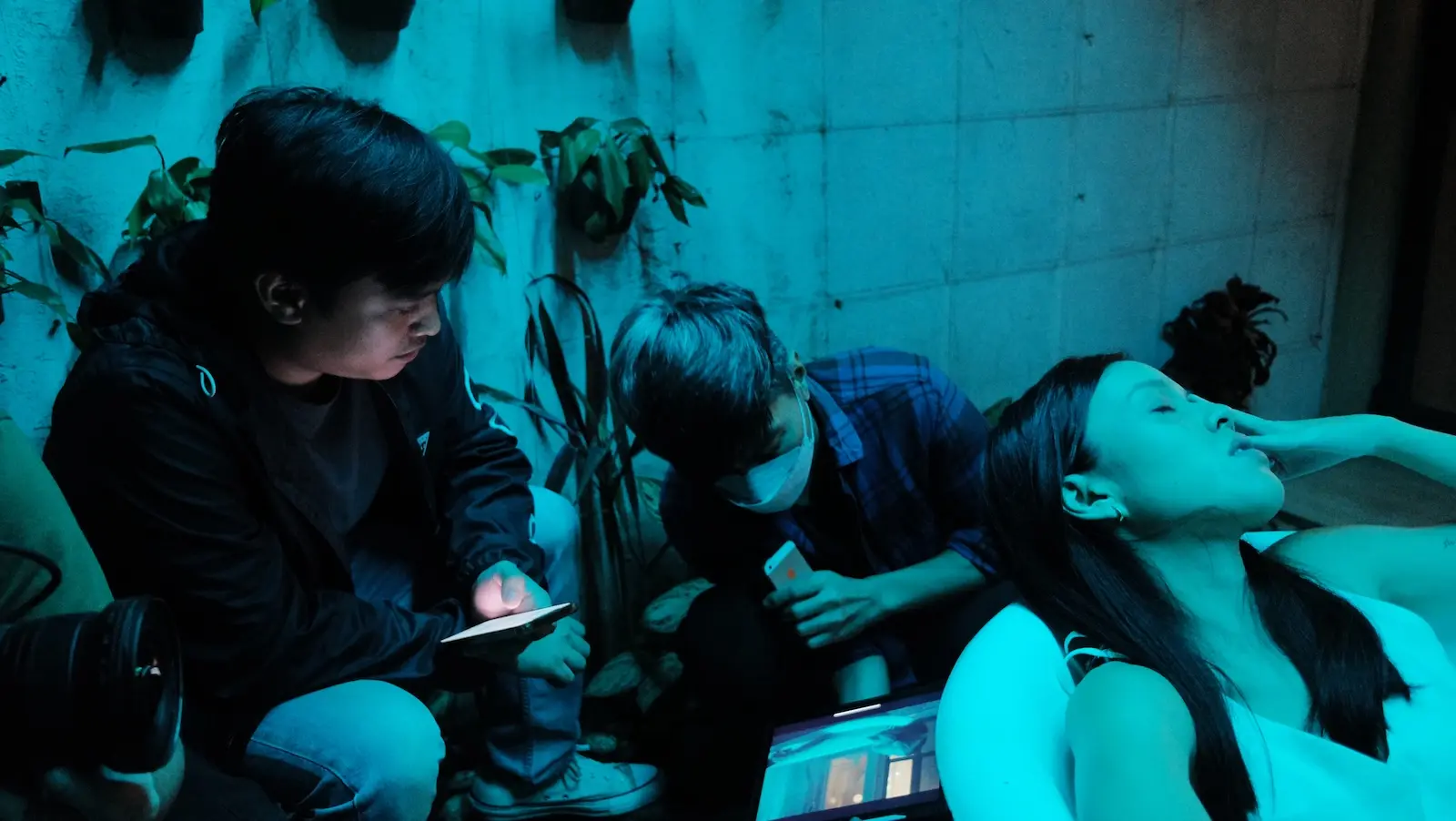
Nagkaroon ako ng artista noon sa short. Andoon na si Enchong Dee, Gabby Padilla, at Alchris Galura, na ibang-iba ang hitsura noong 2022, which is Act 2, which is basically a flashback to the year before the whole story. We had to integrate all the changes in the body and the faces, the appearance, and even the way they move as actors into the story. Which is what I love about the process because it’s very natural. So what we have is set in the past. How do we continue it? Dahil biglang may drastic na weight loss si Alchris, I thought it’s no use editing in new footage around the old footage because definitely it won’t work continuity-wise. ‘Yong second leg kasi, which is Acts 1, 3, and 4, was shot before we left a year ago. So 2025 lang siya. Three years din nag-gestate ‘yong script.
You mentioned co-writing with Dodo Dayao earlier, and Dodo is the kind of writer who takes his time, as was the case in Violator. Did that help, in that there was no pressure to sort of write in the mainstream parameters of writing screenplays?
That’s why we also decided not to get into international co-productions. I mean no offense to those [who partake in] international co-productions, but it’s not for everyone. And it’s also not for everyone to stay in local and very small productions, without any kind of push creatively. So I tried to self-produce so that I don’t pressure Dodo to kind of rush into things because he knows that I’m also not for that. I value space given to the artist. I’m still feeling things out sa process, and it takes time. And sure enough, even the things that I sometimes try to pursue in terms of submitting for funds, very gentle reminders lang siya kay Dodo. If I ask, “Anong naiisip mo?” Kapag sinabi niyang “Hindi ko pa nauupuan,” I respect that. I’m happy about that actually, that we’re not that [kind of writers]. And hopefully, nag-enjoy pa rin siya sa process, although we already collaborated before with Lukas the Strange (Lukas Niño) in 2013. Let me just also add to it na ‘yong third part of the equation is Sherad Sanchez, who is kind of our guide to it. I knew him as someone who has a good handle of our sensibilities and what we could do as to the potential of our cinemas.
Going back to Dodo, I feel like The Remotes splits the difference between Dodo’s Violator and Lav Diaz’s Batang West Side, whose protagonist shares the surname Mijares. I don’t know if that comes across as merely tangential or if that observation makes sense to you. But those who had seen the film would also mention David Cronenberg’s Crash as a point of reference. I don’t necessarily agree with that comparison just because the film lacks the carnality and eroticism swelling at the center of Crash, which was crucial in the examination of the relationship between flesh and machine in the film. Did you and Dodo ever consider that as a source of inspiration?
Which one?
Crash, and yeah, of course, Violator and Batang West Side.
Hindi naman talaga kami nag-discuss ng very specific influences around it. In fact, it was a dance between us. I’d tell him, “Do, ‘wag mong isipin ‘yong films ko. Isipin mo kung paano mo ikukuwento.” Alam mo ‘yon? Ayaw naming i-influence ‘yong isa’t isa sa kung ano ‘yong ginagawa namin, especially sa kanya since nag-Violator siya. In fact, we try to erase that kasi baka we could handle things around, maybe the future drafts or even later on in the production stage where I would be able to kind of have my own space to interpret the text and treat it directorially. What was kind of the prompt in terms of the overall world-building was really the short, We Still Have to Close Our Eyes. I guess kasama kasi si Dodo sa collection of those scenes, like ‘yong shooting niya sa Midnight in a Perfect World.
And the focus of this film, at least the way I see it, is how technology mediates the way we grieve. And this kind of relationship with digital systems is becoming extremely common now to a terrifying degree. People are way more willing to engage with AI-assisted therapy or resort to ChatGPT, even for the most trivial of things. Have you ever been drawn to the allure of AI while processing your own loss?
Oo naman.
But since you’re an artist, do you have this aversion to AI? Because every time I ask other artists about that, they’d say they wouldn’t want that kind of relationship with this technology. There’s that general feeling.
I do understand that pero kasi ang seductive power sa akin ng AI is language. “Wow, nakakapagsalita ka talaga? Nag-uusap talaga tayo?” Parang gano’n, apart from the tremendous amount of information, pero kung gagawin kong very practical, para kang merong kausap na hindi napapagod at pwede mo ring i-pretend na hindi siya na-o-offend, or maaalis sa memory naman kaagad ‘yan, although, at the same time, ibinibigay mo rin ‘yong sarili mo doon sa kalawakan.
Hindi nag-stop sa akin ‘yon, especially when you’re grieving, right? Especially with the devices. We’ve already talked to our devices. We’ve already had a sense that the devices kinda know us already and can predict our thoughts very personally. Dahil may kausap ako, I think of it as a researcher. I went into it thinking, “Okay, what can we do?” Something like that. And just as we’re discovering also that we can listen, we can talk, not only to one person but a multitude, or a data of everyone. In the realization of the other issues as well that that data is from other people who are not willing to actually share those things that get regurgitated and aggregated into something coherent for my needs.
I would say that it was a time that I was discovering that I could speak to another voice and I could imagine that this is a voice that can also be someone I knew. And so I was pretty much open because I felt like I’m already controlled or automated or already speaking anyway to other ghosts or hauntings. And actually feeling that it’s practical to be controlled, right? To just go through the motions. I knew it because when I was shooting during the first leg, I told my friends — because I wanted to be surrounded by voices of my friends who were familiar and I could be safe with — “Guys, I don’t even know if I want to direct this scene. I don’t know what to do.” [They’d say], “Just move. Let’s just see what happens.”
I was lucky to have Jet Leyco, the assistant director, to kind of orchestrate the scene around me. I was lucky to have Tristan Salas who was with me in Lukas the Strange, who was a very, very talented cinematographer. Of course, we prepared everything, but these are the same kind of voices who knew me and I imagined to know what I wanted, and I just felt like I wanted to just go and find the limits of where I could go and to actually be told where to go sometimes.
Are you also the kind of artist that would actually be willing to involve AI in your process or in your art? Because I know there are filmmakers who would write their screenplays and would feed it into the machine to sort of “polish” that for them.
Yeah. Hindi lang ako, kundi sina Sherad. May process din sila na very practical sa kanila ‘yong use ng AI to proofread or something. Very much open, regardless. And soon I would see, “O, sige nga, tingnan natin kung valid nga ‘yong feedback sa script na ‘to, sa draft na ‘to. Tingnan natin kung anong magagawa. O, may point nga, ano? A, parang hindi ako nag-a-agree or something.” So para talaga akong may researchers na hindi napapagod.
Pero at the end of it, you don’t rely on it, e. Sometimes you just don’t want the conversation to stop so that you move and to kind of see what you want to pursue more. So, it was clear that I don’t rely on it, but I just want someone to be there. Ang weird, ‘no? Parang fresh eyes or kind of a sense of possibilities that I didn’t see. In that sense, it’s a researcher because this big source of data has culled things that I might not have seen. It’s up to you to kind of shape things around.
But I guess, knowing what I know now, there are a lot more considerations around AI. I want a more responsible use, a more ethical use to AI. I want regulations for the government to be surrounded by those na hindi nag-re-regulate to protect corporate interests. I also think about the impact on society, like the Pax Silica project. So ang daming gano’ng nuances, ‘di ba? Saka artist rights, ‘di ba? So I’m still dealing with it, grappling with it.
And that’s kind of surprising or maybe even controversial to hear that idea of this thing that never tires because I feel like — and I don’t know if this is coming from a romanticized version of being artists or writers — the pleasure is in the struggle [to arrive at ideas].
Ang consideration ko kasi parang gigisingin ko pa ba si Sherad ulit? Si Dodo? Nahihiya yata ako.
How did Enchong enter the picture, alongside the main cast, like Alchris Galura, Gabby Padilla, and Julia Richards? Did you handpick them?
Yeah, of course. For the short film, the two sisters were important at that time. So we were casting, and I already saw Julia Richards from Presello during the pandemic. Non-actor, but I still wanted to call sana for a possible meetup over Zoom.
She’s an actual realtor, right?
Influencer siya from Presello. Ang laki ng following, grabe. Sila ‘yong may mga walkthroughs talaga. Parang kung ano ‘yong role niya sa pelikula. In fact, sobra siyang big [personality] na noong nakita siya ni Enchong, he’d say, “Kilala kita. Wow, grabe, nandito si Presello girl.” So I called her and also Gabby for the same role of this daughter of someone who just passed. Pero hindi talaga ako maka-decide noon kasi I always go by intuition and gut feel.
So silang dalawa na lang?
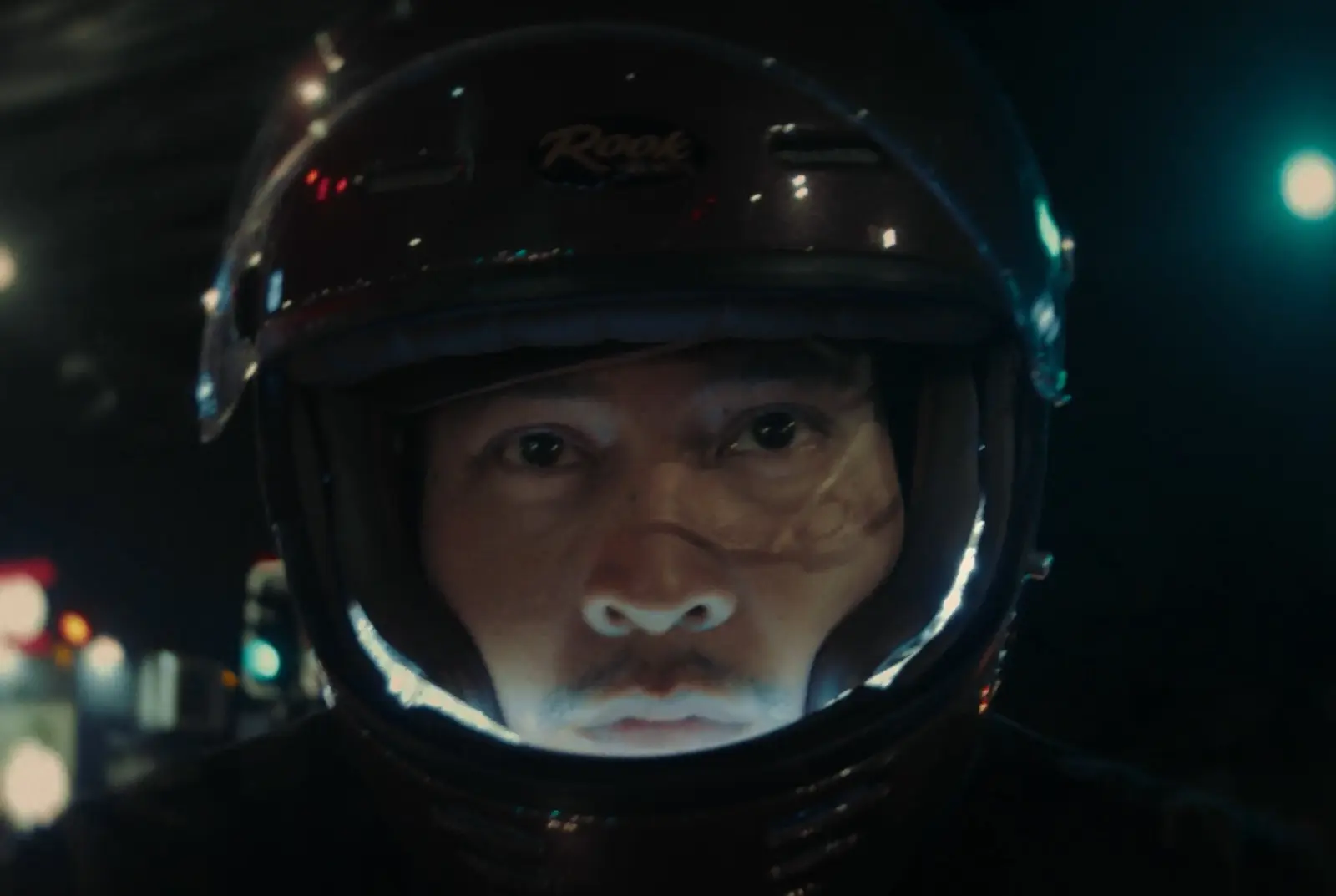
Sinabi ko kina Do at Sherad, “Sisters na lang kaya sila?” Because although Gabby had the technical thing about acting, I was also drawn to this sort of artificiality and surface-level thing that Julia Richards had. And hindi siya parang acting-acting. May certain ghostly or cultic thing siya na hindi ko pa alam na magiging gano’n. Eventually we wrote that in the short. But I needed a rider and I wanted the rider to be joining us for just even a short time kasi konti lang naman talaga ‘yong kailangang gawin, just to ride the motorcycle at magkakaroon ng aksidente. So I needed a celebrity kasi I wanted this to be a real film. May isang artista na I asked before at sinabi niya sa akin, “Political ba ‘to, John?”
Ka-batch ni Enchong?
Yeah, I think so. Contemporary niya. So sinabi ko na, “Ano ba ‘yong hindi political?” Pero of course I was kind of saying also na, “Let’s make it personal too. And this is about my mother. This is about my yearning.” But eventually hindi natuloy ‘yon. So naghanap-hanap ako ng celebrity na recognizable. Si Joel Ferrer, who made a film with Enchong, recommended him. Nag-set visit din ako kay Joel. Naki-extra-extra din ako doon kasi lagi niya akong ginagawang extra kapag bumibisita ako. Andoon si Enchong.
Anyway, nagkaroon kami ng meeting tapos nag-pitch kami online. Eventually, I guess, niligawan namin, saying in a sense, “Mabilis lang ‘to. Short film lang ‘to, proof of concept lang ‘to. Kung gagawing expanded thing, let’s see.” So, it was very practical and eventually we just got Enchong for one day. Lahat ng Act 2 na ‘yon, one day lang lahat ‘yon. Kung ma-no-notice mo, nasa isang bahay lang, interior, and road na puro mga eksenang pag-motor. Hindi siya marunong mag-motor, so dinaya na lang namin ‘yong mga eksena niya. So, yes, very much targeted siya towards intuition and feeling. And then eventually we got si Alchris because somehow nag-fit siya bilang isang mysterious na investigator na bata pa rin pero parang nakain ng sistema nang konti.
He actually reminds me of Joel Torre, even before I learned of his character’s name. Kaya ko naisip ‘yong Batang West Side. He’s just like him, that tortured and pensive character.
Yeah. At the same time kasi sa Act 2, medyo nakukuha mo pa siya kasi hindi pa namamatay ‘yong asawa niya. Mayroon pa ring hope, mayroon pa rin siyang idealism na natitira na nakikita mo rin sa kanyang partner na si Miguel de Quiros na non-actor din pero para siyang embodiment of a dynamic that is going into this darkness.
There are several moments in the movie wherein you emphasize the movement between time and space through cross-cutting or clever transitions to such an extent that the audience might doubt whether or not two actions happen or two characters exist within the same diegetic space or time. I mean sometimes it feels like going into a dream within a dream. Can you elaborate more on this and why you sort of leaned on that approach?
To evoke this dream-nightmare space heightened by the use of a voice that also narrates and serves as a guide for the audience. Gusto kong paglaruan ‘yong ini-inhabit na space. Kanina sinabi ng anak ko, “Tatay, I dreamed that I was in school, but it didn’t feel like it was school. But at the same time, I accepted that it was school when I was dreaming.” I wanted to have this same thing. Not bounded by strict continuity in terms of, like, for one day, we wear the same shirt o kung totoong tao ‘yong kinakausap ko o hindi. Tapos sino ba itong nagkukuwento bilang narrator? Nag-se-stay lang ba siya sa head natin bilang non-diegetic? O napupunta na siya sa diegetic space? And the voice also that is presented in the film can cross other spaces just by how things are delivered, things are heard. Is Donnie or the rider just a mere projection of my character, Mijares? Why did I use my own voice to stand in for Mijares’ voice as narrator?
I did not notice that.
It was me all the time. Why does the recurring thing of the clue of the blouse being said by Mijares and Gill happen? ‘Yong gano’ng choices, and we accept that somehow, yes, it’s slightly different but still the same spirit.
As though they’re trying to finish each other’s thoughts within this sort of continuum.
Yes, it’s like that. And when you’re dreaming or having a nightmare, you’re both trapped and accepting of your fate. Knowing all these things that you know doesn’t really logically flow from one to the other, so there’s an expanded sense of continuity. Of course, it’s a play around the dominant rule of narrative filmmaking, and has a different effect. So crosscutting is the easier thing. I’m not bothered by the ruptures and the disturbances of discontinuity in space and time and rhythm.
And I suppose that’s also why the film is largely engulfed in shadows. What is it about darkness that appeals to you as poetic?
It’s the impression of, you know, a descriptor of our own darkness and grief. I always think about my own personal context first but also to step out and find the same darkness, since we’re all grieving as well, I think was important. This was an easy and quite detailed conversation and preparation with our DOP [Tristan Salas], which I think should have the credit. This is the DOP’s interpretation of what we’ve talked about endlessly and very personally because he’s a friend and knows my own grief but also as an artist and also the grief of the nation. I guess that’s the closest thing to having a peg.
Very western sometimes, ‘yong mga strong side lighting sources. Very Pedro Costa, that’s perhaps the most specific reference we’ve talked about. Pero ‘yong mga pegs hindi siya be-all, end-all; it’s more really about the context that’s driving the mood. More or less parang bawas ilaw palagi. Even bawas coverage, if you notice na parang the framing of things, we don’t have to show through different setups. Pinipili ko lang. Sometimes we leave things away or beyond the frame so that we are also heightening our sense to kind of hear more and also know that the camera is fixed and limited and we’re not always privileged to see or hear everything.
And something related to that sense of poetry is the soundscape, as you mentioned earlier, which I am especially curious about because it doesn’t feel auxiliary or secondary here like how most films would approach sound. There is no primacy of the image. Like I’ve said in my review, it feels borderline Kiyoshi Kurosawan in that sense of heightening sound. What was that process like with sound designer Mikko Quizon and composer Don Josephus Raphael Eblahan? Were there specific inspirations?
As I said, I cannot take the credit. Palaging ganito ‘yong approach ko which I feel is nice because you just make them understand where you’re coming from and just allow them to feel things through and not be so technical about things so much. Of course, the script dictates some of the technical things. I can be technical about having a voice that crosses from being heard from the phone speakers into the room. That can be very technical and that can be competently executed, and I’m very happy to know na gano’n ‘yong dynamic namin ni Mikko.
Is this your first time working together?
No, Mikko Quizon worked with us on Nervous Translation by Shireen. Ang ganda ng material ni Mikko and collaborator Daryl Libongco from the sound field recordings of Miguel Hernandez, who worked with me on People Power Bombshell: The Diary of Vietnam Rose, and who ably gave us a lot of material to work with. So even the rumors and gossip na nandoon sa set, documented lahat ‘yan. I was very happy that Mikko had plenty of playroom for it. But keywords are still, again, what I conveyed just now na don’t be limited to what is there. Imagine a dreamscape, a collapsed idea of time and space. So pwede kang lumabas sa hindi mo nakikita sa screen.
Now, we turn our attention to Don Eblahan. Don and I started working precisely because we now live in the Chicago area. Inisip ko, at nandito na ako noon, “Mayroon akong peg ng music, sino kayang nakakaintindi ng sarili nating grief?” Hindi lang bilang tao pero kundi bilang Pilipino. So dapat engaged and connected sa pakiramdam natin. Kinausap ko si Don noong nalaman kong same city kami. Go naman siya bilang musician siya at maalam bilang direktor. I think part of the success is that, from AD to art dept. (Remton Zuasola) to sound, andaming departments na directors din sila. So I could be abstract about the language and just key into the key experiences and emotions that we want to describe.
I had a peg and I knew where music was to be but allowed Don to interpret and have his own take. And what I really admired about the work that he did was may added layer talaga na Filipino sensibility pa rin but can translate very universally. I’m happy to note that during the screening sound and music were appreciated so much by a lot of people. And that is crucial kasi, ‘yon nga, when we talk about dreamscapes, ang corny naman kung mag-re-rely ka lang sa image. Medyo hindi interesting sa akin ‘yon.
There’s also this unnerving feeling of how the film positions the audience as both the watcher and the watched.
Oh, yeah!
And the idea of surveillance that, to some extent, echoes the Duterte rhetoric and life during the pandemic. Why insist on that approach?
I guess, nag-seep out na rin ‘yon para sa akin. Part of the whole world na ‘yan sa atin na pinapakinggan tayo kung saan man. Sa inuman scene, ‘di ba? The inuman scene is supposedly the most pinakatao sila, ‘yong Remotes.
That’s also the most straightforward bit in the film, in that you believe these people do exist in the same space because, most of the time, the other characters move and behave in this sort of ghostly way.
Yeah, important sa akin na ma-highlight ‘yon na parang hindi siya ganoon kalayo sa atin. Parang tayo-tayo lang din ‘to at nakikipag-inuman tayo sa isa’t isa. Tapos baka same din ‘yong pinag-uusapan natin with our own friends. And they talk about how the devices are always there and how we don’t have any space anymore to talk about small things with our loved ones, with our partners. That is, I think, the key to it na parang naging very down-to-earth detail na stripped of any distancing in terms of genre and characterization. Na hindi siya sci-fi of the future and that maybe it’s also happening here with our inuman, with everything. That’s also the conceit: that we shouldn’t make it feel like it’s from the future and so far removed from us. We could actually imagine that it feels like it’s remotely in the metropolis but still within the peripheries of a big city that happens now. We don’t really delve so much into the actual mechanics of the sessions. We don’t actually see the interface other than the phone of Eva and also a kind of cryptic interface that we can’t pierce through.
Were some of the lines improvised in that scene?
Oh, yeah! Very much. It was still a long script for that scene. But we added a lot more because of the improvisation. It was more coverage of each shot, supposedly a reaction shot of people nodding along. But we’re practical about it since we’re already shooting them. Can I give you a prompt? “What were the instances when you felt the devices were listening in?” Things like that. So per actor ‘yan. And so it was very practical kasi we had a lot of reaction shots in the service of the script but also we can add and pepper in those things that enliven the script. They had a lot of fun shooting that.