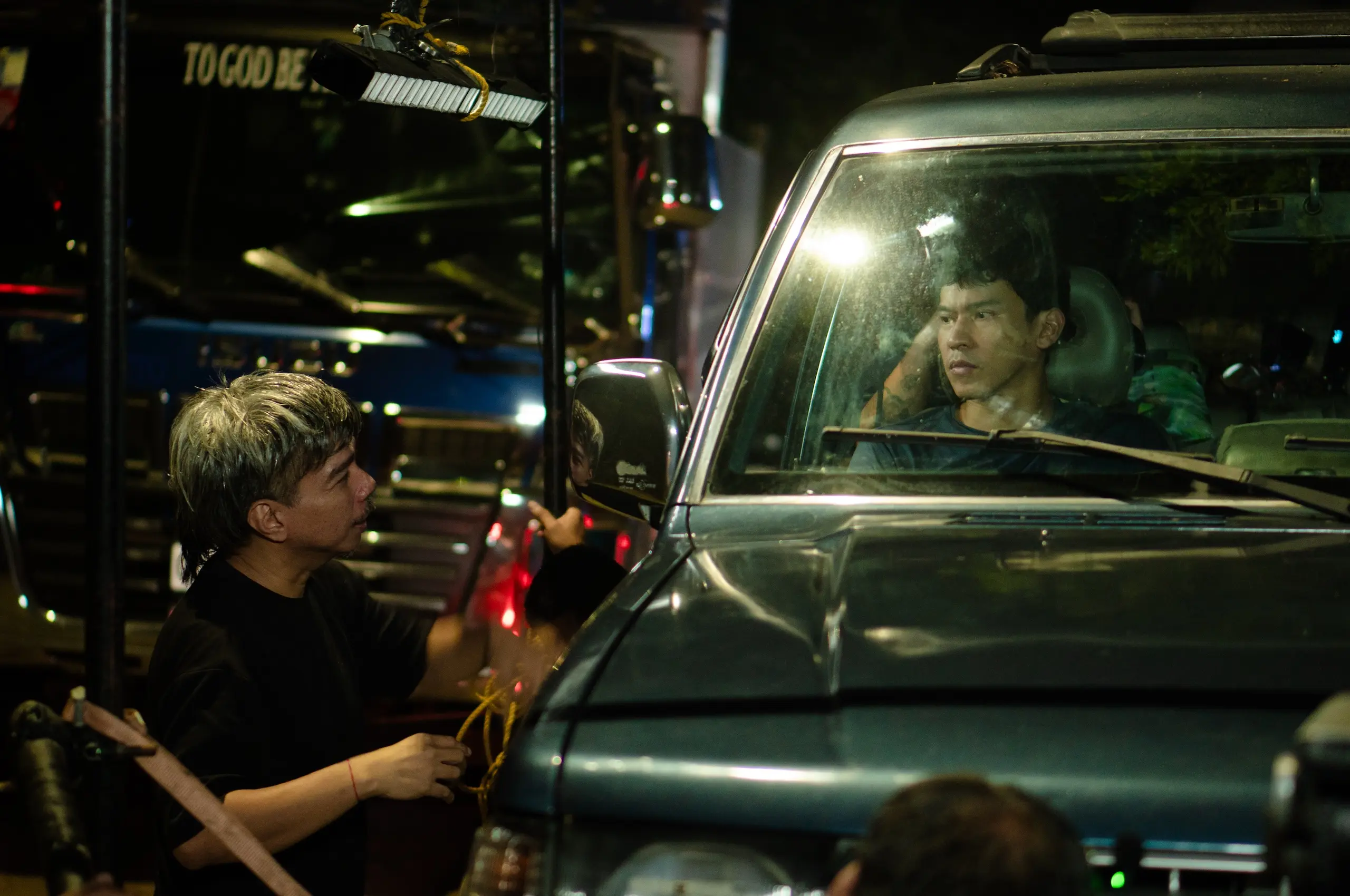


Raymond Red, director of the 2000 Cannes Palme d’Or – Short Film winner Anino and this year’s Metro Manila Film FestivalFilm FestivalAn organized event that screens a curated selection of films, often with premieres, awards, and talks with filmmakers. Festivals are important launching pads for independent and international cinema, and inGo to Film Festival Glossary entry Manila’s Finest, sat down in the latest episode of The Rolling Stone Philippines Interview to talk about working in the realm of alternative cinema in the Philippines and the realities of creating experimental movies alongside commercials and music videos.
When asked what his favorite post-pandemic movie is, Red said he still looked to classics, such as Alfred Hitchcock’s The Man Who Knew Too Much. He specifically looked for the original 1934 version of Hitchcock’s film on YouTube, as the English filmmaker remade an American version of The Man Who Knew Too Much, released in 1956, to meet a contractual obligation with Paramount Pictures.
Other 20th-century films that Red mentioned were Orson Welles’ 1941 mystery Citizen Kane, which he had watched on Betamax acquired from the library of acclaimed screenwriter Ricky Lee, Francis Ford Coppola’s 1979 war film Apocalypse Now, and Stanley Kubrick’s 1968 sci-fi masterwork 2001: A Space Odyssey.
Briefly talking about Apocalypse Now, Red said that younger Filipinos should be interested in the fact that parts of the film were shot in the Philippines.
The filmmaker also wasn’t one to skip on mentioning his oeuvre. March saw the release of Lilim, a horror film that Red and his two sons worked on, with Mikhail at the helm as director, Nikolas writing and editing, and the father as cinematographer.
“For a long time, I never really meddled in [Mikhail’s] films,” Red said. Working on Lilim, he realized that he and Mikhail approached cinematography differently, with the younger Red preferring to set a camera up right away during a shoot, while the older prefers to start with lighting. “I don’t need to put the camera agad, because I have the angle already in my mind.”
In the interview, Red also talked about survival as a common and timeless theme in Filipino movies. He said that Anino was “about not necessarily encouraging to fight, but it was questioning how you survive in a system that is imposing.” His 2009 feature film Himpapawid also expanded this similar theme.
“When I made Anino, it was, in part, a tribute to Maynila, sa mga Kuko ng Liwanag ni Lino Brocka,” he said. He also mentioned that his short film was first screened at the Pelikula at Lipunan FestivalFestivalA multi-act music event, often held over several days, where many artists perform across different stages. Festivals combine live music, food, art, and community, and they give audiences a chanceGo to Festival Glossary, where Brocka’s famed neo-noir was also screened.
“There was somebody from the audience nga who — I mean, I’m not necessarily totally agreeing with it — but he was saying, ‘You know, what Maynila said in two hours, you said in 12 minutes.’ ‘Yon ‘yong reaction niya, so that kind of struck me.”
For more on Raymond Red, watch the full The Rolling Stone Philippines Interview episode on YouTube.
Recommended Video