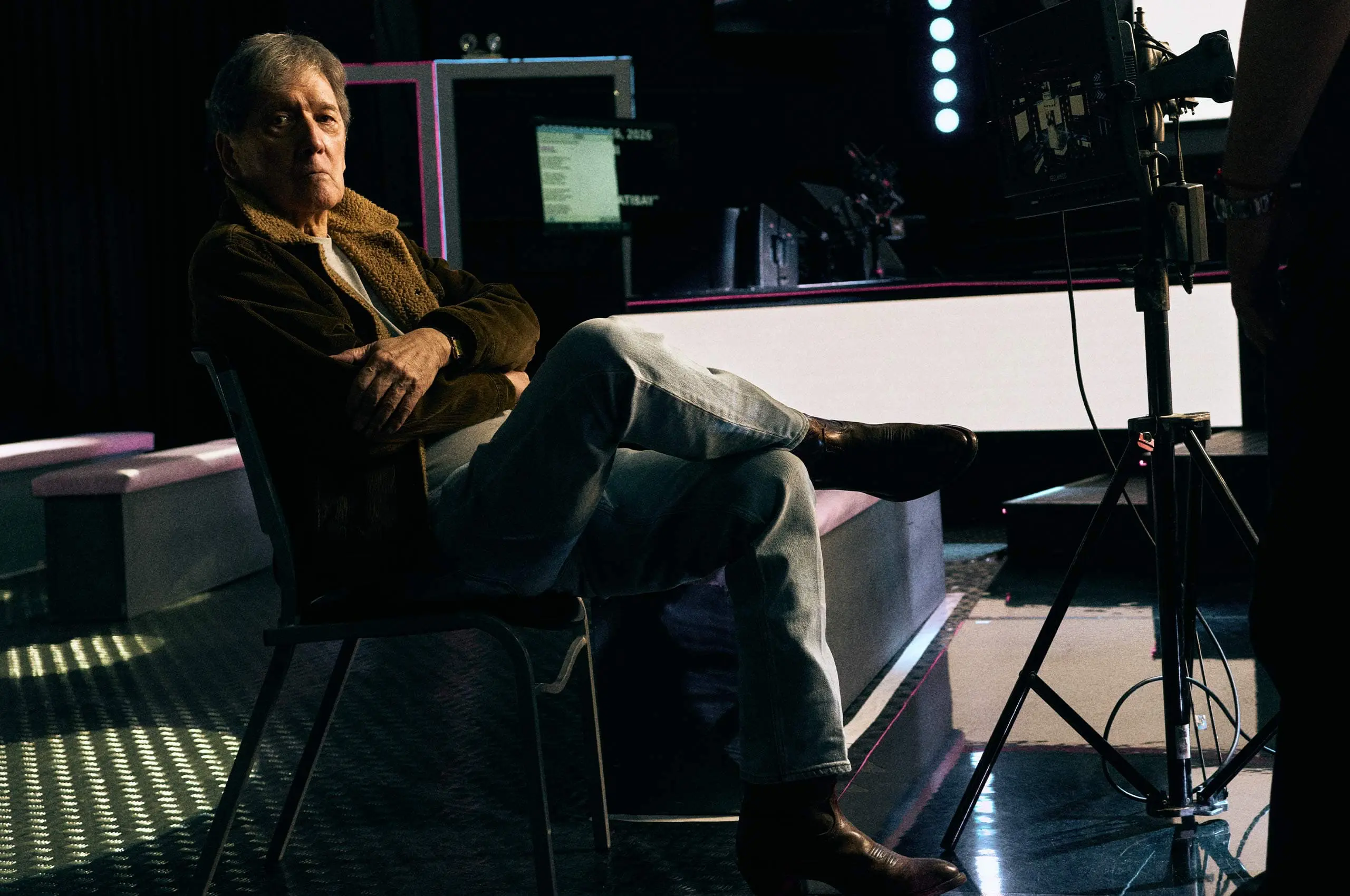



For the first time in three years, Sherwin Calumpang Tuna returns to Marikina Riverbanks where he made his debut on Boiler Room. It was the first published Filipino showcase on the dance music videoMusic VideoA short film made to accompany a song, combining visuals, performance, and storytelling to reinforce the music. Since the days of television, music videos have been a space for creativeGo to Music Video Glossary platform and co-organized by Manila Community Radio, featuring emerging and established musicians in budots — a grassroots dance and electronic music genre of which Tuna is a pioneer.
Known by his peers and fans as DJ Love, Tuna’s video attracted over half a million views on YouTube, and the opportunity helped him secure a record labelRecord LabelA company that finances, produces, distributes, and promotes recorded music, from major international labels to small independent outfits. Labels can offer funding and reach in exchange for a share ofGo to Record Label Glossary deal with London music imprint Eastern Margins; their partnership led to several major projects, including his 2024 debut album Budots World (Reloaded), an official remix of “Bad Boys” by English record producer Jax Jones, featuring American singer-songwriter Rebecca Black and Korean DJ sooyeon, and two U.K. tours. The 49-year-old Davaoeño producer has also worked alongside artists like Eraserheads frontman Ely Buendia and rising P-pop girl group VVINK, whose track “Baduy,” co-produced by Tuna, won Pop Song of the Year at the 2026 Filipino Music Awards — the first time a budots track has ever won a major music award. He’s also toured his music in many countries across Europe, Asia, and Oceania.
A lot has changed in Riverbanks since 2023, which one might see as remnants of a bygone era: the nearby amphitheater, once lively with local residents, is now barren and under reconstruction; the iconic mermaid statue, a backdrop for attendees who entered the venue for Tuna’s performance, is crumbling and under scaffolding due to damage caused by Typhoon Carina the following year.
But for Tuna, seeing the setting was a chance to let out a sigh of relief.
“Dati, hindi ko inexpect na dito pala ‘yun gaganapin,” Tuna says as he remembers the challenges he faced during his anticipated performance, like preparing to play using brand-new DJ equipment he had never used before, or the stage fright of shooting a set without any cuts in front of a live audience — let alone it being his first-ever performance in Metro Manila, despite having a fear of flying or not even having a passport.
“Kasi dati parang pressure ‘yon, ‘di ba? Hindi ko alam. ‘Luh, ano palang nangyayari.’ Pero nung [bumalik] ako dito, parang, wow. Tapos na. Magaan na.”
The Early Beginnings of budots
Budots is among the earliest, if not the first, uniquely homegrown dance and electronic music genre in the Philippines. It is undeniably infectious, carrying an energy that will leave its subjects unable to resist the urge to undulate and gyrate their hips to the floor.
“Kung gusto niyong malaman kung ano ‘yung totoong buhay ng mga Pilipino, makinig kayo ng budots,” Tuna says. “‘Yung sound ng mga huni ng ibon, mga bata na naglalaro, mga asong nagtatahulan, tapos ‘yung kapitbahay mong maingay na araw-araw na lang nag-aaway. Mailalarawan mo rin na galing talaga ito sa isang community na dingding lang ang pagitan, hindi kagaya ng mga bahay na housing.” Budots, he says, came from “budong,” a Bisaya term for tambay. “Budong sa lalaki, budang sa babae. Pinakamababa sa lahat ng tao kasi ang mga pangalan na ‘yan, parang nilalait talaga ‘yung mga taong ‘yan.”
Before budots became known for its speedy tempo, shrilly synths, and playful samples of street life, it began as a style of dance in the early 2000s. Inspired by the wave-like movements of the Sama-Bajau, Tuna describes how members of the indigenous Muslim tribe regularly danced at diskorals, where he was the audio technician for his parents’ sound system. His savvy at the parties gave him a reputation in his neighborhood as a choreographer, teaching people the moves they needed to win dance contests.
Tuna later found a more stable job at a pisonet, a coin-operated computer shop owned by a close friend whom he taught how to dance. As a way of passing the time, Tuna browsed on the peer-to-peer file sharing platform Limewire, introducing him to pirated music software as well as Eurodance artists like Eiffel 65 and The Vengaboys who were topping the charts at the time.
“Gusto ko ‘yung dating mga tugtog kasi hindi solid ‘yung putok [at] bagsak. Ang ginawa ko, kumuha ako ng beat dito, tapos dinoble ko’ng ganun,” Tuna says about his early sensibilities as a producerProducerThe person who shapes how a record sounds, from arranging and recording to guiding performances and making creative choices in the studio. A great producer can bring out the bestGo to Producer Glossary, with the syncopated kick drum becoming a trademark in budots music. “Doon ako nagka-idea na pwedeng gumawa ng tugtog na ganito. Kulang lang ‘yung mga siren, alarm ng motor ng sasakyan. Pwede ‘man talaga ‘yon.”
Tuna recalls working at the pisonet at the height of former mayor and later Philippine President Rodrigo Duterte’s anti-drug campaign in Davao. “Ako ‘yung pinagbantay [ng pisonet] kasi barkada ko. Tapos ‘yung mga tambay na medyo mga adik sa rugby, doon na lang [nag-tambay], tapos libre na lang kain.” He kept his customers from trouble under the condition that they stayed sober. In return, he’d keep them busy by teaching them new dance moves and recording it on video using a cheap webcam.
“Dumadayo kami ng mga rugby boy [sa] disko. Kasi dito sa barangay namin, mahilig talagang magsayaw. Tapos kinupkop ko sila, doon ko sila pinatira sa computer shop, doon na nagsayaw. Ang style ko, pinainom ko sila ng Tanduay, choreo-choreo pa, tapos doon na nagsimula,” Tuna says as he recalls the beginnings of the Camusboyz, his viral dance troupe named after the J. Camus road extension outside his house. The videos Tuna posted on his YouTube spread like wildfire, raking in 72 million lifetime views since 2013, as of the time of writing.
(During the pandemic, when Tuna couldn’t film any new videos with the Camusboyz, he re-uploaded his old videos using different music, which prompted YouTube to flag his account for spam violations. As a way of appealing, he deleted those old original videos, many of which, Tuna says, had views as high as 12 million. Other accounts had already reposted those old original videos, causing YouTube to flag him for even more violations.)
“Nag-post ako, tapos [shinare]. Binabasehan nila na ganito pala, may ginawa ako na ginagaya talaga,” he says, recalling how his neighbors began dancing to his moves in the nearby funeral home. “‘Anong nilagay mo doon, DJ Love?’ So tinuro ko, tapos doon na nag-spread ‘yung bomb ko. Doon na sumikat.”
This is an excerpt from the Rolling Stone Philippines Hall of Fame Issue, now available for pre-order on Sari-sari Shopping and in major newsstands soon.
Get digital access to the latest issue here.
DJ Love wears Fortune W.W.D
Recommended Video