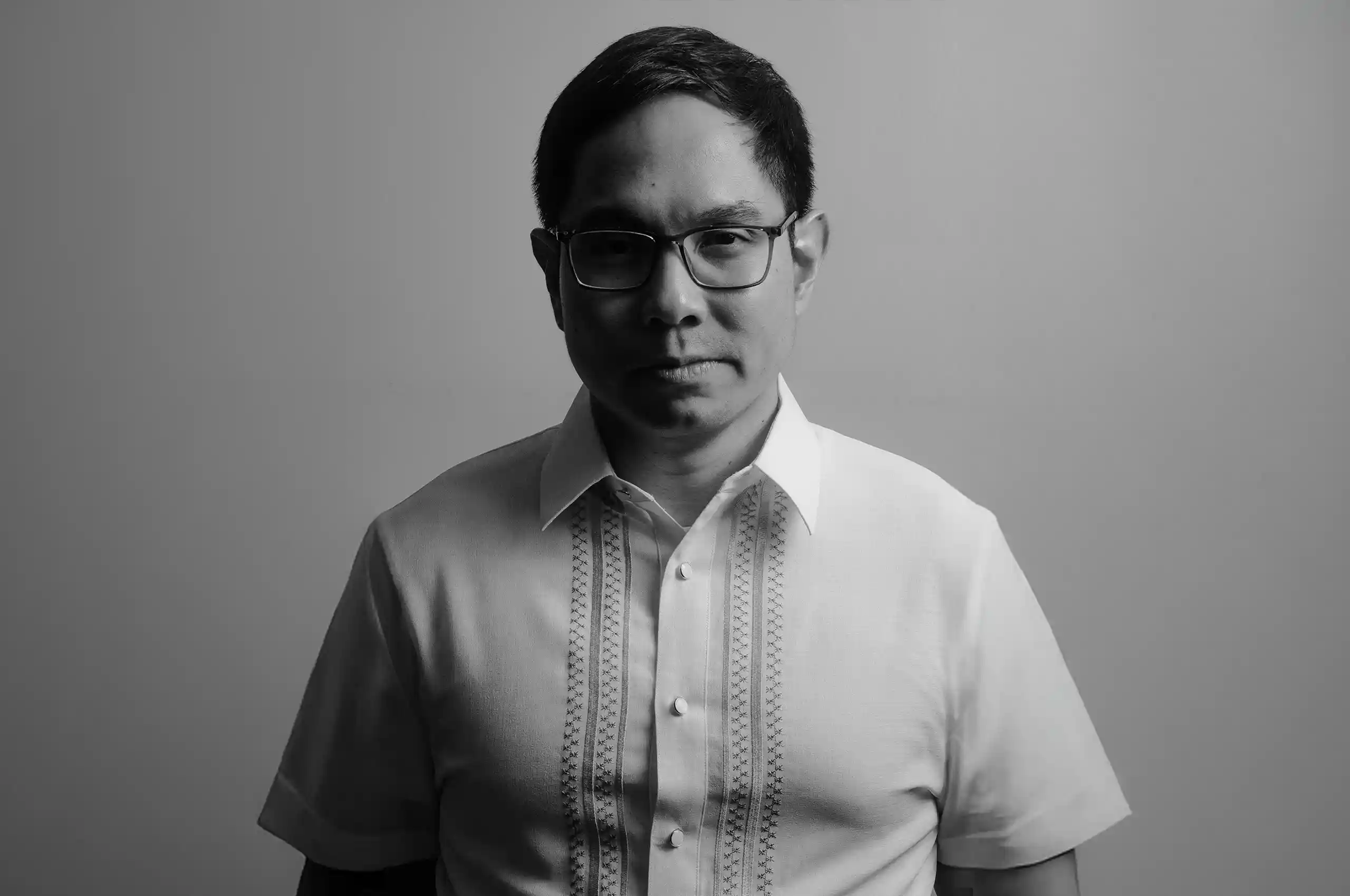
Department of Health (DOH) Undersecretary Albert Domingo has one request for his executive assistant before the Rolling Stone Philippines interview started: Please remember where you put each pile of paperwork.
The mounds of documents on his desk are then moved to the shelf beside it to make room for this writer’s recorder and notebook. But the arrangement matters to Domingo. Each stack has a place in a mental map that only he can read: this pile is urgent or “life or death,” this one can wait, that one is FYI. His executive assistant nods. Nothing will be misplaced.
It is exactly how he runs everything else. Domingo is the kind of person who holds more information than anyone else in the room suspects, and has a system for all of it. The paperwork never ends, he says, but what matters is knowing, at a glance, what goes where.
This is the man the DOH sends out to face the cameras.
Domingo is 43, young-looking, and aware of it. He is a physician, a public health expert, a former World Health Organization (WHO) consultant, former PhilHealth vice president and spokesman, a three-year law school dropout, a high school debate champion, a campus photojournalist, and a licensed indoor cycling instructor who teaches three classes a week.
None of it was planned. All of it, somehow, prepared him to become DOH spokesperson. His appointment as undersecretary under the Marcos administration carries not just the spokesperson function but oversight of six bureaus, two divisions, and the title of chief of staff to Health Secretary Ted Herbosa. “What I’m about to say is not a flex,” he says, then proceeds to rattle off every role anyway. But the experience that shaped him most is not on any CV. His 80-year-old mother has dementia and Parkinsonism, and can no longer speak. He has learned to read her in other ways: the slight relaxation of a shoulder, the flicker of a smile.
“There’s always a new disease out there. But as a doctor, parang kami ‘yong nag-de- decide… ‘Ito, kailangan malaman ng tao ito.’”
He reads reporters the same way. He can tell when one hasn’t done their research. He knows when someone is fishing for a soundbite. He watches himself back after every interview, his voice, the framing of his face, his body language.
“You have to see how you sound and how you look,” he says. “And you take it as feedback.”
What started out as discipline has become, over time, something closer to craft.
“When we’re having a conversation, it’s [like] having an intellectual game. There are tons of data I’m holding on to, but I cannot just release it like a floodgate,” says Domingo. “There’s always a new disease out there. But as a doctor, parang kami ‘yong nag-de- decide… ‘Ito, kailangan malaman ng tao ito.’”
Part of that craft, Domingo says, is knowing what not to say. The discipline came early, from Dr. Susan Mercado, a Filipino public health veteran and former WHO Western Pacific official widely respected for her ability to bridge science and communication.
When Domingo was an intern there, she pulled him aside. “Albert,” Domingo remembers his mentor telling him, “if this is the career you want — meaning WHO, international civil servant — then you’re no longer entitled to broadcast your own personal opinion. Because your clients will be from all sides.”
Domingo took it to heart. Comb through his social media from 2015 onward, he says, and you will find nothing partisan. He means it as a point of professional pride.
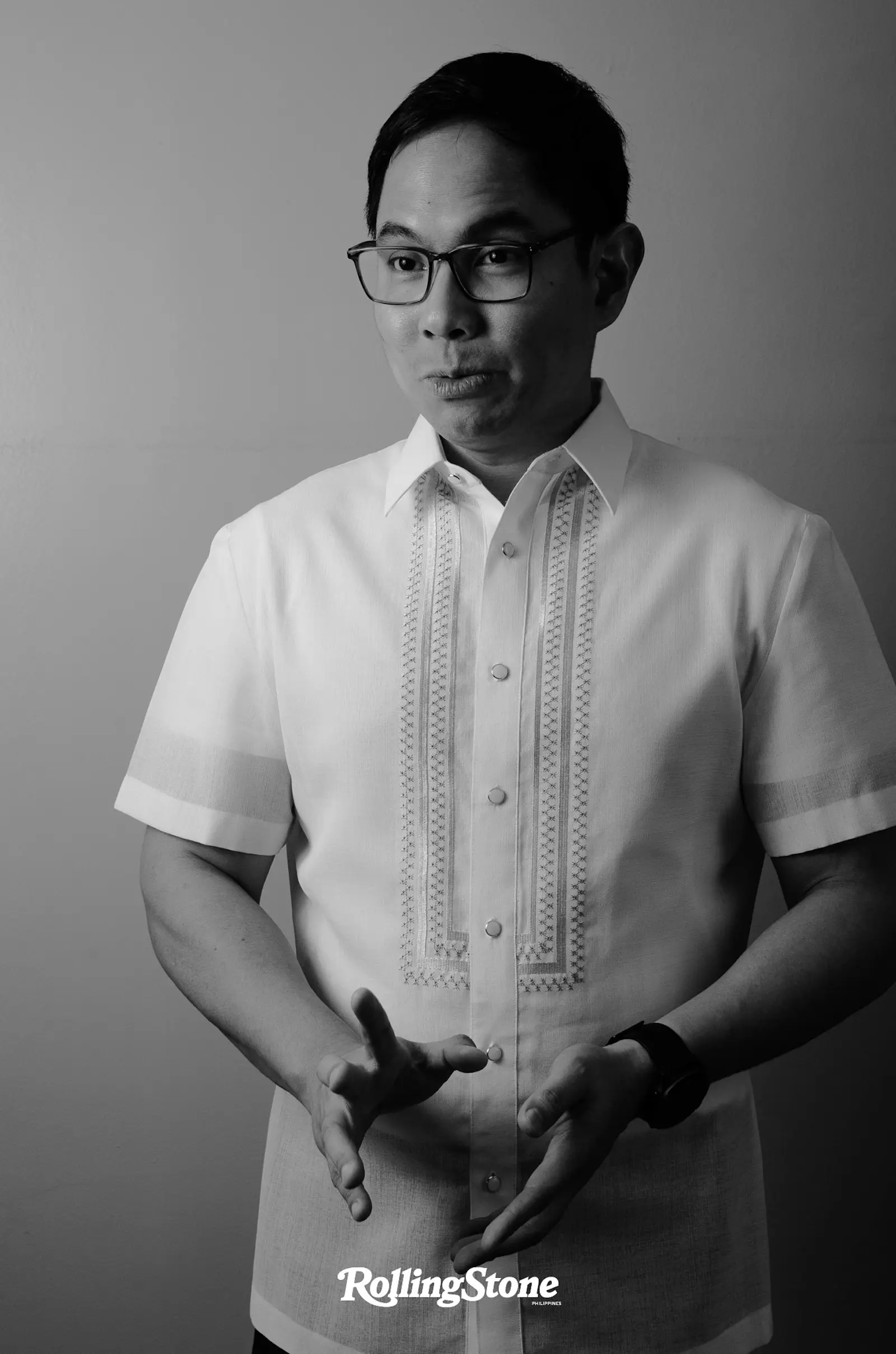
It is not an easy thing to do. Domingo speaks for the DOH at a moment when the institution is still rebuilding trust after years of scandal, from Dengvaxia to COVID-19 to PhilHealth corruption. Earning back that trust, he says, comes down to one discipline: never confusing data with interpretation.
“You may have editorialized versions of the truth, iba ‘yon. Pero ‘pag sinabing facts and figures, these are facts and figures,” says Domingo. “And when you answer a question, dapat malinaw: are you giving data or are you giving an interpretation?”
He is also clear about what he is not.
“People think that we’re propaganda machines. I will say that is a misconception, especially with technical agencies like the Department of Health,” Domingo says.
“I will never lie. But pay attention to the questions being asked of me. Because if the questions are incomplete, hindi ko naman ibibigay ‘yong tamang sagot kasi mali ‘yong tanong e.”
That philosophy was put to the test in June, when Herbosa’s department’s order to upgrade Domingo’s economy class ticket to business class for the 79th World Health Assembly in Geneva made headlines. Domingo has not issued a public statement, except here, in this interview, to Rolling Stone Philippines.
“I welcome the push for an investigation as that will clarify government regulations and procedures,” he says, the cadence unhurried, the tone almost clinical. “Looking forward to it.”
The upgrade, he explains, was within budget and within regulation. The delegation arrived on a Saturday with meetings starting Sunday morning. “I’m not after the perks. It’s not after the privilege. I’m just asking, ‘Please let me rest while I’m in-flight.’”
He reaches, instinctively, for an analogy. Think of it like an airplane, he says. Economy and business class both get you to the same destination. But if your schedule requires you to work the moment you land, the calculation changes. “Eh paano ‘pag landing mo, biglang trabaho ka agad? Kailangan ko magpahinga.”
The trip, he adds, produced results: the Netherlands Minister of Health agreed to assist 38 Filipino seafarers then-under quarantine after a Hantavirus outbreak that killed three passengers aboard the Dutch-operated cruise ship MV Hondius.
“‘Yong output ko, kailangan worth it or even more than that business class ticket,” he says. “I’m very confident na ‘yong naiuwi namin will actually redound to policies that will translate to quantifiable benefits for the Filipino people,” Domingo says. As spokesperson, he simply presents the facts and waits for the room to catch up. His working relationship with Herbosa follows the same logic. The DOH chief is a trauma surgeon: cool, calm, oriented, the kind of person who triages before he reacts.
“Kahit i-barrage pa siya ng sari-saring issue, mag-ti-triage siya. This one is important, this one is not, this one is for tomorrow, and he practices it.”
Outside the office, Domingo is also a church lector who serves every Sunday morning.
“Part of our training as a lector is, you proclaim the word; you are not the word,” he says. “Which means, yeah sure, galingan mo ‘yong pagbasa mo, maayos ‘yong boses. Pero ‘wag kang magsusuot ng flashy garb or ‘wag kang masyadong magaslaw kumilos. Because it’s not about you; it’s about what you’re reading.”
It’s the same principle that governs everything else in Domingo’s domain, from the piles of paperwork in his office to the careful calibration of what he says and doesn’t say in front of the camera.
Because, for DOH Undersecretary Albert Domingo, the room can always be rearranged. But he will always know exactly where things stand.
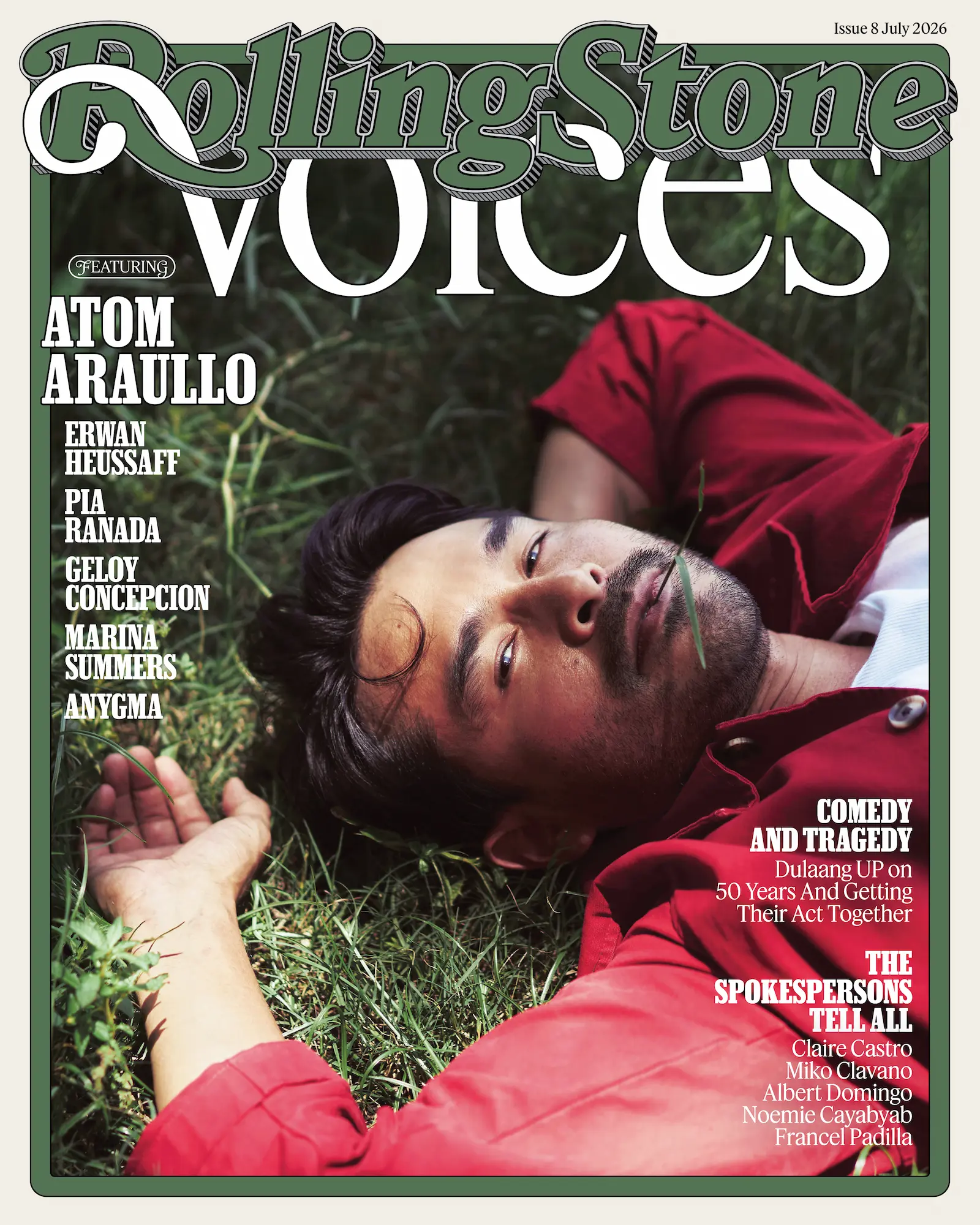
This story first appeared in the Rolling Stone Philippines’ Voices Issue, now available on Sari-sari Shopping and in major newsstands.
Get digital access to the latest issue here.