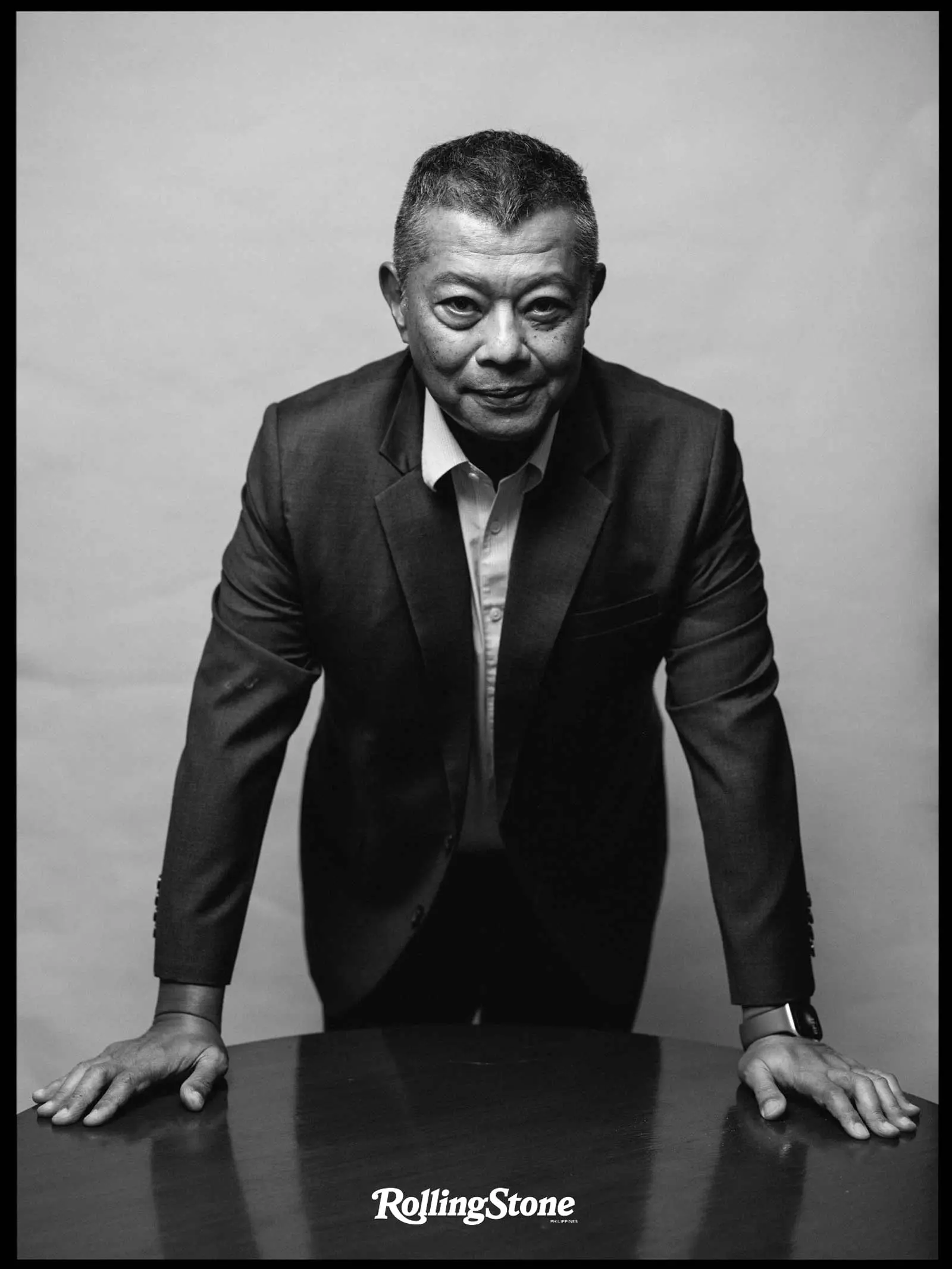
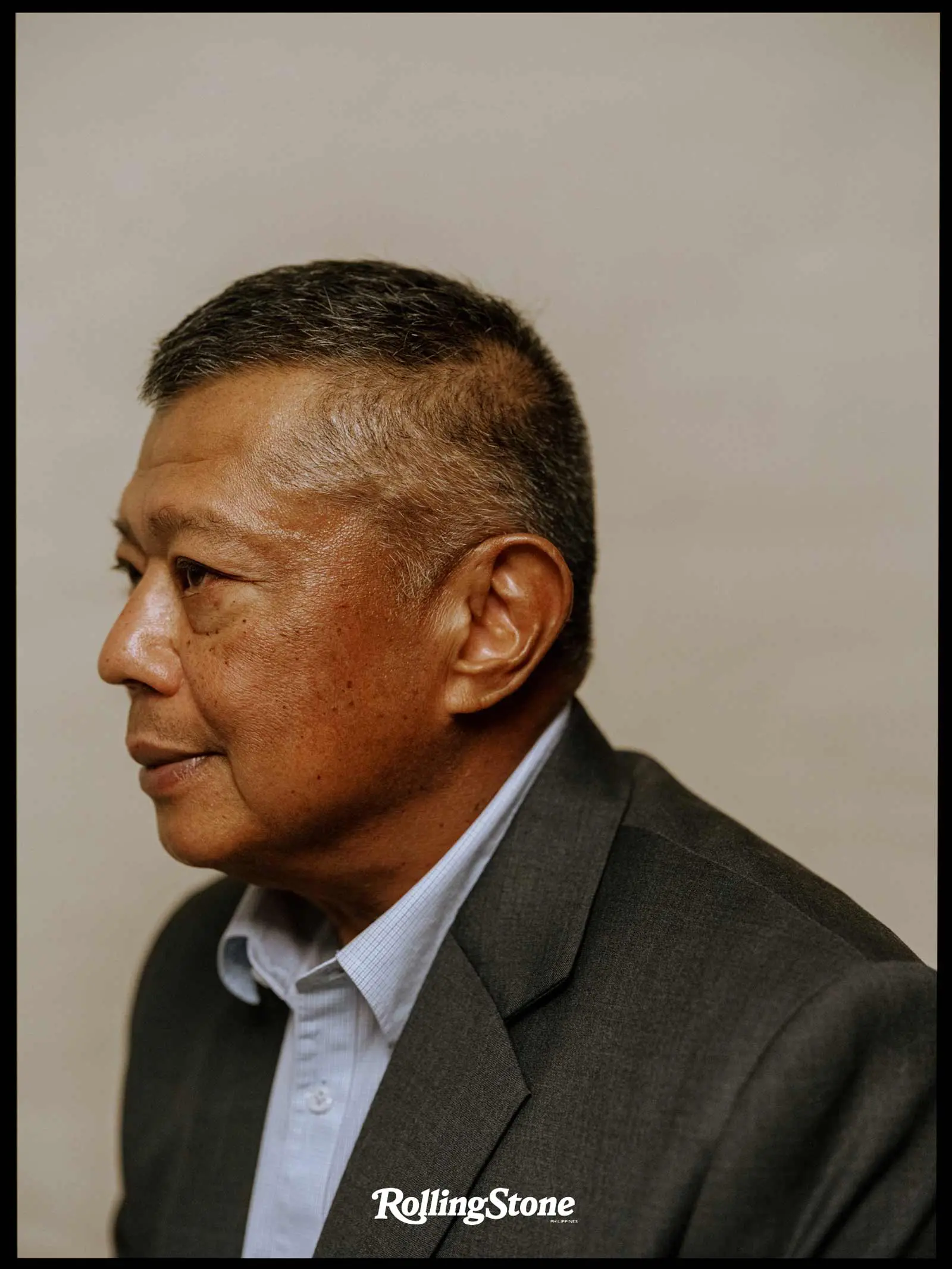
Jesus Crispin “Boying” Remulla does not do apologies.
I first covered him in 2019, when he was Senior Deputy Majority Leader of a House that would vote down ABS-CBN’s franchise a year later. He has not softened on his surgical takedown of the network that probably made even his own allies sigh with relief that he sits on the same side.
“They abused their franchise,” according to Remulla. “They didn’t hold on to their franchise the way that they should: to serve the country. They were already doing it as a power play.” Six years after ABS-CBN was officially shut down, Remulla says he “has no regrets.”
And does he still feel that way, even if thousands lost their jobs?
“People have moved on,” he says.
The Cavite politician now sits as Ombudsman, and the men he once worked the House floor with are the men his office is now building cases against.
His critics call the Office of the Ombudsman the instrument allegedly being used by President Ferdinand Marcos Jr. to target Vice President Sara Duterte and anyone standing near her. Remulla’s counter is that most of those already in jail are the president’s own allies.
The friendships, he insists, are what make the job hard, not what make it suspect.
“It’s not a matter of choice; it’s a matter of responsibility to do the right thing, at every situation. That’s why, they may be friends, we may have worked together closely before, but when the facts present themselves to me, should I turn my back and turn a blind eye to people who are not following the law?” he says.
“Destined? I don’t know. It’s very hard to answer that question. But I’ve always wanted this.”
Every day, Remulla is up at four in the morning, in the gym by 4:30, and then works until it’s time to sleep by 8:30 pm. He plays golf twice a week, because that little white ball is the only thing that makes him stop thinking about graft and corruption. He cooks adobo, perfected for a daughter who once lived in Paris. He grows kaong in Cavite. He has bodyguards now, and misses walking in shopping malls. But he shrugs it all off as par for the course for the life he has chosen.
Love him or loathe him — and plenty of Filipinos manage both at once — he is now the man the so-called “big fish” likely fear in the biggest corruption scandal to rock the Philippines in recent history.
In this Rolling Stone Philippines Interview, Ombudsman Boying Remulla talks about lawmaking and crime-busting, the perils of public life, and why he will never apologize for doing what he believes is right.
The following has been edited for clarity.
Sir, you met me for the first time in 2019. I was under Miss Gigi [Go] pa noon.
Oo, [sa] Rappler!
Yes, it’s been a while, but I’ve been following you over the years. You’re no stranger to people saying you’re outspoken, intimidating, or that you have a sharp legal mind.
Of course! [Laughs]
I love that you’re embracing it, Sir. But you’re at this point in your career where I guess you can say you’ve sat at both sides of the table. I remember, at least from my experience covering you, you were a congressman; you were a senior deputy majority leader of the House that voted against the franchise of ABS-CBN.
Yes.
The same allies that you—
I worked with [Senator Rodante] Marcoleta and [former Congressman Mike] Defensor.
And now, you built the case against them that eventually forced Iglesia ni Cristo to—
I didn’t build the case.
Your office did.
[Marcoleta] built the case himself by giving us everything.
“We cannot blink; we’re the government. We cannot blink with any religion or any group of people who want to upset the responsible thing to do.”
When you are building these cases against people that you may have worked with or were allies with in the past, now that you’re Ombudsman, Sir, do you think like a lawyer or a politician? How do you balance that?
I would say that I think like a Filipino, like a Filipino leader who wants to leave a good legacy to the country. So, most of it, most of these things that are happening, we look for what the future will be for the country. And when you talk about legacy, it’s just as simple as saying, “We want a more decent country to live in. And we want to restore decency to the service.” Because the way it’s going now, people see no wrong in conflict of interest. And I think that’s the hallmark of decency. When there’s conflict of interest, you just have to stay away. You just have to keep your hands clean and not dip them into things that you should not be dipping your hands into. That’s it. That’s basically what we want to happen first. We want them to start thinking that there is a law, and we have to make a choice whether we go politics or we go business. But we cannot have both.
I believe in what you’re saying, Sir. But your critics would say, “Dati kaalyado niyo ‘yan. Tapos ngayon, dahil hindi kayo pareho ng kinakampihan, now you’re using the brilliance of your mind to go after the very people you used to be with.” Do you see that as a contradiction? From being in Cavite, being a congressman, and being in the DOJ, and now the Ombudsman, does the trajectory of your career make sense to you?
Alam mo, there are things that you don’t have any choice with. So, it’s not a matter of choice; it’s a matter of responsibility to do the right thing, at every situation. They may be friends, we may have worked together closely before, but when the facts present themselves to me, should I turn my back and turn a blind eye to people who are not following the law? I mean, it’s good for everybody.
Is it a lot more difficult when they’re your friends?
It’s difficult. It’s difficult because you don’t really want to do it.
Because they’re your friends?
Because you got to work with them and you became friends with them. And it doesn’t give you much of a choice. It’s something that I have to do.
When you announced that there was going to be a case against Marcoleta, that’s believed to be the reason why Iglesia ni Cristo blocked EDSA, right? Was there a point in those days in between that you thought maybe, “‘Wag na naming ituloy ‘yung kaso?”
No.
Why not?
Because we cannot blink; we’re the government. We cannot blink with any religion or any group of people who want to upset the responsible thing to do. You cannot blink. The government cannot blink.
When you became Ombudsman, Sir, it became very clear to a lot of people that the President really wants you to do the job. I’m very curious ‘yung mga kaibigan mo, Sir, na siguro naramdaman nilang may kasong darating, at ikaw ‘yung mag-bi-build noon, ‘yung opisina mo — they know that you’re no nonsense, na gagawin mo talaga. Did anyone ever try to maybe talk to you, be a little kinder, or maybe file a different case?
No, no, no. But some people went to me professing innocence when I knew all along that conflict of interest was there. And I had to remind them. Like somebody went to me and said, “The construction company is not in my name, so I should be free.” Sabi ko, “No. It’s beneficial interest.” That’s what the law provides. We have to stop doing this. We have to make a choice: whether you go to business or you go to politics, but not both.
And what did that friend say?
Wala, nothing. They didn’t say anything because it’s true. It’s common sense, actually. There’s nothing new about that. It’s just that people have treated their government positions with impunity for the past so many years because nobody was there to remind them, even to accost them, to tell them that they should stop doing it. That’s why now we’re telling them to stop doing it.
And that’s what we expect the Ombudsman to do.
The Ombudsman should be doing that.
“People have treated their government positions with impunity for the past so many years because nobody was there to remind them, even to accost them, to tell them that they should stop doing it.”
And one of the things I think that impressed me when you first sat as Ombudsman was that you eased the restrictions—
SALN? [Statement of Assets, Liabilities, and Net Worth]
Yes, that [former Ombudsman Samuel R.] Martires was implementing. And honestly, I did not expect that you would do it. Why did you do it? And why was it so important for you to make the SALNs more accessible?
There is a baseline for knowing a person’s net worth. That’s it. I mean, when you join government, you are already in for a lot of limitations to your life. One of them is the SALN, the other one is the right to travel. When you join government, you have to get a travel authority to be able to leave the country all the time. Because when you join government, you give up something. You cannot just have your cake and eat it too, so to speak.
Pinaalam mo ba ‘yan sa pangulo?
Ah, hindi na! He will not micromanage that. I mean, he didn’t really remind me of anything, in fairness to him.
How is your working relationship with the president?
We’ve always just worked together very well. But we’ve never been socially [out] together. It’s just really a professional relationship I have with him. Even if our parents worked with each other before, and I got to know him when I was working with the Estrada administration, and he was governor, that’s the only time I met him. We never really went out socially.
And why do you think he trusted you enough?
I think that our family history is very clear to him that we do not… we just do what we have to do.
And when you became Ombudsman, nag-usap ba kayo ng pangulo, Sir, on how [to run the office?]
Wala! He appointed me. I asked him to appoint me because there were things that we had to do for the country.
You asked him?
Yes, yes, but I asked him way before his State of the Nation Address. I told him in June, and he gave the speech in July [2025]. But I was telling him already, I wanted to be the Ombudsman.
Pagkapanalo ni BBM? 2022?
Actually, I didn’t even apply to be Secretary of Justice. I was supposed to be interim Majority Leader of Martin Romualdez in Congress, but fate had me be Secretary of Justice. So I accepted it. It is very challenging, and I took it.
How do you think your time as Justice Secretary prepared you to become Ombudsman at this most consequential time in Philippine history?
Well, the Secretary of Justice position trained me, told me that you have to face people head on when there are issues that have to be resolved. I had to face [former Bureau of Corrections Chief Gerald] Bantag head on. The Atong Ang [controversy] was during my time. I mean, there’s nothing that you can run away from when you are Secretary of Justice because you stand for the Republic. You cannot be a scaredy cat. You cannot afford that.
Lalo na ‘yung kay Bantag, Sir, kasi jurisdiction din ‘yun ng DOJ.
Yes, yes, exactly!
Did that make it even more difficult then as Justice Secretary?
Not really. It’s something that had to happen. Because when the evidence points to that, can I say, “Diyan ka lang ha? I‘ll take care of you.” I cannot do that. It’s not the way things are done in the Department of Justice. You really have to exact justice for people.
Paano mo kasi babalansehin ‘yun, Sir, na you have to be fair but may pinagsamahan kayo?
‘Yung pinagsamahan kasi, relative ‘yan. Ang mahalaga, ‘yung duty to country. In your hierarchy of values, that’s one of the most important, ‘di ba? God and country above all.
Where is that conviction coming from?
From my education, from my upbringing.
Really? Any memories, maybe from your childhood?
From my father, and from the fraternity, Upsilon Sigma Phi.
And what did you learn?
That’s it: that you have to have a hierarchy of values, you have to know what comes first. God, of course, the law of God. And of course, the country.
“When you put a person like me in a position to help this country, I will do it.”
Your critics would say, Sir, na maybe that didn’t apply when you were tearing ABS-CBN apart during the hearings, which I was covering.
Why not?
That’s your answer to that?
Abuse of right. They abused their franchise. They didn’t hold on to their franchise the way that they should: to serve the country. They were already doing it as a power play. They were using it as a power tool, to get more favors from government, to conduct more business, to get into more business. And they were already playing God in politics at the time.
And you didn’t like that?
I don’t like that kasi you influence public opinion in a very strong way, and you take advantage of it to make or destroy the people — that’s what they were doing.
And no regrets, Sir?
No regrets!
Even when many people lost their jobs?
No regrets, no regrets, no regrets.
Really?
Yes. People have moved on. And, of course, it came at a junction when social media was already coming out and people had alternatives to get the truth.
Saan nanggagaling ‘yung conviction, Sir, na even if people disagree with the decisions you’ve made, as long as it’s following the Constitution, it’s following the law, you don’t really care what people say about you?
Yeah, because you have to take care of this country. And you know, when you put a person like me in a position to help this country, I will do it. I’ll do it.
Sir, can you take us through how the Ombudsman now is building all these cases about the flood control scandal?
What do you mean?
These cases will last even beyond the current administration. How do you make sure that you will be able to see, or at least the government will see these to justice? Even if political [winds shift]?
We are not filing cases when they’re not ripe to be adjudicated. The time was, people would file cases because it was politically good to file the cases. And it happened during the EDSA Revolution. They didn’t do their homework properly, and they allowed the lawyers to run the show. And when that happens, the dilatory tactics will win out. So what did I do? I made sure we will not file a case unless we had all the evidence. So that the moment we file the case, we can tell the court, “We want a continuous trial so we can rest our case as early as possible.”
That’s how you make sure that the case is heard?
Some cases are still being heard up to now, 30 years after. That shouldn’t happen. You should be able to rest the case, because if your evidence is complete, then you already have a schedule to follow in court, then the court will follow, then the court will accept.
What’s the ideal timeline?
Dapat ‘yan maximum ng one year to present your evidence. Dapat ‘yan!
Dito kasi sa ‘Pinas, Sir, sanay tayo na taon ‘yung inaabot.
Because they allow lawyers to have their heyday. And then, you know, lawyers will have their heyday if you allow them. And if you put enough pressure on the courts and the lawyers to do their job faster, it will happen. It will happen.
How exactly do you make sure, Sir, na kumpleto ‘yung kaso?
I started this in the DOJ. In the DOJ, we had a case build-up method. So, what we did was we started training the prosecutors and the policemen and the law enforcers to work together. Because, in my experience, when I used to go to court in criminal cases, the judge would be amused by the lack of connection between the law enforcers. And that really set the Republic back because when you have a criminal case, and the prosecutor and the law enforcement do not work together very well, your evidence is compromised. So we started training people to do it already. When I became Secretary of Justice, that’s what we did. I hired the police general to become an assistant secretary so we could streamline the process of building up a case. That’s so important. It’s so basic.
It does! Pero hindi siya ginagawa.
It’s common sense. Because nobody really… a lot of people who join government, let’s say for a Cabinet term, do not want to think on the long side of the story. They just want to go with the flow, with what they saw when they got there. It’s the same old story. Ika nga, tuloy ang ligaya. But these common sense solutions, we’ve been talking about them in law school. So I didn’t invent anything. I just made sure that we implemented what we had to do.
And itong process na ginagawa mo, Sir, that will help ensure that even if the political winds shift in 2028, matutuloy pa rin itong mga kaso?
If the cases have been laid out properly in court and we have rested our case, nobody can change it. It is something for the record already. So in case the judiciary will not behave in accordance with what was presented, then history will judge them. It’s something that we have to do early.
I will challenge you a little bit further. Of course, I love all these cases that you’re filing. Personally, I want them to be accountable.
Yes.
But obviously, your critics are saying that the Office of the Ombudsman now is being used to systematically target Vice President Sara Duterte and her allies on behalf of the Marcos government. How do you push back against that?
The people who are in jail now are mostly allies of the president. We sent to jail allies of the president. So, how can you say it’s against the administration? Simple. Marcoleta was part of—
Not anymore.
He was part of the allies of the government before. But he’s a special case. He admitted everything in public. That’s why it’s not a question of fact; it’s a question of law already. And we want the court to tell us: “Are we correct or are we wrong?” But it has to be laid out properly. If we don’t do it, then it will be something that people will say. “Ah, they never did it.” But we have to do it.
Sir, when I was covering the House starting in 2016, every now and then may pahapyaw kaming investigations on flood control. Kasi mahirap kumuha ng dokumento noon. And you’ve been a congressman for so long. Nag-start ka ba, Sir, as bokal (provincial board member)?
Bokal.
Based on your experience, Sir, what is the root cause of this flood control corruption? Because obviously, ‘di lang siya nangyari ngayon.
Abuse of discretion. Your bidding rules, it has to be competitive. But when people use their discretion to cook up the whole scenario, then the bidding disappears, the competitive bidding disappears. And it’s actually something admitted by former Department of Public Works and Highways (DPWH) Undersecretary Roberto Bernardo. The whole time, none of them were really competitively bidded. It was all fixed up.
Is it because…?
Collusion, collusion.
Kasi gustong kumickback, Sir?
It became part of a grand plan. That’s my theory.
Where do you think it started?
DPWH and the contractors started working closely together. And contractors started joining Congress and didn’t care a hoot about delicadeza, about decency. Walang decency! I’ll give you an example.
Yes, please.
They designed the flood control structure to be overbuilt. So, the thing appearing under the ground as sheet pile, it’s supposed to be 14 meters deep.
Pero, mababaw lang.
Four meters, five meters. So, that cost itself is already kita, already profit. So, it’s all tempting for them to do it.
As congressman ba, Sir, nakikita nyo, ganyan, down to the specific [details]?
No, no. I only found out about this now.
Talaga?
Oo, dito na lang, dito ko na lang natutunan ‘yan.
So, you were shocked about—
I was shocked!
Dun sa modus na ginagawa?
Exactly, yeah.
So, it can slip through even congressmen who actually passed the budget and all that? Because, Sir, when PBBM first announced that he will focus on flood, pumalakpak ‘yong mga congressman. And to me, it was such an insane image in my head. Kasi sabi ko, madami sa inyo, nakinabang siguro sa system na ‘yan, and yet you’re clapping for it. Hindi ba kayo kinakabahan na ma-fa-file-an kayo ng kaso? Wasn’t that a little strange to you?
It was strange.
Do you think your colleagues or your ex-colleagues who were in Congress at the time really had no idea also that such a system was festering?
Many of them had, many of them. The people who we call “congtractors” were part of the scheme. There were at least eight to 10 big contractors there who were already in on it, who were already contracting without any care about conflict of interest.
So, is it an advantage then, Sir, that you were a former lawmaker?
Yes, it’s an advantage.
How so?
Because I know their characters! I know how they behaved. I know how they were living it up. Yeah. Hindi naman ako inggitero eh. I just let them be.
Parang wala ka namang reason para mainggit.
Hindi, kapag nandoon ka kasi, mayroon kaming kasabihan doon sa Congress: “Walang basagan ng trip.” So hindi ako nangbabasag ng trip doon. Eh ‘to trabaho ko na ‘yun doon.
Pwede ka nang mangbasag ng trip?
Hindi. Mali ‘yung trip eh.
Pero before, hindi mo binabasag ‘yung trip?
Hindi. Hayaan mo lang sila kasi I was busy with my own thing. I love my job, running the show on the floor, declaring the debates open, going to the committees. I loved that job.
And you were pretty good at it. Every time na dadating ka sa hearing, “Ah ito, may storya na tayo.” And I’m sure it was the same when you’re in the DOJ. And now in the Ombudsman.
I go to work every day. I love to work.
“You have to decide someday. If you’re not going to decide today, you have to decide tomorrow. You have to decide after 10 years. Might as well decide early.”
Run me through your typical day now as Ombudsman because Assistant Ombudsman Mico Clavano says, kahit ata madaling araw minsan, nag-me-message ka.
Yes. I wake up very early. I wake up at 4 every day. 4:30 sometimes.
Why that early?
Because I sleep at 8:30. Eight o’clock, I’m in the room. Eight-thirty, I try to sleep already. Before 9, I must sleep already.
Okay, so 4 am. Mayroon kang morning routine, Sir?
Oh, yeah, of course.
I guess I‘m just trying to figure out how the Ombudsman prepares.
I exercise. I have my own exercise routine.
So one hour and then breakfast and then you head down here?
No, I work out for more than one and a half hours. Minsan two hours pa.
So you’re a workhorse, from what I hear from the people you work with. And you expect the same amount of efficiency as them.
Yes, yes. I am very passionate about my work. Actually, I’m very passionate about everything.
Are you the type of boss that would message even outside of work hours?
Oh yeah, yeah. If I wake up at three o’clock and I see something, I’ll message you. I’ll send it, I’ll send it!
Sabi nga ni AO Clavano, dapat matagal pa ‘yung paternity leave niya. Naging one week na lang kasi mukhang kailangan sya.
Kasi, we run a very tight outfit here. I mean, and I work with young people. I hired Mico because of my children. My children know him, my son knows him. And then he applied.
From Ateneo?
Yeah. So when they got Mico, they got the other guys in also, their generation. Sabi ko, I like working with my children. So, it’s like working with my children. That’s why we do a good show here. We enjoy the professional relationship, of course, the mentoring also.
I’ve been mentioning to AO Clavano na ang bata ng office, relatively young. Why choose younger, relatively younger, but experienced and skilled people to be part of your staff?
Because they will inherit this country. Might as well give it to them already early. Put it in their hands as early as possible. I wish I was given that chance when I was young, but it wasn’t meant to be. I became a congressman when I was already 43.
So if I were to work with Boying Remulla, ano ‘yung mga hinahanap mong qualities to deliver the same kind of public service that you want?
I want a good imagination. I want hardworking. Good with the written word.
AO Clavano described you as a loyal boss, which seems like a great boss to have. I’m curious: when people don’t follow your orders, what are the consequences?
It doesn’t happen much.
I mean, I wouldn’t want to fuck up if I’m part of your staff. So when it does happen, what are the consequences?
I’m very patient, but sometimes I can be exacting.
How so?
Consecutive calls and consecutive follow-ups.
You’ve been Ombudsman, Sir, for almost a year.
Yeah, nine months.
What else do you think you’ve done differently in the past nine months that you believe are making Filipinos really trust the Ombudsman again?
We try to make public what we do. We try to make transparency a rule. And it’s still the rule that we want to follow because when we look at the problems that we are trying to solve now, like the idea of restitution, you have to be transparent. So, transparency is the most important [thing]. So people know that they can trust you. That’s it.
A couple of years ago, you went through a bypass surgery and had a leukemia diagnosis. I think you had an interview where you said that after going through that, you live day to day.
Yeah.
Mayroon ka ba, Sir, na sense of borrowed time, and did that experience, that health scare kind of influence—
I don’t think in those terms.
Really?
I just live by the day. That’s it. Live by the day, and then plan out for the next few days what has to happen. It’s something that is so immediate.
Going through that experience, Sir, did that in any way influence how aggressively and efficiently you are now doing your job?
No, I think that helped me become more efficient, more systematic, and manage my time better.
Really? Anong difference from before?
More leisure before. But now I’m able to time my leisure better.
You mentioned you’re into wellness.
Actually, I had a more active social life before.
And when you say more active social life, drinking?
A bit, yeah. I socialize a bit. But I stopped doing that already. I stopped. I still drink. I drink a shot or two with my wife. Medicinal ‘yan, ‘pag konti lang. ‘Pag konti, gamot. ‘Pag sobra, lason.
One shot lang. Tequila, Sir?
No, no. Scotch.
Does your family ever express any worries now that you’re the Ombudsman?
Oh, yes, my daughters.
Ano ‘yung fears nila, Sir, and how do you assure them na [safe ka]?
Danger, they’re afraid of the danger, the enemies that we have to make.
Of course, they understand why you’re doing what you’re doing.
Yes, of course.
‘Yung mga apo niyo na bata pa pero nakakaintindi na, baka nakakanood ng news, how do you explain to them na safe pa rin si lolo, but this is the job na you have to do?
Hindi naman. It doesn’t go to that point. It’s my two daughters who worry a bit.
But do you ever bring them here?
They’ve seen the office. But they’re busy with their own thing.
How do you respond to threats?
Actually, I don’t get much, sa totoo lang. But I just know that it’s a risk I have to take. I’m careful about where I go. And I’m not seen in public. I try to avoid a public life.
Do you see yourself as threatening?
Threatening? No. Imposing, probably.
Sir, na-mention na, I think that Father Flavie [Villanueva] has become your advisor.
He’s a good friend.
How did he become your adviser?
I met him when I became SOJ after around six months. I met him. He was introduced to me. We hit it off.
Just randomly, or were you looking for…
No, no, no. Randomly.
Really?
Yeah, because a classmate of mine was close to him and introduced us.
Some would say it’s a very unlikely friendship, Sir.
‘Di naman.
What’s one thing that you’ve learned and have been inspired by Father Flavie?
The value of human life. It’s so important that there’s somebody who reminds you of that. Because sometimes when you’re in a position of power, you can take things for granted, but you should never do that.
And that’s something that you learned talaga.
Yes, yes. I mean, I was able to think completely about what our job entails. Just because of the drug war, when we were talking about the drug war, and we were talking about it, you can see that it’s there. The value of human life is paramount. There’s the primacy of human life.
How often do you see Father Flavie?
We just text each other. He’s busy and I’m busy. But once in a while. Because time is so limited. Even if I wanted to share a drink with him and relax with him more, you only have 24 hours in one day, and you only have two days in one weekend. You can’t give much. But once in a while, it’s refreshing to see somebody like him, to talk to somebody like him.
“When you join government, you give up something. You cannot just have your cake and eat it too.”
Sir, balikan ko lang that time na binisita kita dito sa office mo and you mentioned that you used to write plays, ‘di ba? Do you still have time to write now?
Sometimes when I force myself to sit down, I’m able to come up with something.
What was the last one that you wrote?
Usually I like writing about the country, or maybe a poem about independence. I have a few pieces of them.
Do you ever share that?
I post them.
Where do you post it?
Facebook.
And what’s the feedback, Sir?
Okay naman. I was doing it when I was governor. I was publishing when I was governor. And I used to write songs and plays when we were younger.
What’s your favorite song na sinulat mo?
I wrote a song that won the Paligsahang Awit Pamisa.
Really? What’s the title?
“Tanging Birhen.” I wrote it the year before “Hindi Kita Malilimutan” came in. I was a songwriter.
Did you ever seriously consider maybe a career in songwriting?
I got married early eh. So I had to think of a livelihood to keep body and mind together. I got married when I was 21.
Oh, that’s so young.
Yeah, I was still pre-law. I got married already. So, you have no luxury of playing with the world. You just go down to business.
At such a young age, how did you know that you were sure that you’re going to get married to your wife?
You have to decide someday. If you’re not going to decide today, you have to decide tomorrow. You have to decide after 10 years. Might as well decide early.
And I feel like this is a mindset that’s consistent with you in all aspects of [your life].
Yeah, you have to decide. Make a decision.
Do you have any regrets, Sir, with how you’ve done your career?
No.
Not even one, at all? Because some people would have a lot eh.
Ah no, I don’t believe in that.
Why not?
Always give it 100 percent.
Sir, at the start of this interview, you mentioned thinking about your legacy. Are you the type to always plan ahead? And how has that been to your advantage?
Hindi. Planning ahead and living by the day are two different things, ‘di ba? But I’ve always thought that the country deserves the best from its people and from its leaders. So, if you’re chosen to be a leader, you should do your job. That’s it. Leaders should do their job.
Do you feel any pressure, Sir? Kasi ‘yan ang personal mindset mo, and people are really expecting that na once magkaroon ng kaso itong mga big fish na for the longest time have benefited from the culture of impunity. Do you feel any pressure that you’re doing your job right, even as simple as signing a document here kasi kailangan ma-hold sila to account?
I do what I have to do. Right now, we have a system where we exploit the fact that there’s a limitation to government service. That the right to travel is compromised already the moment you join government. And we’re holding people in the airport. We’re not allowing them to leave if they’re under investigation. We tell immigration, “These are the people we’re watching out for. Do not allow them to leave.” We do that.
And maybe that’s why you’re here doing this job. Perhaps because BBM knows. When you became Ombudsman, sabi ko, “Ah he’s the perfect man for the job.” And I think that’s why you should have been there, you should have been appointed much earlier.
No, no, no. The position became vacant only last year.
Yeah, I know, I understand. But you’ve always wanted it.
Oh, I knew about the position as early as ‘87. Yeah, because I graduated in ‘87. And the Constitution was ratified in 1987, February of 1987.
So even then, why was it so appealing to you, this position?
It’s a game changer. It was already designed to be a game changer and a balancer of the country. So that if it goes wayward, somebody had to do it. Somebody had to step in and be given the power to do it. If push comes to shove, this is the best job to have.
Do you feel you’re destined to become an Ombudsman?
Destined? I don’t know. It’s very hard to answer that question. But I’ve always wanted this.
Some people say ‘yung destiny, binibigay ‘yan sa mga tao na ganyan ang sagot, Sir. You knew about this job, Sir. You saw it, you wanted it, you’re hungry for it. But you didn’t let it define your life, and maybe that’s why it became successful.
No, just live by the day. Ever since naman.
You said you wanted the job. But in your own words, why do you think you were the right man for the job?
Because the crisis that was enveloping the country already needed somebody with a strong political will. And I think I have that. I’m the right guy for it.
When Filipinos think of Jesus Crispin Remulla, not the politician, not the Ombudsman, but the man, how would you want Filipinos to remember you?
Fair and just. I think that’s a good way to be described later on.
Photographer’s Assistant GERIC CRUZ