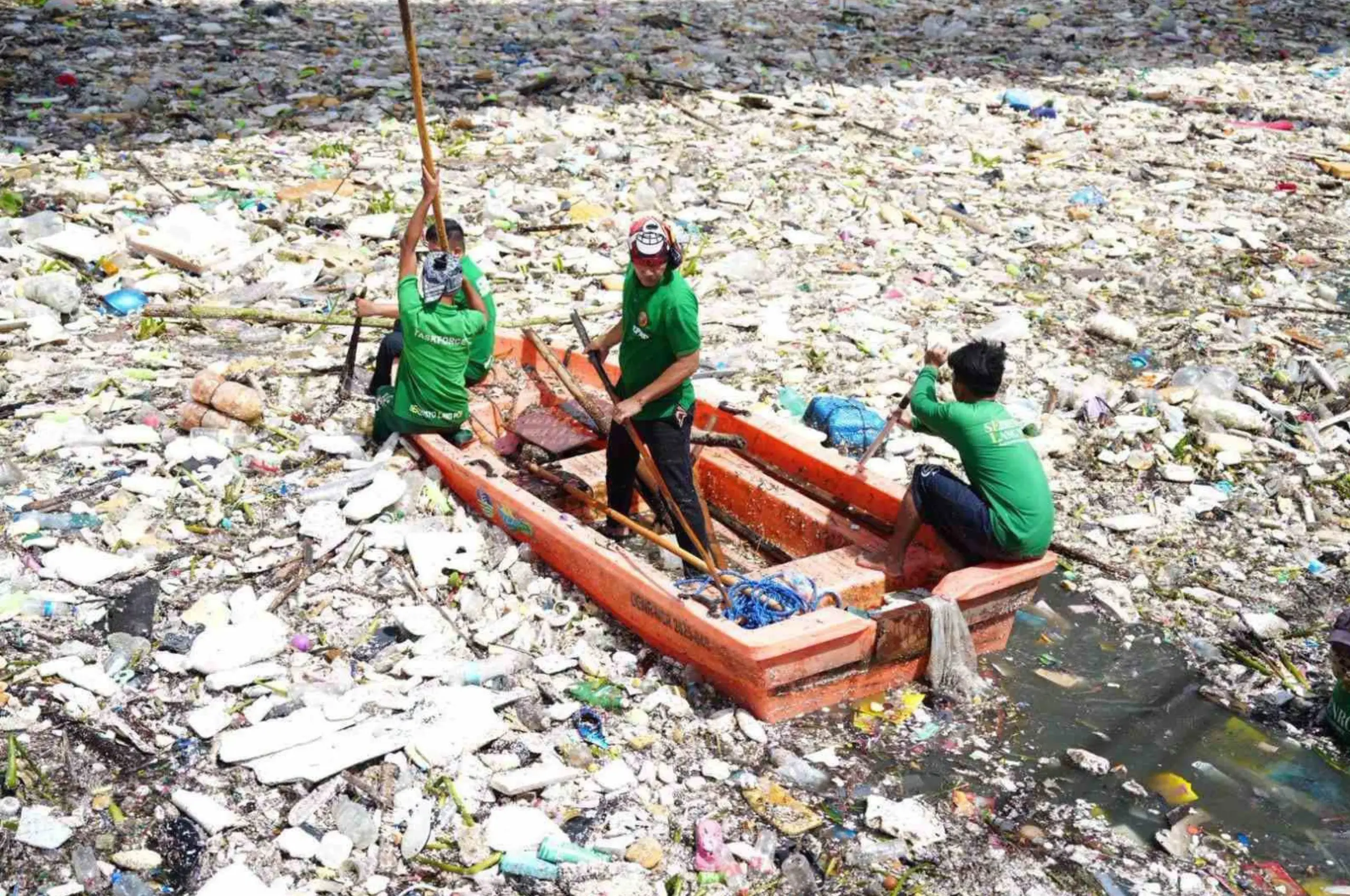
The country has endured relentless rain two weeks into August, once again forcing Filipinos into a familiar cycle of resiliency as floods strand commuters and disrupt daily life. This time, however, the issue extends beyond just flood management — there is also floating trash.
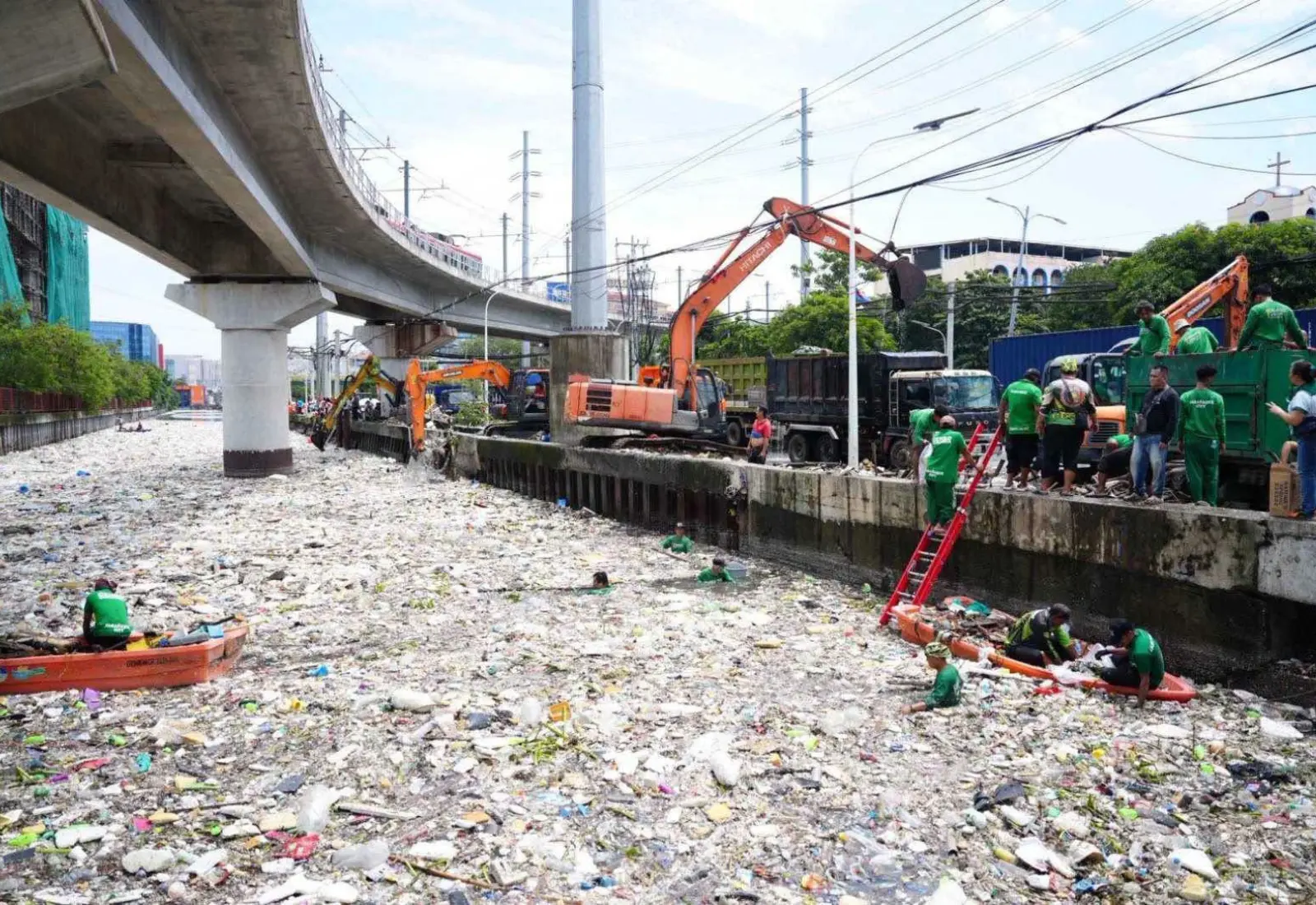
Parañaque City bore the brunt of the issue, with the Baclaran-Redemptorist water channel harboring numerous pieces of garbage, most of which were styrofoam and plastic bottles, as well as debris from the past few days. The city also experienced waist- to chest-deep flooding on Monday, August 10.
On the same day, the city government explained in a Facebook post that the piled-up trash had come from Manila Bay and entered the water channel after a trash trap was removed amid heavy rains. They also said that cleaning efforts were underway.
The scale of the cleanup, however, quickly revealed that this was not a problem that could be solved with a few rounds of garbage collection. In an August 13 update, the Parañaque City government said more than 188 truckloads of accumulated trash had been hauled from the waterway over three days. The volume of waste has then prompted Department of Public Works and Highways Secretary Vince Dizon to declare a “garbage crisis” in Metro Manila.
Meanwhile, President Ferdinand Marcos Jr. refused to describe it as such, calling the state “critical” instead. “If that’s not critical to you, it [is] to me. So yes, I wouldn’t call it a ‘garbage crisis,’ but that is the problem that we are facing,” Marcos told reporters after seeing drainage efforts in the adjacent Las Piñas City.
But the semantics hardly matter when the piles of trash are already clogging the infrastructure designed to move floodwater. If anything, it only illustrated the years of inadequate waste management and plastic pollution, as well as the waterways that have become repositories for the waste of densely populated communities in Metro Manila.
As photos of the garbage-choked waterway continue to circulate online, so does the familiar debate over who is accountable or should be blamed. And while some point to individual behavior, placing the entire burden on individual discipline risks ignoring the systems that determine whether responsible disposal is actually possible.
Even Marcos acknowledged as much, saying penalties for littering mean little if people do not have proper places to dispose of their garbage. “It’s not useful to fine people for not throwing their garbage if there is no place to put their garbage. Kailangang bigyan din natin ng facilities na kung saan puwedeng itapon ang basura,” he said.
The government has moved to address the immediate problem. Dizon has called for more equipment, including floating backhoes and trash barges, while Marcos instructed work on longer-term waste-to-energy plans to convert garbage into electricity. Interventions that are necessary, but in hindsight, are also reactive, as they only address what is already floating rather than fix the conditions that allowed the garbage in.
It all ultimately boils down to the gap between having rules on paper and having the infrastructure, funding, and public systems needed to make those rules work. Fixing such a crisis cannot rest solely on government cleanup crews, nor can it be reduced to telling Filipinos to simply “stop littering.”
“Patuloy lang ang ating trabaho para mabawas-bawasan ang baha hindi lang sa Metro Manila, lahat ng buong Pilipinas. Iba-iba ang sagot, hindi naman pare-pareho ang problema,” the president said.
FREQUENTLY ASKED QUESTIONS
Heavy rains dislodged a trash trap in Parañaque, sending Manila Bay debris into the Baclaran-Redemptorist channel. Over three days, crews hauled 188 truckloads of floating waste, prompting DPWH Secretary Vince Dizon to call it a garbage crisis.
Marcos avoided the term “garbage crisis,” calling the situation critical instead. He argued the label mattered less than the underlying problem: waterways clogged with trash that worsens flooding across Metro Manila and the rest of the country.
City officials said accumulated Manila Bay debris entered the Baclaran-Redemptorist channel after a trash trap was removed during heavy rains. The volume revealed a deeper failure in waste collection systems, not a one-time weather event.
DPWH has requested floating backhoes and trash barges for immediate cleanup, while Marcos ordered work on waste-to-energy plants to convert garbage into electricity. Critics note both responses remain reactive, addressing floating trash rather than its root causes.
Even Marcos acknowledged littering penalties are ineffective without proper disposal facilities. Critics argue the crisis reflects systemic failures in infrastructure, funding, and public services — gaps that individual discipline alone cannot fix.