

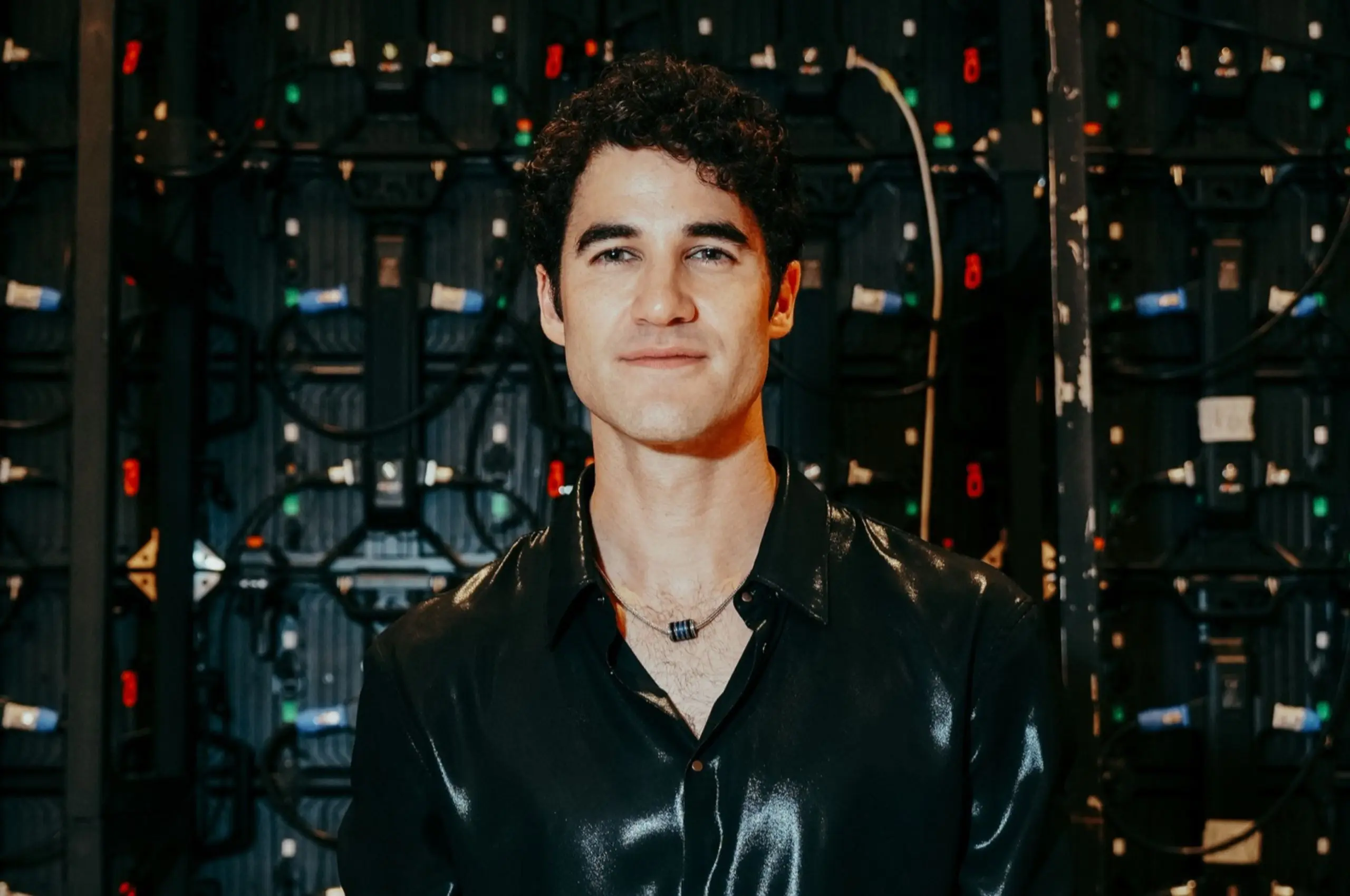
Darren Criss didn’t grow up with a lot of Filipino men in his life. As an American of Irish-Filipino descent, all he knew about the latter came from his Filipino mother. “My mom is Filipino, so there is a feminine oeuvre to the lens of how I see the Philippines,” Criss tells Rolling Stone Philippines. “My mom is the Philippines to me.”
This past weekend, Criss was in town for the launch of GQ Philippines, where he graces one of the covers of its maiden issue alongside NBA Champion and New York Knicks guard Jordan Clarkson and FEATR founder and Rolling Stone Philippines Voices honoree Erwan Heussaff.
In his cover story, Criss talks to GQ Philippines Deputy Editor Chino Hernandez about how he views his work in the performing arts and what he wants to come out of it: “Why do we communicate? It’s to bring ourselves closer and to have a closer understanding of each other, particularly to people we’ve never met and to strangers we have not communicated with.”
Even before the wave of Wasian actors that we’re seeing today, Criss had already been a mainstay across stage and screen. He first broke out as Blaine Anderson in the teen musical dramedy Glee at its peak. Post-William McKinley High, he went on to star as Andrew Cunanan in yet another Ryan Murphy project, The Assassination of Gianni Versace: American Crime Story, for which he won the Primetime Emmy Award for Best Lead Actor in a Limited Series or Movie, becoming the first actor of Filipino descent to ever do so.
His successes would only grow from there. Criss went on to two productions on Broadway: American Buffalo and Maybe Happy Ending, the latter of which he both starred in and co-produced. Maybe Happy Ending also earned Criss his first Tony Award in 2025 for Best Performance by an Actor in a Leading Role in a Musical, as well as Best Musical.
“There’s just no higher rung on the ladder,” Criss tells Rolling Stone Philippines about Maybe Happy Ending. “That was the most wonderful thing that I really ever got to be a part of.”
Backstage at the GQ Philippines launch at the MGBx Convention Hall in Newport, Pasay City, we talked to him about this current era of Broadway, why it’s resonating in this age of AI, and how to navigate this very tumultuous time living in the manosphere.
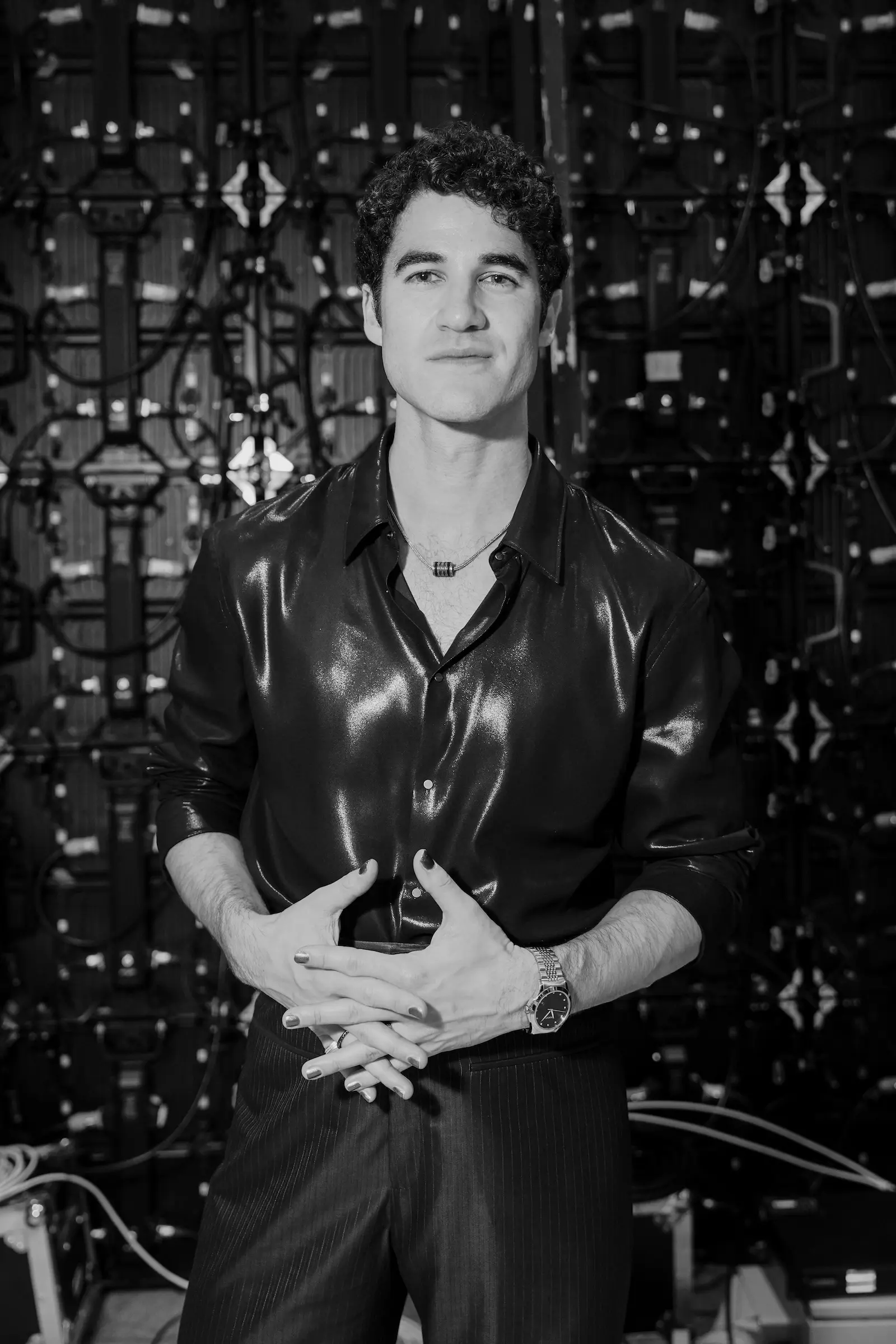
The following has been edited for length.
I want to start with Maybe Happy Ending. What was that like for you given how those kinds of Asian-centered roles don’t really come very often, especially on Broadway?
Yeah, it does not, times a million, and I’m fully aware of that. And prior to my involvement in the show, the question that is often asked of any actor, especially in the theater, is “What’s your dream role?” My answer had always been like a role that I can’t even think of. I want to do something that I don’t know, and that’s exactly what happened. This thing came out of nowhere, and everybody, including the people in it, was kind of stupefied and enraptured by. I’ve said this ad nauseam, but it continues to be, and certainly was while I was in it, one of the greatest possible things that could be happening and have happened and continue to happen for my life, professionally, personally, spiritually, emotionally, artistically. There’s just no higher rung on the ladder. That was the most wonderful thing that I’ve really ever gotten to be a part of.
“I’m a forever student whether I’m the oldest guy in the room or the youngest guy in the room.”
In some ways, its success is a great example of what’s happening in Broadway today. I feel like beyond the ticket sales, it’s more thanks to the diversity and the variety of shows that are finding audiences and generating buzz not seen in a long time. Between Maybe Happy Ending and Oh Mary!, what makes this era of Broadway maybe the best it’s been in years?
Well, time will tell if that’s true, and I don’t know how one quantifies that to be a metric. Is it ticket sales? I think the first stop for any social analyst would be the inevitable response to AI, and the response to isolation. I think the combination of those two things — things that are artificial and things that are isolating — is the complete opposite of what the theater is. Theater is inescapably real and inescapably communal. It has to happen with other people, and it gives me goosebumps to even talk about it. It’s very encouraging to know that despite every reason we have not to be together, we do everything to be together. And the great irony is when people say, “Oh, you know, we spend all our time on our screens,” it’s just because it’s the closest, next best thing to being with a bunch of people. It’s a facsimile for that. So, if people really want the real thing, it’s available. I’ll use theater as a specific example. It’s one of our oldest art forms, as far as performing arts is concerned. Every culture, at some point, for thousands of years, has had some kind of version of performance, and for people to gather and experience some kind of communal catharsis.
That’s such an offshoot from what your question was. But I think there’s a singularity to those things in the way that all the great shows before them that we now remember and celebrate have, which is the thing that’s sticking out. It’s the diamond in the rough. There is something in it that is enduring. There’s a reason why we love Les Misérables. The music is unbelievable, obviously, but there’s a story and a heart to it that transcends borders and language, and like all great art, I think it’s the things that were unlike the things that we ever expected. The greatest thing about that is that there’s always going to be something we don’t expect that really is encouraging.
“My masculinity actually does come from a very prominent female presence in my life.”
And how has this resurgence in Broadway been like for you as a performer?
I think, in particular, Maybe Happy Ending and the play I did before that, American Buffalo, I felt this kind of natural crossfade between two eras of my life. In American Buffalo, I was the young gun. I was the youngest guy in the room. I’ve had something that I’ve called my whole life a younger-brother syndrome, where I’ve always wanted to impress the old guard. I want to earn my stripes. I want them to respect me the way I respect them. I want them to think I’m cool. I want them to think I’m funny, and I’ll do anything I can to earn that in a natural way, right? So that was my role in that play, and then I did Maybe Happy Ending, where suddenly, oh my God, I guess I’m the upperclassman now. I’m no longer the freshman. So who am I trying to impress? I’m trying to impress the young people. I want to earn their favor and respect and affection through my wiles, and not through leadership, but through just trying to do the best that I can in order to gain their favor. So I kind of felt that transition because it was the first show where I was really kind of put in a leadership position that I had never truly been in before.
Did you enjoy that?
Yes, but I’m careful with saying “yes” to that because it sounds sort of egomaniacal. I didn’t enjoy it for the authority. I enjoyed it for the humility of what it is to learn how to lead, you know? “By your pupils you’ll be taught,” to quote Rodgers and Hammerstein. So I’m a forever student whether I’m the oldest guy in the room or the youngest guy in the room.
So you’re here in Manila for the launch of GQ Philippines, and a lot of the discussion right now is about the modern interpretation or understanding of masculinity and strength. As we talk about the importance of vulnerability and humility in men today, at the same time, the opposite is also once again on the rise, like that very alpha male, very force-as-strength idea of masculinity. I’m curious what’s your take on navigating this era with these two opposing sides coming to a head.
Well, I’ll say it’s nothing new. This is not a new threat. This isn’t like some new phenomenon. It doesn’t make it any less unpleasant, but those things happen not for nefarious reasons. They come from the very things that they’re not in touch with, which is fear and vulnerability, and an inaccessibility, a feeling of alienation. That perhaps those people haven’t had the opportunity to get in touch with for whatever reason. Usually for reasons beyond their own control. So I can never fault those people. I understand where it comes from. It’s unfortunate.
So I think for the other side of it, I think there has to be a lot of grace in understanding that, and I think we don’t win anything either from shutting people like that out. I think one has to learn to enable growth across all boards. Easier said than done. Obviously, it’s a very complex thing. I just think understanding that it’s a natural thing to be scared of things that are different, it’s how we’re built, and in this modern world, it can show up in nastier ways than we prefer. But I think it’s about trying to show grace in the way that we show grace to a child, and enabling their growth and understanding of the world. It’s a tough task, and those kinds of changes can only be made incrementally through small graces on a global scale. It’s certainly nothing new.
The last thing I’ll say about this is, you know how the squeaky wheel gets the grease? The louder guy gets the bigger stick, right? The more people will hear about it. The kinder, softer side of what we’re talking about in this dichotomy isn’t as loud. They don’t make the news as often. Good people don’t make the news as often as bad people. So I think it’s important to remember that while we live in this age where the most distressing things and ideas are aggregated to the front, because those can harvest reactions in the way that normal everyday civil people do not, I’m a full believer that the civil group is the vast unseen majority.
“I’ve always wanted to impress the old guard. I want to earn my stripes. I want them to respect me the way I respect them.”
On the topic of masculinity and being Filipino, I want to ask how your Filipino upbringing informed how you understand masculinity?
I mean, my mom is Filipino, so there is a feminine oeuvre to the lens of how I see the Philippines. My mom is the Philippines to me. So it is inherently a female angle. I’m sure psychologists or psychoanalysts might have something to say about the way that I am Filipino. I don’t know. I’d be curious to know what a professional’s opinion would be, but my masculinity is based on a lot of femininity. I love dichotomies. So if we’re being sort of binary, just for the purposes of this conversation on this particular point, what makes masculinity cool is understanding femininity to the best of your degree, and vice versa. The wabi sabi of it all, the yin and yang. So yeah, maybe there’s something to that. That my masculinity actually does come from a very prominent female presence in my life.
Recommended Video