

The first “bayani” one encounters at the Libingan ng Mga Bayani is that old Katipunero, General Artemio Ricarte, whom the Armed Forces of the Philippines (AFP) recognizes as its very first Chief of Staff. The Libingan, after all, is a military cemetery carved out of the old Fort McKinley (not Fort Bonifacio).
The first Chief of Staff from the revolutionary era certainly should lie on the hallowed ground reserved by the military for its most honored dead, shouldn’t he? General Ricarte, though, had a checkered history. Having refused to swear allegiance to the American colonial government, Ricarte eventually found himself in exile in Yokohama, where he opened a restaurant which became the go-to spot for Filipino stragglers in Japan. He finally returned to the Philippines in 1942, together with the Imperial Japanese Army that invaded the Philippines. Ricarte accompanied the Japanese forces as they retreated to the Cordillera mountains at the tail end of the war. Up north and up high, hiding, he died and was buried in the mountains. Treasure hunters later unearthed his remains, and 33 years after his death, he was ceremonially reburied at the Libingan, with President and Commander-in-Chief Ferdinand Marcos Sr. himself as the guest of honor.
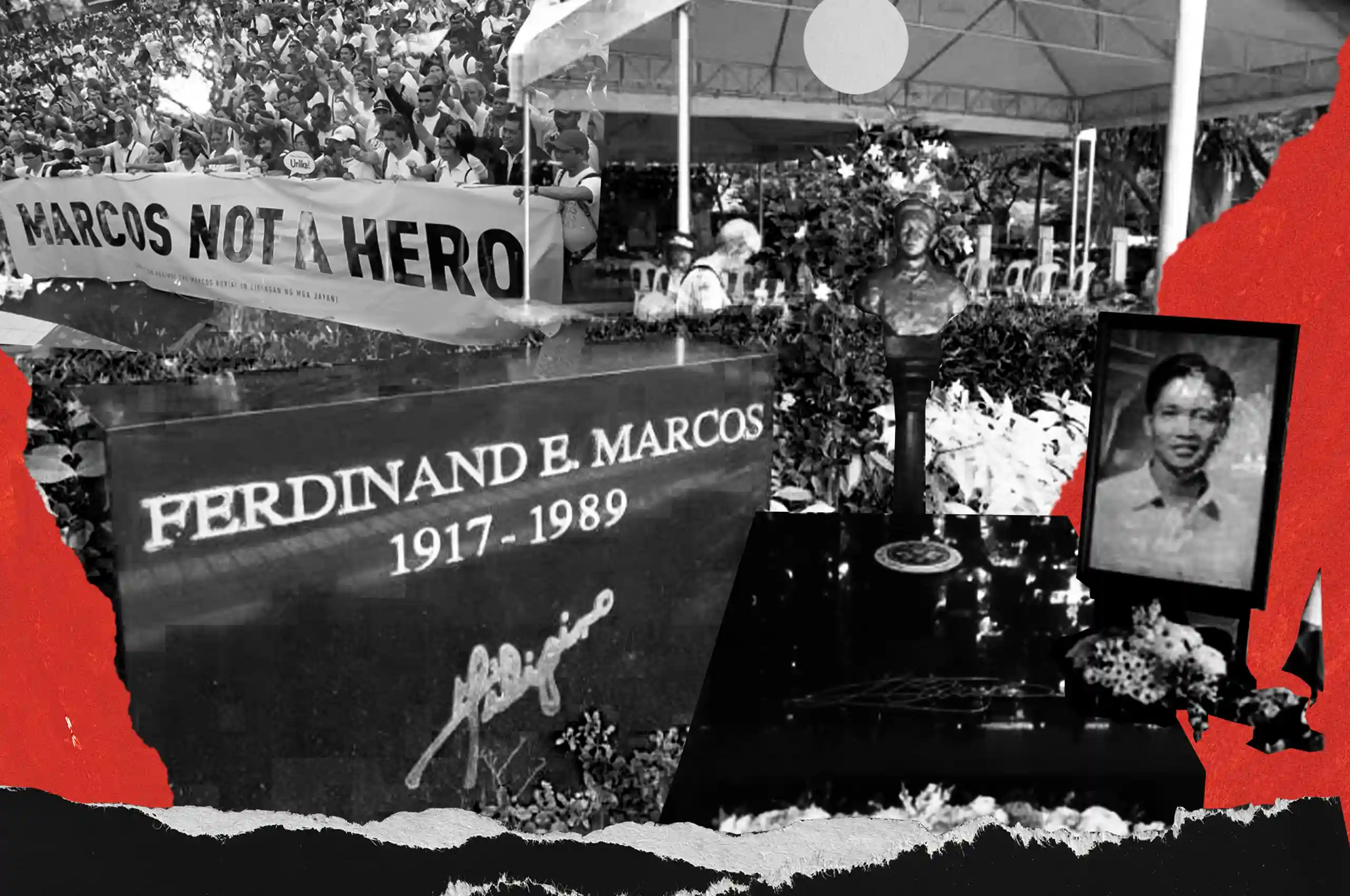
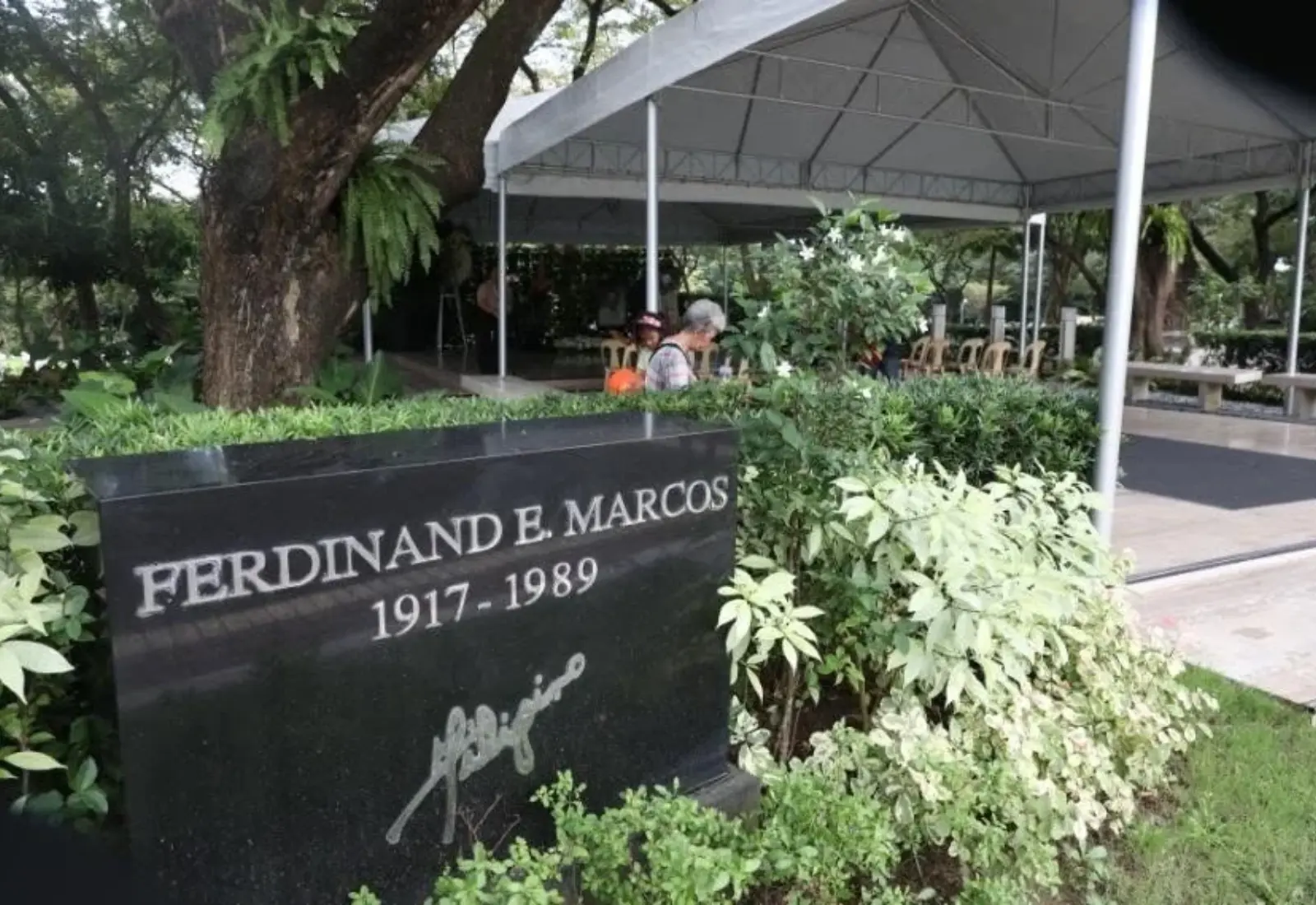
It would take less time — 28 years — between the time that Marcos died in sunny Hawaii and when he was finally interred at the Libingan ng mga Bayani in 2016. There he lies with several of his erstwhile colleagues such as Juan Ponce Enrile, Arturo Tolentino, Blas Ople, and even the man who agreed to run against Marcos in the widely boycotted 1981 presidential elections, Alejo T. Santos. Quite recently, the Superstar herself, Nora Aunor, a fervent supporter and campaigner for Marcos until the near end, rested for good at the Libingan. And imminently, because time wears no colors, Imelda too, as have the other First Ladies of the deceased Presidents at the Libingan, will have her flag-draped coffin slowly but certainly escorted on a hearse towards what remains of her President.
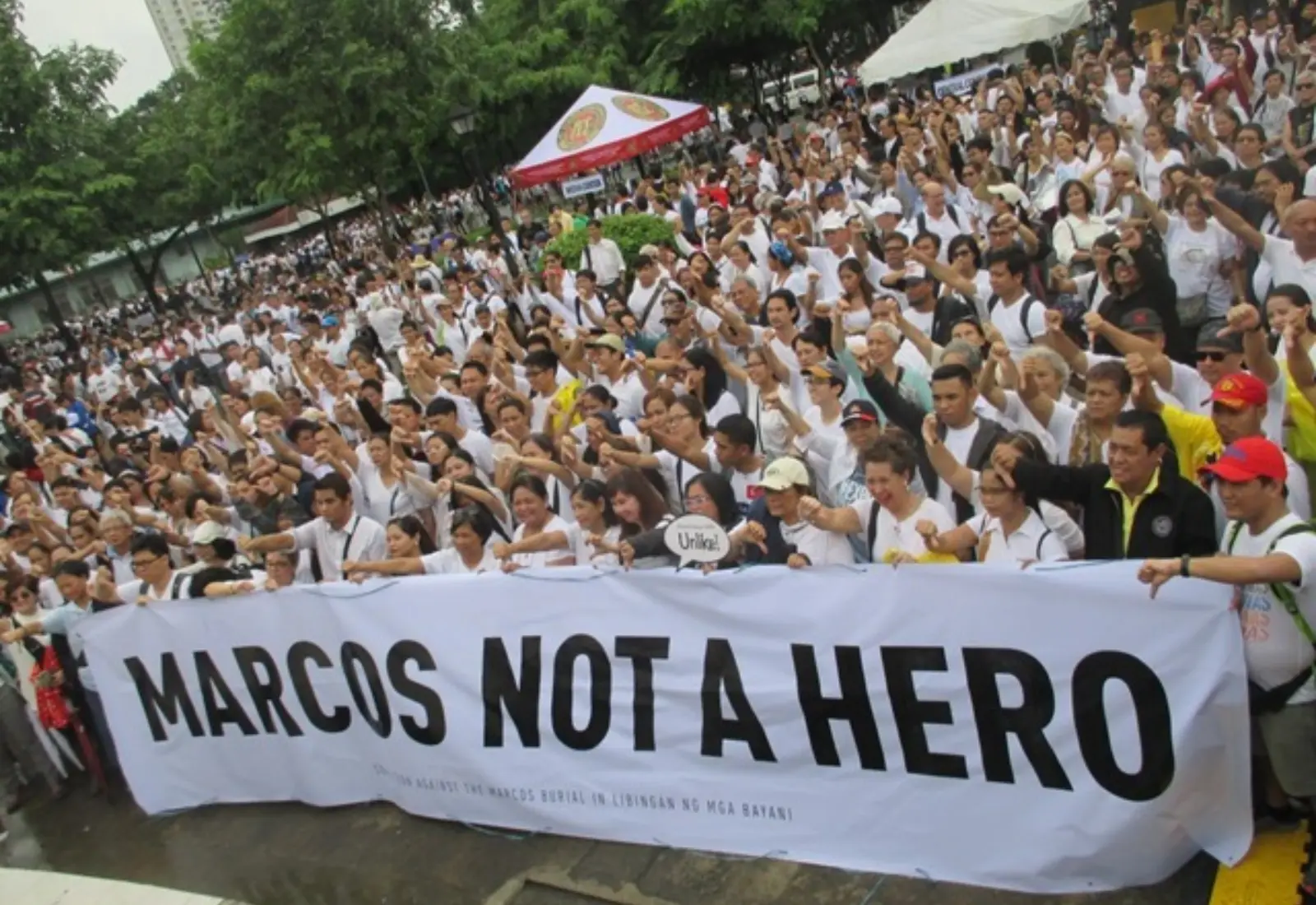
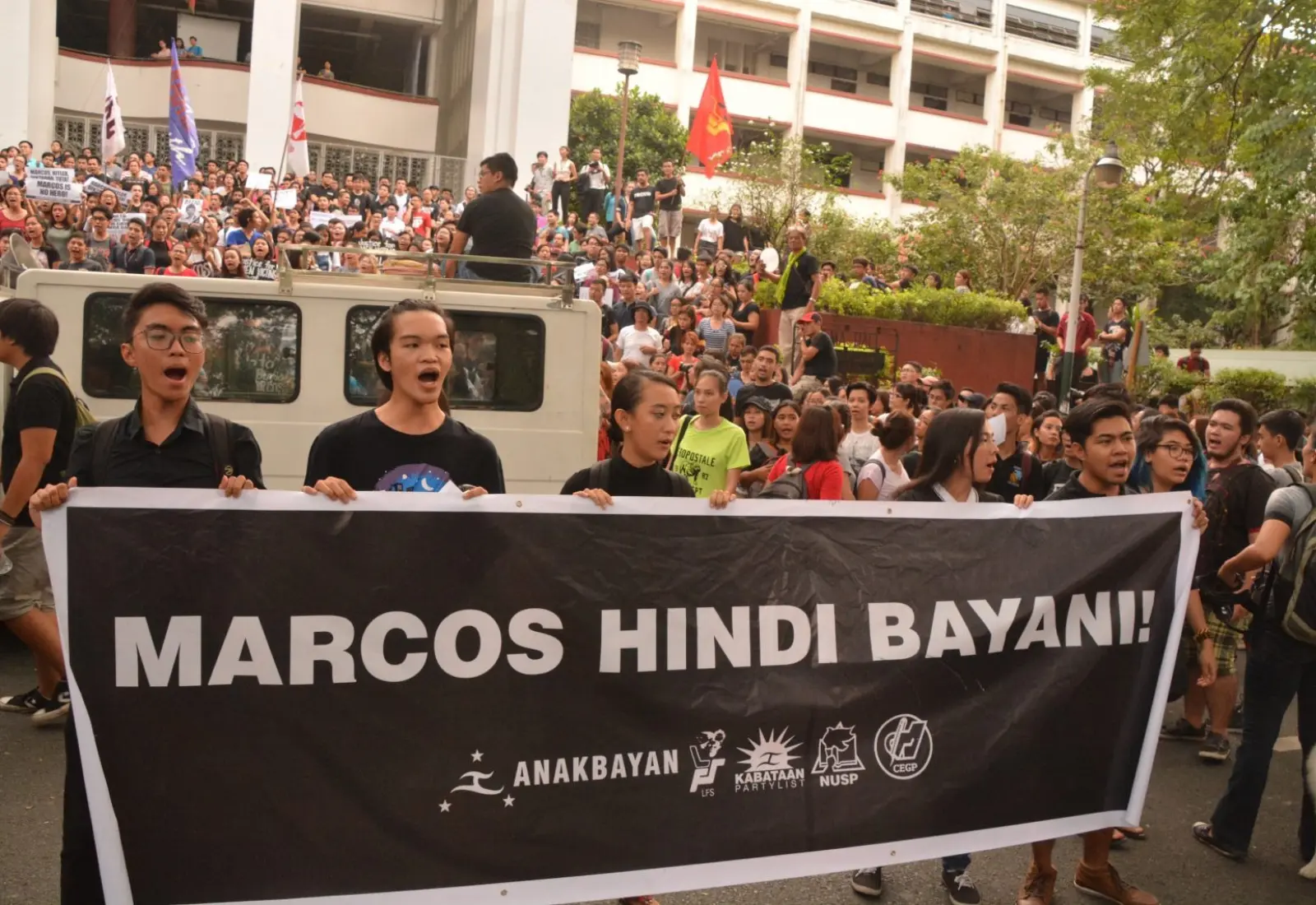
For certain, there would be the same massive protests on the day Imelda is buried at the Libingan as on the day her husband was. That latter day, to perhaps the heartening surprise of some, featured many young people on the streets, those who would not have yet been born during the dictatorship. The presence of the young gave assurance that torches would be passed bearing the memories of those who lived through martial law to a generation whose right to protest was guaranteed by the revolution that brought Marcos down. Still, as the 2016 and the 2022 elections proved, not enough people. Not enough people, unlike 1986 when there were enough people to stop the tanks. Not enough people to stop the slow-moving hearses towards the Libingan ng mga Bayani.
It did take 28 years before the desire of the Marcos family for that most honorific of burials bore fruition. It took a decision of the Supreme Court of the Philippines — the same Supreme Court that in the past had documented the villainy of Ferdinand Marcos — to effectively grant permission for that funeral. Yet more precisely, the Supreme Court had said that there was no law that had said with precision that Ferdinand Marcos cannot be buried at the Libingan ng mga Bayani, and therefore, President Rodrigo Duterte, who had willed the burial, cannot be stopped. The AFP regulations that disqualified military personnel who were dishonorably discharged from service, the law that was enacted assuring reparations for the victims of the dictatorship (the Human Rights Victims Reparation and Recognition Act of 2013), the very Constitution steeped with provisions intended to operationalize the slogan, “Never Again!” — all these may have hinted against allowing a dictator to be buried at the cemetery of national heroes. But while five consecutive presidents had the delicadeza, without need of being forced by legal compulsion, to disallow a Marcos burial at the Libingan, an undelicate President like Duterte can be unshackled by any such inhibitions. After all, elections have consequences.
For as long as a dead person’s identity carries popular meaning, their mortal remains will not be left in peace.
The 2028 elections too will have consequences, including the possible election of a president who recently and famously admitted threatening that the body of Ferdinand Marcos would be unearthed from the Libingan and thrown overboard into the West Philippine Sea. The same laws and logic that justified Rodrigo Duterte in allowing the Marcos burial at the Libingan, these too would allow a President Sara Duterte (or any of her clan) to prevent an Imelda burial at the Libingan, or even carry out Sara’s grandiose threat, at least to the extent disinterring Ferdinand Marcos. The scenarios that could play out during a next Duterte presidency centering on the Marcos gravesite at the Libingan will arouse complex and complicated reactions. Delicadeza may ultimately prevail upon the next Duterte president to let the sleeping Marcoses lie still. If Sara does end up being the leader who delivers the final historical verdict on Ferdinand Marcos by disassociating him from the heroism and the heroes’ cemetery, it will wrestle the emotions of those who dislike either of the controversial strongman-presidents of living memory.
There is, in fact, a healthy historical tradition of dead authoritarian leaders first buried in pomp and circumstance but later disinterred when the political winds had changed. Some examples align with the expressed graphic wishes of Sara Duterte. The most notorious and profane of these instances was Pope Formosus, who died in 896 and had the misfortune of being succeeded by an enemy who had the late pontiff’s corpse dug up, dressed in papal robes, and propped up for a public show trial before being thrown into the Tiber after his posthumous conviction. Just as galling to modern sensibilities is the fate of Oliver Cromwell’s body. The English dictator who overthrew and beheaded a King died peacefully in power in 1658 and was buried at Westminster Abbey together with the other monarchs of England. After the restoration of the monarchy three years later, Cromwell’s corpse was dug up and then beheaded, with the severed head displayed on the roof of Westminster Hall for the next 20 or so years.
More recent examples of disturbing dead dictators have been more benevolent, at least to the remains themselves. After Stalin’s crimes against his people were exposed, his embalmed mummy on display beside that of Lenin’s was removed, then reburied to lie with less consequential Soviet politicians at the Kremlin Wall necropolis. The rusting of the Iron Curtain led to the disinterment from their lofty graves of Communist dictators such as Gottwald of Czechoslovakia, Dimitrov of Bulgaria, and Enver Hoxha of Albania, the latter being reburied at a public cemetery in a tomb that could easily be mistaken for that of the neighborhood butcher.
Perhaps the most relevant example for the wishful thinkers is that of Generalissimo Franco, absolute caudillo of Spain from 1939 until his peaceful death from old age in 1975. Franco himself had overseen the monument rising at the Sierra de Guadarrama mountain range — the Valley of the Fallen — where he was to be buried in a grand funeral attended by several international dignitaries, including Philippine First Lady Imelda Marcos. The fascist government Franco had installed outlived him by only a few years, yet his remains remained at the Valley of the Fallen. It took the election of the left-wing government under José Luis Rodríguez Zapatero for there to emerge a serious proposal in 2011 to rebury Franco. Those efforts though proved controversial and were then dropped. It would take the subsequent election of another left-wing government in 2018 under Prime Minister Pedro Sanchez for the revival of the plan. Conveniently, Franco’s widow had been buried at a municipal cemetery when she died. Thus, the ultimate reburial of Franco in 2019, now alongside his wife, could be justified as a family reunion rather than a ritual disembowelment.
Elections, however, matter. New general elections in Spain are scheduled before the end of November, with opinion polls projecting the fall of the Sanchez government and the return of the conservatives to power. More disturbingly, the mainstreamMainstreamThe ideas, styles, and works that reach the widest audience and dominate popular attention, such as radio hits and blockbuster films. The word is often set against indie or underground,Go to Mainstream Glossary conservative People’s Party has sealed an electoral alliance with the far-right Vox Party, which had vociferously opposed the Franco exhumation. In a government-led or jointly-led by a neo-Francoist party such as Vox, it remains possible that a re-reburial of Franco when it serves political convenience is in the future. If that happens, Franco (and likely, Mrs. Franco) would be removed from the same cemetery where now also lies the longtime assassinated dictator of the Dominican Republic Rafael Trujillo, whose remains were spirited away to France after the family fell from power, buried at Père Lachaise, then years later reburied again, this time in Madrid under the auspices of the then-living Franco.
For as long as a dead person’s identity carries popular meaning, their mortal remains will not be left in peace. Those beloved will be visited by admirers, students on field trips, or vloggers who have added famous tomb visits as part of their content portfolio. Those despised, as Marcos is by many, will spark controversy because their last whereabouts are known and marked with the official colors of the flag. The decision to formally honor or dishonor is a choice informed by politics; even the enactment of a law dictating that choice for future generations is also rooted in politics. But politics need not be the only hinge point. Jose Rizal now lies at a monument on a site that, during his own lifetime, stood beside the sea. With the rise in sea levels brought about by climate changeClimate ChangeThe long-term shift in global temperatures and weather patterns, driven largely by human activity. The Philippines is among the countries most exposed to its effects, from stronger typhoons to risingGo to Climate Change Glossary, it is projected by some estimates that within the next several decades, the ocean will begin to reclaim the land stolen by various reclamation projects and start lapping the perimeter of Rizal Monument. In decades more, Jose Rizal himself could lie along with the abalone and anemone unless the government of the future wrestles with that existential choice of whether to rebury our National Hero away from Kilometer Zero. Perhaps at that time, there still would be space at the landlocked Libingan ng mga Bayani.