

The following essay is taken from “How Crisis Forged a Synergy” from Level Up: Narrating Stardom, Substance and Service by Noel Ferrer.
Shared vision: that is what Film Academy of the Philippines (FAP) x Film Development Council of the Philippines (FDCP) x QCinema x Metro Manila Film Festival (MMFF) looks like right now. Not a joint poster with four logos stacked for a press release, but united action built into the calendar.
For decades, Philippine cinema survived on individual heroics: a director maxing out a credit card to lock picture, a producer begging a mall for a decent timeslot, a crew working 18 hours because the call sheet said so. We have been excellent in spite of the system. This coalition is the first honest attempt to be excellent because of the system.
Collabs work when everyone carries the same “why.” Ours is simple, and we intend to repeat it until it shows up in budgets and contracts: protect the workers, grow the audience, and give Philippine films a real fighting chance. No self-promo, just shared work. Exciting times, yes, but more importantly, necessary times.
“The goal is unglamorous but urgent: find the best arrangement to bring audiences back to theaters and build a system that is beneficial to all stakeholders.”

This September, during Philippine Film Industry Month, which the FDCP leads each year by Presidential Proclamation to honor the industry’s contributions, we will test that “why” in public. We will do three things together, not in parallel silos.
First, announce the Philippine entry to the Oscars, a decision that FAP makes each year but will now carry with the full weight of national campaign planning behind it. Second, launch the Quezon City Cinematheque, a permanent home in the city for restored classics, student shorts, and community screenings that do not disappear after a weekend. Third, celebrate Quezon City being named a UNESCO Creative City of Film, the first city in Southeast Asia to receive the designation when UNESCO announced it on October 31, 2025. It affirms what anyone who has ever lined up for a QCinema screening at Gateway already knew: Quezon City is the Heart of Philippine Cinema. The studios are here, the post houses are here, the schools that feed the sets are here. UNESCO did not crown us; it recognized us.
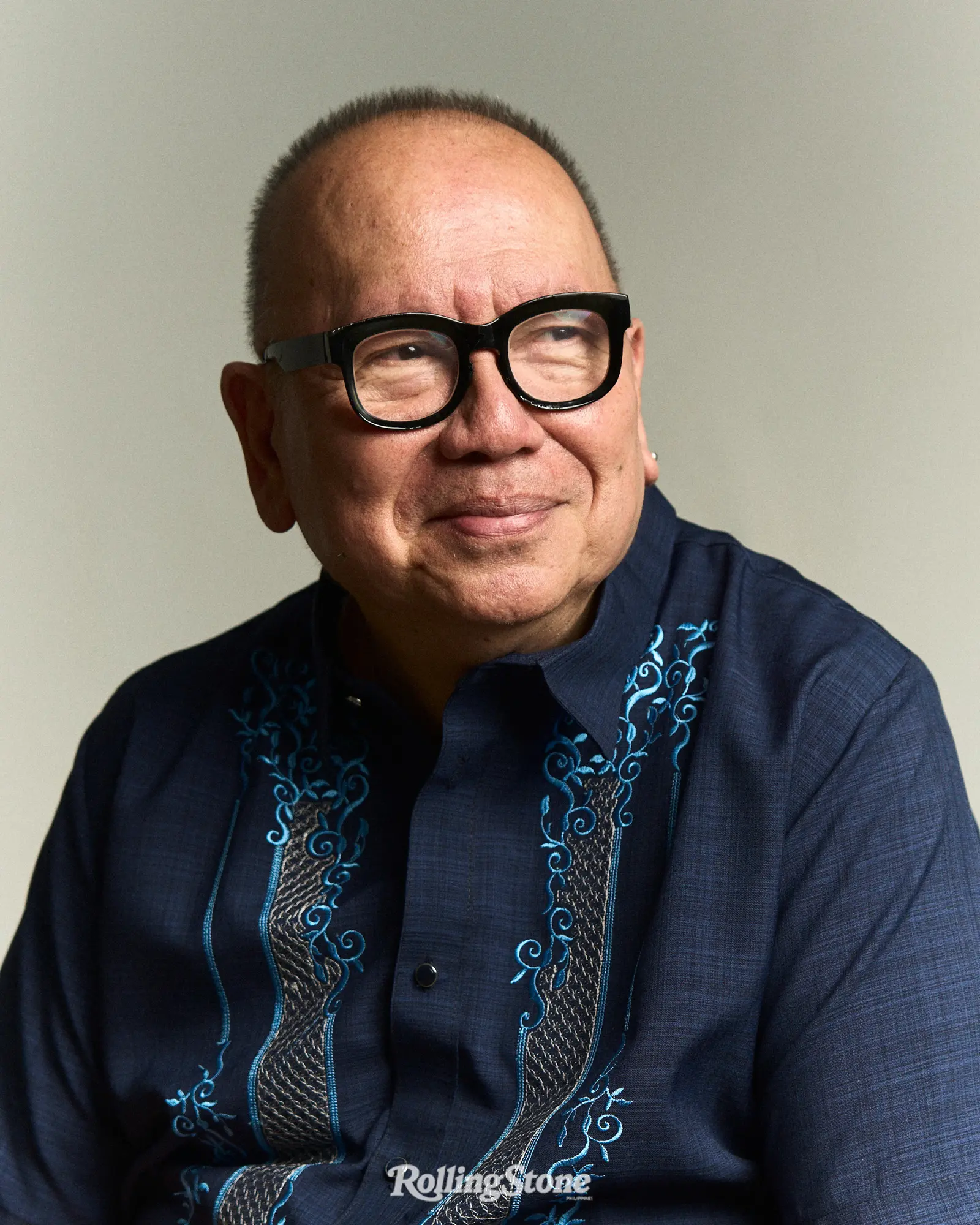
Joey Reyes, reappointed as FDCP chairperson and CEO after a term focused on education and strategic planning, calls this moment plainly overdue. “This coalition of the Film Development Council of the Philippines with the Film Academy of the Philippines, the Quezon City Film Council and the Metro Manila Film Festival is long overdue,” he says, and points to the clutter that delayed it. “All these institutions have one goal in common: the upliftment of the Filipino movie industry in order to bring to the world the potential if not the brilliance of our cinematic arts. Numerous factors, if not personal endeavors, have served as obstacles to this delayed unification. But now that the air has been cleared and sanitized, now that the alignment is based on singularity of purpose and not the promotion of individual interests, the united front is created with the agreement to help each other in serving particular mandates.”
For him, the first concrete proof will be the Student Short Film Festival, timed to the UNESCO celebration, where all agencies will be “hand in hand in this historic celebration in turning the Capital City of the country not only as a City of the Stars… but the Center of Filipino Cinema.” The FDCP, he insists, will remain “a moving force for relevant and sustainable development,” but now with partners who can actually deliver the last mile.
That last mile is where Quezon City lives. Giana Barata from the Quezon City Tourism Operations and Cultural Affairs Office frames the UNESCO honor not as a trophy but as a job description. “As Quezon City proudly upholds its designation as a UNESCO Creative City of Film, we recognize that the full realization of this honor demands more than institutional recognition, it calls for deliberate, sustained, and meaningful alliance with the foremost bodies that govern, develop, and celebrate Philippine cinema.”
The city has been revitalizing its film commission into the Quezon City Screen Commission precisely to be that connective tissue, convening dialogues, sharing infrastructure, opening barangay halls and school auditoriums for screenings, and championing policies that uplift the whole industry.
“We cannot fulfill our UNESCO mandate as a solitary actor. The designation is not a trophy to be displayed, it is a living commitment to use the power of film as a tool for cultural development, social inclusion, and economic growth.”
For Quezon City, partnership is not protocol, it is purpose, and the convergence with FDCP, FAP, and MMFF is meant to secure “a resilient, inclusive, and thriving creative industry for generations to come.”
MMFF is stepping into that same convergence, and we want to be clear about what that means structurally. The FAP, the FDCP, and Quezon City are part of the organization. That is how the MMFF intends to maximize its impact as the longest-running, most anticipated, and widely supported film festival in the country. All year, not only in December, we partner with agencies, filmmakers, and local governments to serve the industry better. This year, aside from mounting the 52nd MMFF in December with student shorts returning to the lineup, we will initiate sustained dialogues with producers and theater operators through the Cinema Exhibitors Association of the Philippines (CEAP). The goal is unglamorous but urgent: find the best arrangement to bring audiences back to theaters and build a system that is beneficial to all stakeholders, from the ticket seller to the gaffer who waited six months for residuals.
Paolo Villaluna, who was appointed Director-General of FAP in 2024 and has spent the last year rebuilding the guilds, keeps his part short on purpose. “The important alliance between the Film Academy of the Philippines, Film Development Council of the Philippines, Quezon City Screen Commission, and Metro Manila Film Festival is not just timely, it’s essential and necessary. By combining national policy and funding, local infrastructure, and major festivals, these institutions are proving that our film industry can do more together than any one of them could alone. With Quezon City now a UNESCO Creative City of Film, the Academy and its guilds are fully committed to this collaboration. Real change is finally within reach.”
Real change, in this framework, looks like four shifts that finally line up. Protecting the workers stops being a press statement and becomes a workflow, because FAP brings the guilds and their standard contracts, FDCP handles education and the festivals, and QC issues permits that require proof of insurance and proper crediting. Growing the audience stops being each festival’s lonely marketing push and becomes a pipeline, because FDCP brings data and the JuanFlix platform, QC brings schools and community venues for year-round repertory, QCinema brings curation that discovers new voices in November, and MMFF brings the national scale in December. Giving Philippine films a fighting chance internationally stops being a last-minute scramble and becomes a campaign, because the Academy selects in September with FDCP funding the Oscar run, QC hosts the public send-offs and filmmaker talks, and MMFF keeps the film alive in the public imagination through the holidays.
“By combining national policy and funding, local infrastructure, and major festivals, these institutions are proving that our film industry can do more together than any one of them could alone.”
Then we keep going. QCinema in November will operate as the research and development wing, with its Film City theme, with RainbowQC, with QCShorts, with that new Student Short Film Festival that Reyes named as the first joint deliverable. MMFF in December will be the stress test for the CEAP dialogues, for fairer terms, for better timeslots, for marketing that starts in October instead of Christmas Eve. Between them are the less photogenic meetings on incentives, on archive restoration at the Philippine Film Archive, on masterclasses that move from FDCP cinematheques to QC district libraries.
We really hope to serve the movie industry well, not because collaboration is fashionable, but because we all feel the crunch right now. Costs are up, theatrical attendance is fragile, streaming has flattened discovery into an algorithm, and workers are tired of being thanked in speeches while waiting for protections promised since the Luna Awards began in 1981. This is not for self-promotion, and it is not to advance any personal agenda. It is for an industry that is ailing but determined to thrive, an industry that has never lacked genius, only continuity.
So why did we not build this synergy sooner? Perhaps we needed the crisis to clear the air, perhaps we needed Quezon City to be named first in Southeast Asia to remember where the heart beats. Perhaps we needed four institutions to get tired of competing for the same small pie. Perhaps we needed to do some house cleaning, and weeding out conflicts of interest, and non-good governance practices. Better late than never. Crisis often forces better and more lasting solutions. Now we know better, and now we work together.