

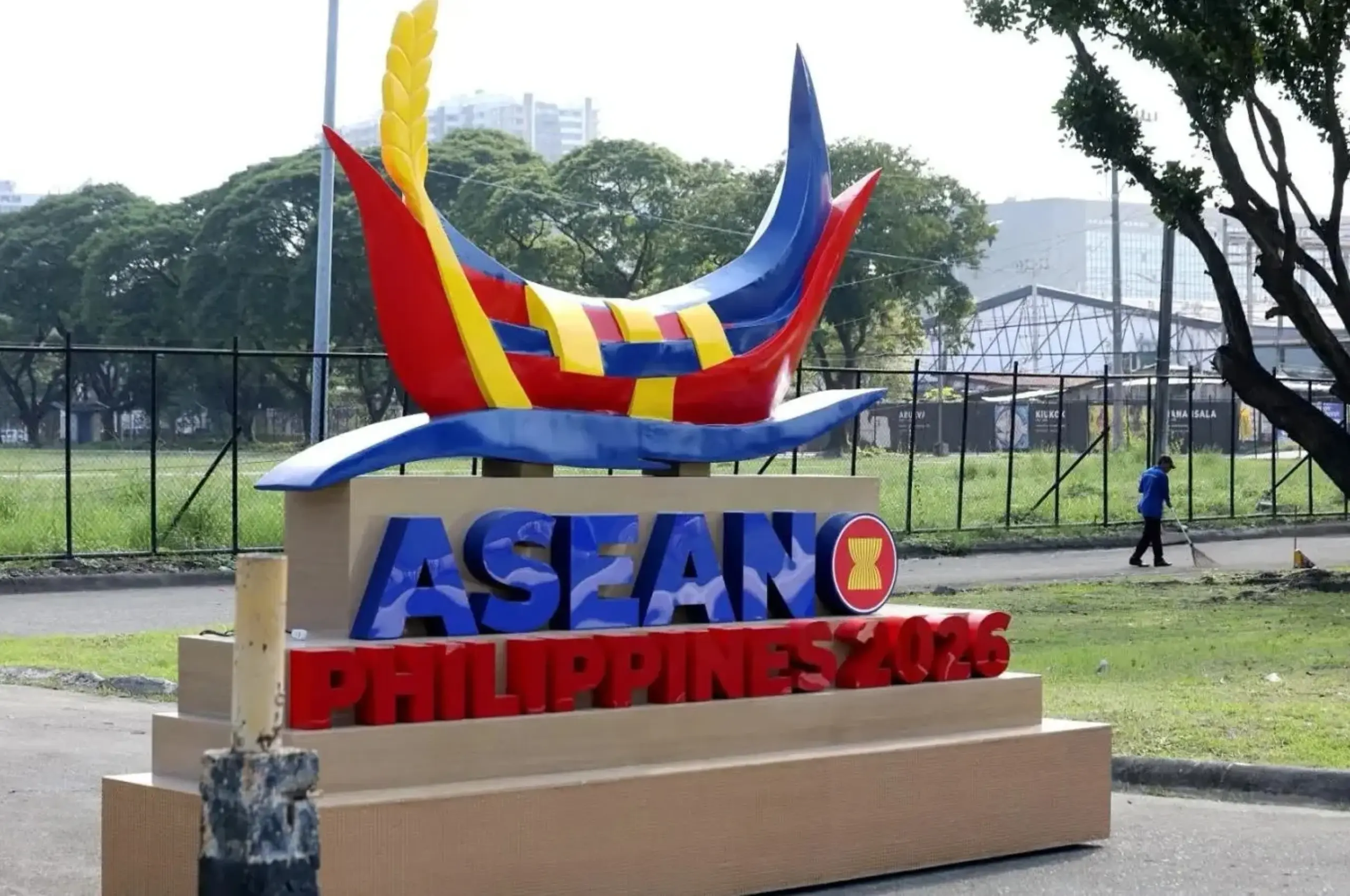
There is an approximately P22.9 billion budget allocated for this year’s hosting of the Association of Southeast Asian Nations (ASEAN) Summit in the Philippines — the highest budget among the country’s previous chairmanships. Under former President Gloria Macapagal Arroyo in 2001, it was approximately P1 billion. In 2018, under former President Rodrigo Duterte, there was P11 billion (with only P3.79 billion spent).
While the figures are not directly comparable due to the varying economic conditions of the country at each period, the recorded allocation this year is also amid the Philippine economy’s slowing growth.
A COSTLY SHOW
In the third quarter of 2026, the Philippine economy grew by only 2.1 percent compared to 2.4 percent in the previous quarter, and down from 2.8 percent in the first half of the year. According to the Philippine Statistics Authority, the agriculture and fisheries industry also dropped by 4.8 percent.
The 2025 annual per-capita poverty threshold is only P35,121, or P96.22 per person per day. In August, the IBON Foundation called for an update in this threshold, as they said the methodology “understates poverty because its food threshold is basedBasedBased is slang expressing approval for someone unapologetically stating their genuine opinion, regardless of whether it's popular, controversial, or conventionally acceptable within discourse. Originally associated with certain online political subcultures,Go to Based Glossary on a bare-minimum, least-cost basket while non-food needs are not directly and adequately costed.”
Against this backdrop, over a thousand stalls in totality were ordered temporarily closed for security measures ahead of the summit in Pasay and Parañaque City. As compensation for the vendors’ expected loss, the Department of Social Welfare and Development (DSWD) distributed cash assistance of P10,000 and family food packs to each affected seller, which started on November 8.
And in an effort to present a pristine ASEAN-ready Philippines, there are even delegated lanes for ASEAN visitors on EDSA with no prior public advisory, resulting in relentless traffic for the commuters.
According to Palace Communications Officer Claire Castro, the beautification and coverings of the roads (specifically in slum areas and along rivers) with artworks near the ASEAN venue were done to attract potential investments. She further denied claims of presidential vanity.
TRUMP’S ARRIVAL
For the 49th ASEAN Summit, Malacañang declared November 16, 17, and 18 as special non-working days in the National Capital Region to alleviate traffic and for security measures. United States President Donald Trump is also confirmed to visit the Philippines for a bilateral meeting with Marcos.
The Palace has also urged groups to hold off on any protests, saying that there are other better times to conduct demonstrations rather than during the summit and arrival of VIP guests.
As of November 13, multiple planned protests against Trump’s visit and the U.S.-led Pax Silica initiative have already kicked off, including those from various universities and schools like the University of the Philippines, Ateneo de Manila University, University of Santo Tomas, Polytechnic University of the Philippines, and Miriam College, which have released statements and started their own demonstrations.
frequently asked questions
The Philippines has allocated approximately P22.9 billion for hosting the 2026 ASEAN Summit, the highest among its previous chairmanships, though figures are not directly comparable due to differing economic conditions.
Over a thousand stalls in Pasay and Parañaque were temporarily closed for security ahead of the summit, and the DSWD gave sellers P10,000 and family food packs starting November 8.
Malacañang declared November 16, 17, and 18 as special non-working days in the National Capital Region (NCR) for the 49th ASEAN Summit to alleviate traffic congestion and support security measures.
The Philippine economy grew 2.1 percent in the third quarter of 2026, down from 2.4 percent, while agriculture and fisheries dropped 4.8 percent, according to the Philippine Statistics Authority (PSA).
The Palace urged groups to hold off on protests during the summit and VIP arrivals, but multiple demonstrations against Trump’s visit and the U.S.-led Pax Silica initiative have already begun.
Recommended Video