

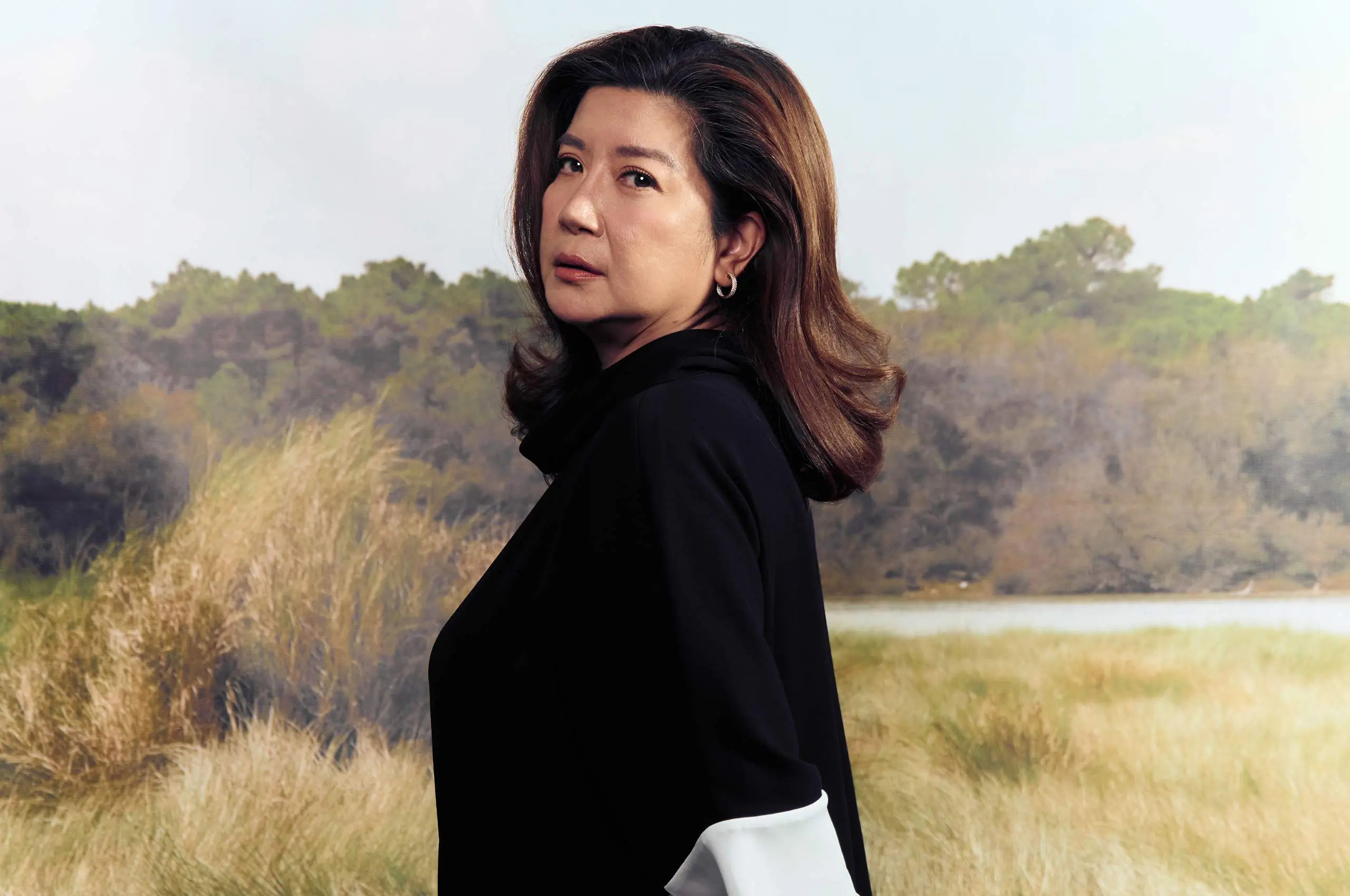
Kara David is kind of everywhere these days. She still writes and produces documentaries for i-Witness and occasionally hosts a news program, “pinagbibigyan ‘pag may absent,” a cheeky nod to her first official assignment as a journalist over three decades ago, when Jessica Soho needed a reporter to cover a shipwreck in Batangas and David, then a PA-researcher, was the only one available in the newsroom. And since her TikToks took off nearly two years back — she’s been dubbed the “Queen of Potential Sounds” — she’s turned into an unlikely pop culturePop CultureThe everyday entertainment, trends, and media that large groups of people share, including music, film, television, fashion, and online content. Pop culture reflects what a society cares about at aGo to Pop Culture Glossary darling, by way of the internet randomly picking a woman of the moment (right now on my side of TikTok, it’s The Voice Kids Philippines alumna Lyca Gairanod).
She’s appeared in Boy Abunda’s Fast Talk at least twice and is slated to guest judge on the latest season of Drag Race Philippines. And if that’s not enough proof of just how much the queens love her, she’s also been on drag queens Arizona Brandy and Hanabeshie’s podcast, B is for Bonding, where she said if she’d ever do drag, her drag name would be MV Kimelody Cristy, after the passenger vessel that unfortunately sank but gave her her break in 1995.
Beyond those, this is what a regular week for Kara David looks like: “Meron akong araw para sa pagtuturo [sa UP]. Dalawang araw ‘yun. Tapos, meron akong isang araw para sa Pinas Sarap. May isang araw ako para sa podcast, tatlong araw every month para sa i-Witness. Tapos, weekend, Sundays ko ay para sa Project Malasakit (her foundation, which will get to later). Mornings, mag-se-serve ako sa simbahan. Tapos, tumatakbo ako at nag-te-training sa gabi.” Does she ever rest? “Hindi. Pinupuno ko ‘yung araw ko nang bonggang-bongga. Ang pahinga ko dun ay lunch at saka parang mga one hour in between the appointments.”
Travels outside of work are planned ahead: once a year with her seafarer husband whenever he’s in town, once with her best friend, and once with her father, the respected sociologist and journalist Randy David.
Kara’s Path to Journalism
Her parents, the Truth Forum talk show host and the late public servant Karina Constantino-David, both figured in the anti-dictatorship movement opposing Ferdinand Marcos Sr.’s authoritarian rule. She was born Kara Patria, which means “beloved country” in Latin, a year after martial law was declared. “During that time, activists sila at hinahanap sila ng mga military. Hindi [daw] nakulong si mama because nakita ng mga sundalo na she was already on her way. Masyado nang malaki ‘yung tiyan niya,” she recalls. “So in a way, the baby inside her saved her from being jailed during martial law.”
By eight, she’s reciting “Kung Tuyo na ang Luha Mo, Aking Bayan” by Amado V. Hernandez on top of a jeep before demonstrators to introduce her mother and Rebecca “Becky” Demetillo-Abraham as the feminist folkFolkA genre rooted in storytelling and tradition, often built on acoustic instruments and honest, plainspoken lyrics. In the Philippines, folk and its protest-song legacy have long carried social commentary, andGo to Folk Glossary music duo Inang Laya.
At home, where she grew up to a no-curfew policy (“Ang rule lang sa bahay ay respetuhan. Talagang ang gusto lang ni mama at si papa, gawin namin kung ano ‘yung masaya kami nang wala kaming natatapakan na karapatan ng ibang tao”), everything is up for discussion, from why their favorite Japanese anime Voltes V has been cut off the air to why some of her parents’ friends are being imprisoned.
“Pangarap ko talaga nung bata ako na maging Araling Panlipunan teacher, magturo ng kasaysayan sa mga bata,” she remembers. “Tapos dahil mahilig talaga akong magsulat nung bata pa lang ako, ang pangarap ko noon ay magsulat ng mga children’s books na ikukuwento ‘yung kasaysayan ng Pilipinas. So inspired din siya ng lolo ko.” Her maternal grandfather was, of course, the prolific historian Renato Constantino, whose writings questioned prevailing colonialist historical narratives during the late ‘60s and ‘70s.
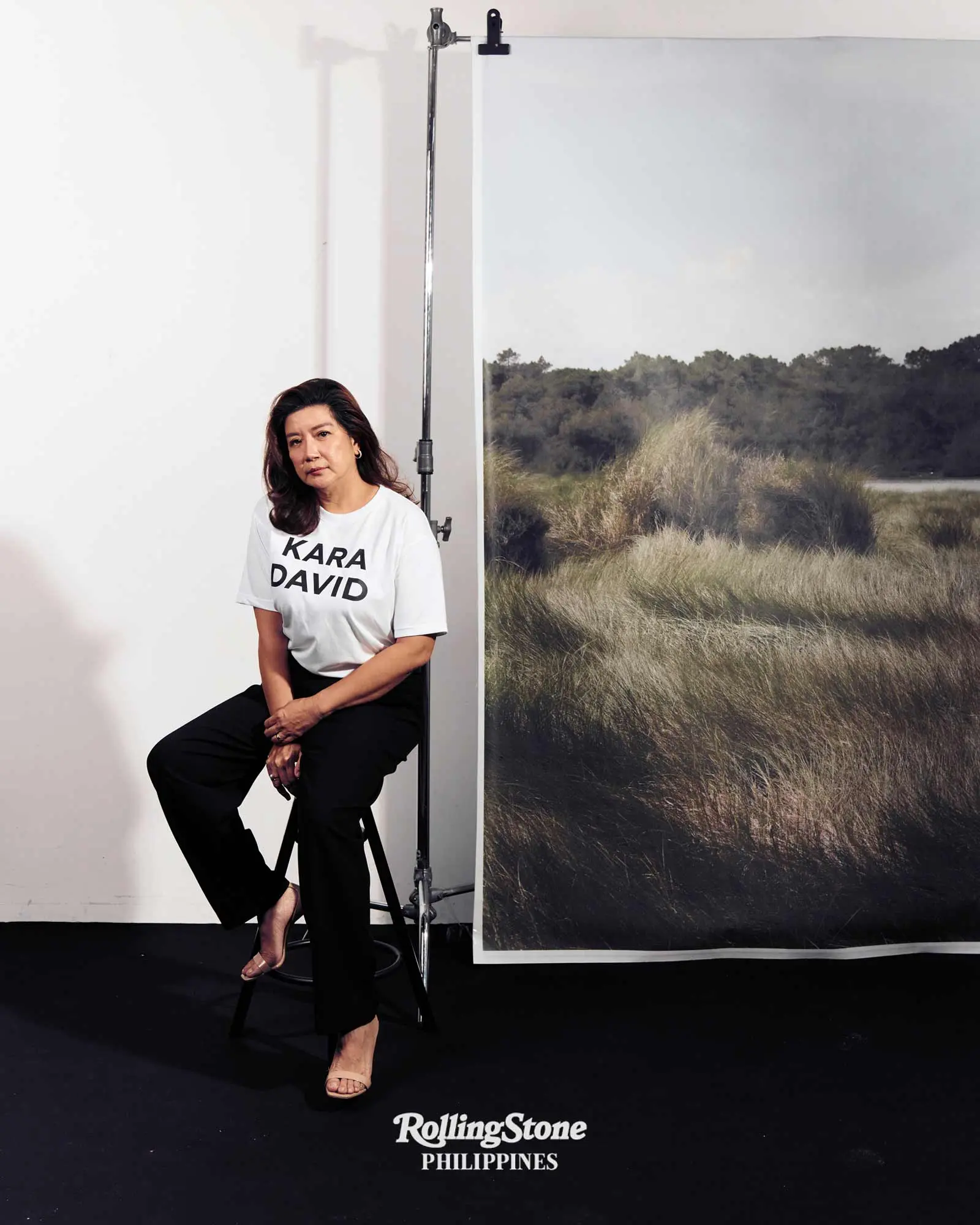
David was on track to live out her dream in UP until she realized it’s not always fun being Constantino’s granddaughter in the university’s History department. “Hindi ko alam na hindi pala lahat ng historian ay agree sa lolo ko. Lokang-loka ako sa buhay ko talaga. So, pagdating ko ng second year, gusto ko nang mag-shift kasi na-pressure ako.”
Her parents weren’t too glad that she shifted to Broadcast Communications. They were actually expecting her to be a historian. “Pero dahil democratic nga at respetuhan sa bahay namin, sinabi lang sa akin ng tatay ko at saka ng nanay ko, ‘Susuportahan ka namin sa pag-shift out mo, pero please promise us that gagalingan mo sa kung saan man ‘yung napili mo ngayon. Kung magma-maskom ka, try to be the best journalist you can ever be and make us proud.’”
She would later find out that the industry she plans to enter has not caught up to her father’s mission to make Filipino the language of mass communication. “Nung time na nag-a-apply ako, 1994, English pa ‘yung karamihan ng mga balita. Ayun, bumagsak ako dun sa mga exam kasi hindi ako magaling magsulat sa English.”
Despite also failing an on-camera test (also in English), Marisa Flores, then head of GMA’s News and Public Affairs, took a chance on her, hiring David as a production assistant/ researcher. “‘Di ba ‘pag PA ka, naiikot mo ‘yung buong newsroom kasi inuutusan ka ng lahat e. So sa free time ko, miron-miron ako doon. Tapos nag-aaral ako sa sarili ko. And later on, marunong na akong mag-edit. Tapos marunong na rin akong magsulat eventually. Nagbibu-bibuhan ako,” she says. And that was how she prepared when it came time to prove herself to Jessica Soho in the wee hours following the sinking of the passenger ferry MV Kimelody Cristy on December 13, 1995.
Soon, she was promoted to segment producerProducerThe person who shapes how a record sounds, from arranging and recording to guiding performances and making creative choices in the studio. A great producer can bring out the bestGo to Producer Glossary, writing stories for the late-night public affairs emergency response show Emergency, and then months later, to reporter-anchor, doing man-on-the-street interviews during the Asia-Pacific Economic Cooperation (APEC) summit in Manila. It was 1996, TV sets were booming with the voices of the likes of Mike Enriquez. David’s juvenile manner of speaking felt out of place.
“‘Yung boses ko, masyadong sweet, masyadong malumanay, pabebe ba ganyan,” she recalls. “For a long time, iniisip ko, hindi na ako magiging reporter, tapos hindi ko mahahanap ‘yung boses ko. So, sabi ko, ‘Magsusulat ako ng script na bagay sa boses ko.’”
Her signature calm and measured speech, which people came to associate with her documentaries, came later, inspired by another documentarist who paved the way for an alternative manner of delivering somber journalistic pieces. “Napanood ko ‘yung documentary ni Ditsi Carolino na ‘Minsan Lang Sila Bata’ about child labor. ‘Yung boses na ginamit doon ay malumanay, very first person, parang ‘yung style ko sa i-Witness. Sabi ko, ‘Shucks, may puwang ako sa mundo ng media. Pwede akong maging ganito.’”
One of her early docu works was for Brigada Siete, which was previously hosted by Soho until David took over in 2019.
Aired in March 2000, “Si Titser Monica at ang Sitio Avocado” opens with a cheery David and her team hopping on a bus to begin their six-hour journey to what was once a hotspot for the New People’s Army in Negros Oriental. She starts her spiel while balancing on the rear of a habal-habal along with three other passengers. Her tone was optimistic despite announcing that it would take two hours on the two-wheeled ride to reach their destination. Then, she began to describe the grim details of how its residents were left to fend for themselves after nearly a decade of shootings, bombings, hunger, and diseases. “No man’s land para sa iba pero hindi para sa isang matapang na babae,” she said as she introduced Maestra Monica Sison, the lone teacher to the sitio’s over 200 students. Sison taught and empowered Sitio Avocado’s residents, from her brightest student who treks 10 mountains and seven rivers every day to get to class to a 29-year-old woman who attends school with her fourth-grade daughter as her classmate.
“Dineliver ko siya in the way na naturally conversational. Tapos ang daming naiyak, ang daming nagandahan,” David says. “Tapos sabi nila [Ma’am Marisa at Ma’am Jessica], ‘Ay, mukhang mag-wo-work. ‘Yan na ‘yung branding ni Kara.’ Pinayagan nila ako. Hindi sila nag-impose. Tinulungan nila akong hanapin ‘yung boses ko.”
With that voice conundrum sorted, Kara David’s reign with the documentary program i-Witness went on for over 25 years.
This is an excerpt from the Rolling Stone Philippines Hall of Fame Issue, now available for pre-order on Sari-sari Shopping and in major newsstands soon.
Get digital access to the latest issue here.
Styling STEVEN CORALDE of QURATOR STUDIO, assisted by NIÑA CUYANA and CHARLOTTE SOMBILLO
Grooming CHUCHIE LEDESMA
Hairstyling RHOY CERVANTES
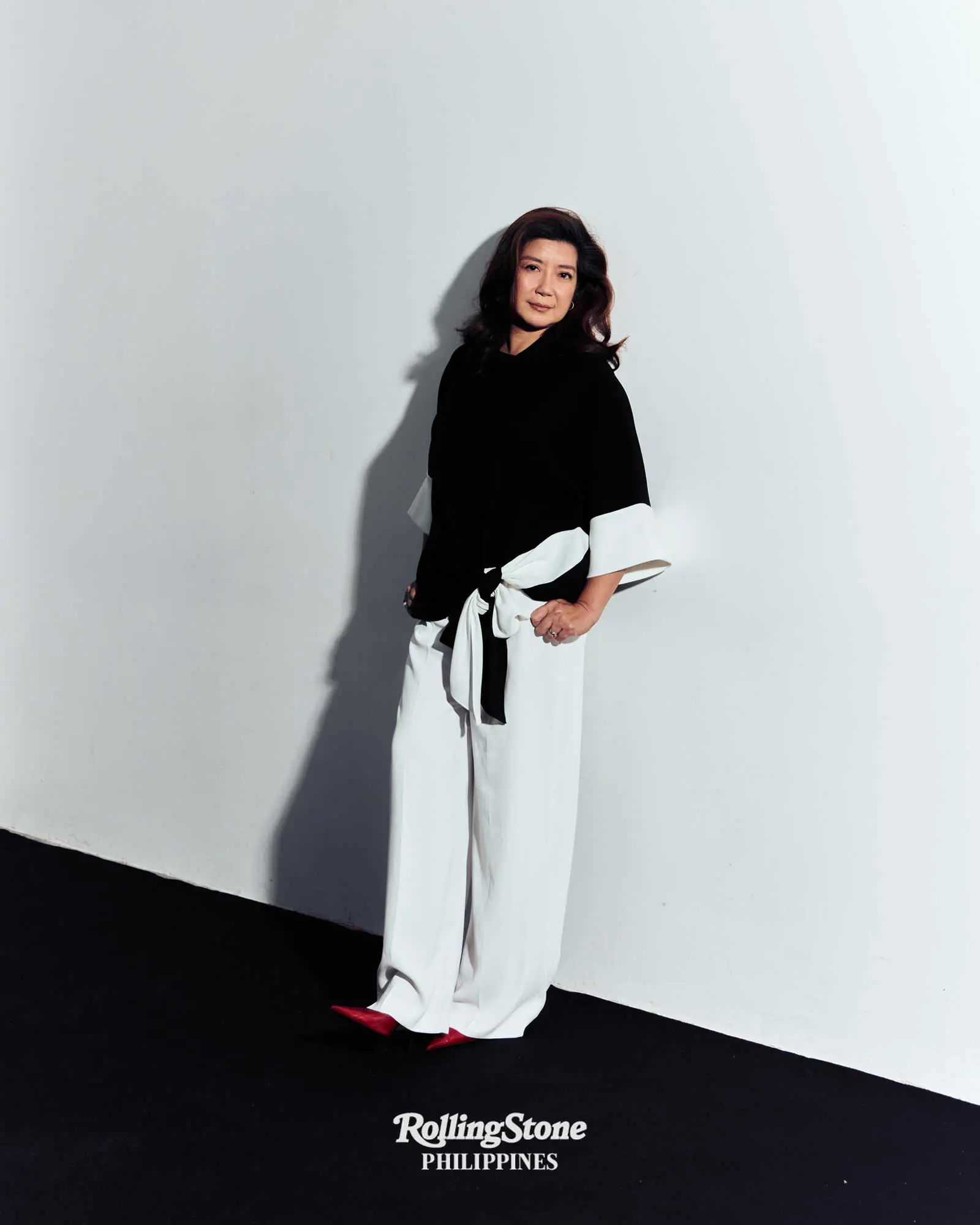
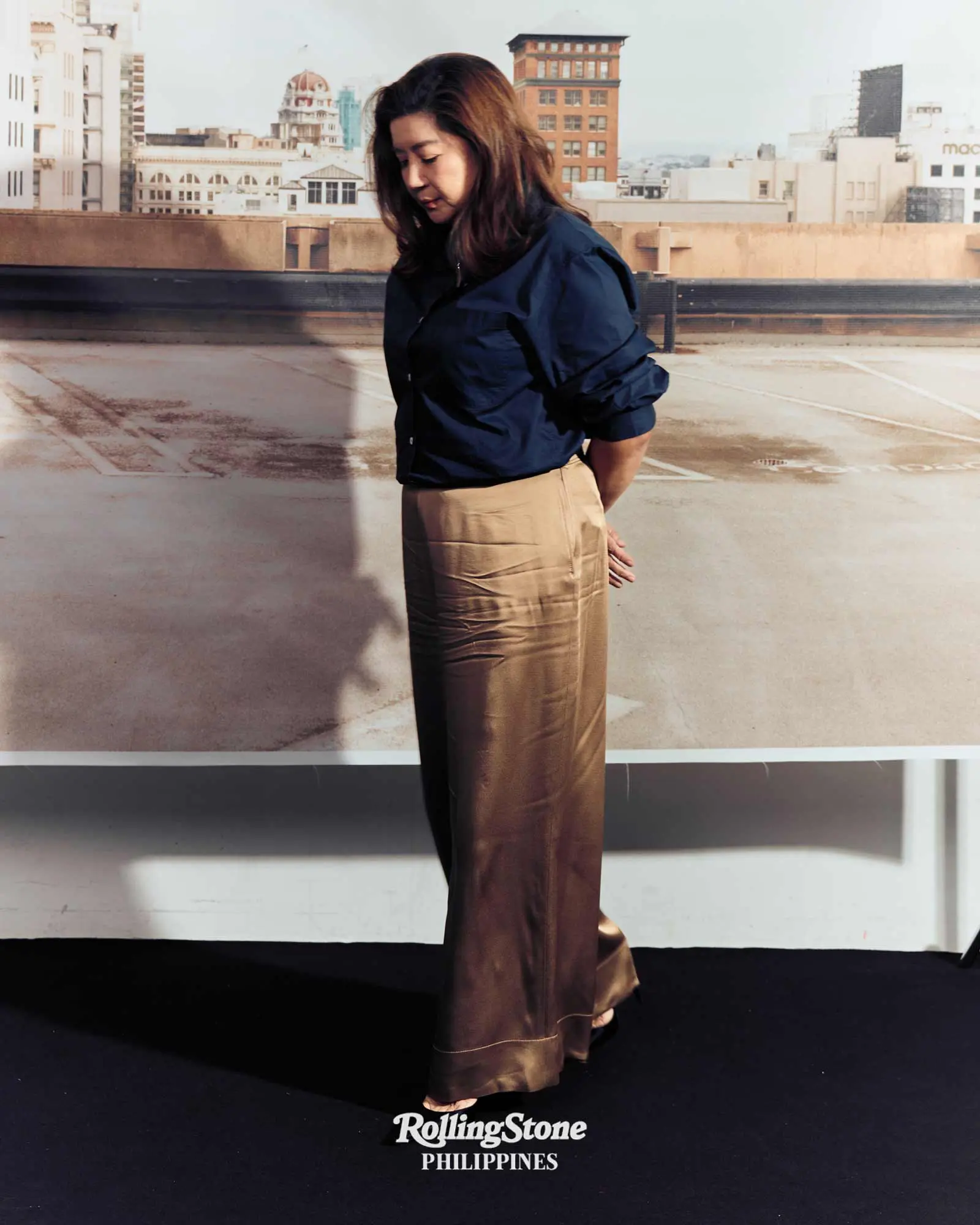
Kara wears Carolina Herrera trousers, Saint Laurent shoes, and Miladay jewelry
Recommended Video